Tests of vigilance and attention
Measuring attention remains a concern in many settings. Some work tasks are not very error tolerant. Here are a series of sample tests to measure attention in children and adults.
Publish at November 20 2024 Updated November 18 2024


We're past midnight when it comes to the environment. We are no longer in a mode to prevent damage, but rather to reduce future devastation. How can we avoid catastrophe? Can we positively influence the way things evolve?
We know that human beings have already influenced ecosystems for good or ill. The problem is that the notion of impact on ecosystems has rarely been taken into account. Introducing bullfrogs seemed like a good idea for eliminating insect pests in Australia. Now, however, the species is attacking other endemic animals, threatening their survival.
Today, scientists are trying to protect the corals, for example, by exposing them to a little heat so that they develop resistance, or by injecting them with microorganisms to protect them from rising water temperatures. For many researchers, it is genetic modification that could help flora and fauna. It would now be easy to create generations of all-male mosquitoes to stop the spread of malaria, or to design super-efficient trees capable of absorbing far more carbon dioxide than normal ones. Genetic scissors technology could lead to more targeted protection of species without the need to poison, cull or introduce other disruptive elements into environments.
Admittedly, there are risks involved, and it will surely be necessary to start on a small scale rather than in nature itself. But, as several of the specialists interviewed in the report point out, doing nothing is tantamount to letting the sixth mass extinction go ahead.
Running time: 30 minutes
You might also like:
Tests of vigilance and attention
Measuring attention remains a concern in many settings. Some work tasks are not very error tolerant. Here are a series of sample tests to measure attention in children and adults.
A fun game about heredity and genetics - Welcome to Thingdom
How do you talk to children about genetics and heredity? A British museum has come up with the method: design a game in which you create a line of adorable creatures with precise objectives. The game is fun, colorful and easy to learn. Even adults will succumb to the charms of the bugs and their large families.
The sharing economy has led to small changes in various economic sectors such as transportation, housing, etc. This approach has changed the relationship of citizens for different services, now cheaper and offered by their fellow citizens. However, who actually benefits from this new economy? The people or the companies in question? A U.S. newsgame shows how the life of Uber drivers isn't as lucrative as one might think.
A virtual aquarium to understand Darwinian evolution
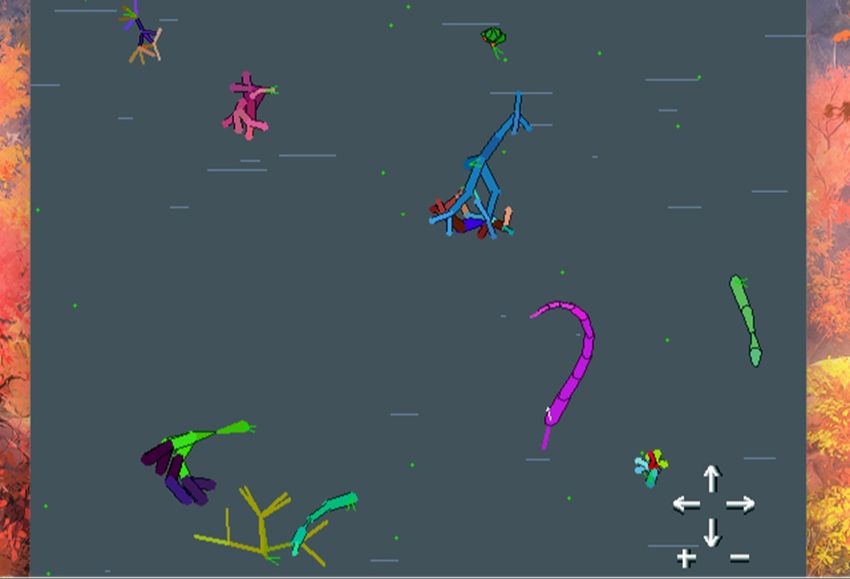
Is it possible to understand evolution through simulation? It would seem so. A very interesting resource for high school science classes.