Learn the mechanisms of misinformation with Bad News
Understand the strategies of online disinformation through an interactive experience that puts you in the shoes of a fake news propagator.
Publish at January 15 2025 Updated January 15 2025



Skiing is an extremely impressive discipline at the highest levels of competition, and a great pleasure for frequent skiers. However, it's important to master the techniques involved; this is a technician's sport, even when it comes to speed. One of the first things you need to know is how to turn. Because, apart from on very simple, very straight runs, every skier is going to have to turn regularly to get a good downhill speed and stay on the inside of the slopes.
One of the elements of the turn is the transition, i.e. the moment when the descender passes from right to left in a turn and so on. This critical moment may seem complex, but this Quebec-based capsule uses a light-hearted approach and filmed examples to show what techniques are possible. Indeed, as the presenter explains, there's a bit of a debate about transition methods in skiing.
For him, it all depends on the skill and ease of the individual. Those who are just starting out or who want a gentler approach will adopt the one where they shift the pressure from one leg to the other in a moment that allows them to refocus. Simply avoid being too stiff or having too low a center of gravity, so that control of the movement is more fluid.
Those wishing to get closer to the skiers at the Olympics can opt for the technique where the legs do all the work of moving from side to side. The two approaches can even be hybridized if it's easier for the skier.
Duration: 9min48
You might also like:
Learn the mechanisms of misinformation with Bad News
Understand the strategies of online disinformation through an interactive experience that puts you in the shoes of a fake news propagator.
"Space Shelter: Google's cybersecurity game
All our lives have an online component. As a result, a large proportion of Internet users are at risk of being tricked by hackers. A short game invites Internet users to remember certain elements of cybersecurity using a space theme.
Koam, playing with balanced nutrition
A veritable showcase for public health, Koam was developed by Nutrikeo, a consulting firm specializing in nutritional strategies. Supported by BPI France, the Nouvelle Aquitaine region and Europe, Koam is the result of two years' work by a team of leading specialists in nutrition, childhood, pedagogy, sociology, digital and behavioral theory.
"Phalenes! understanding natural selection through play
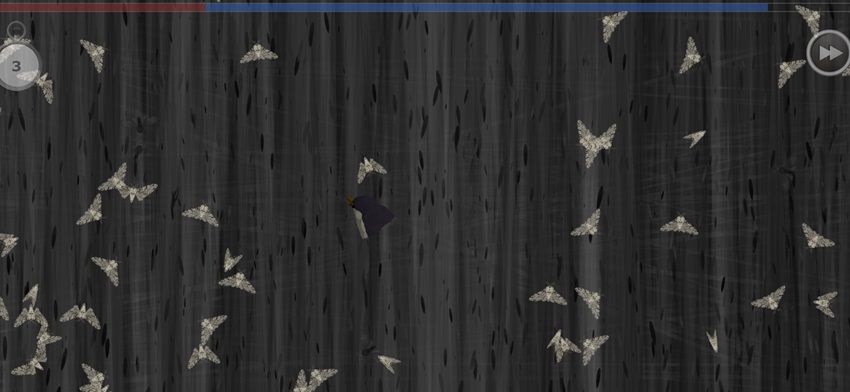
A serious game designed to demonstrate natural selection and its effects on a moth population.