The engineering sciences, applied to complex technological objects, enable us to create or improve an existing system to meet expressed or future user needs. From study to design, through modeling and simulation, they require rigor, practicality and perseverance.
Above all, an engineer must be rational. He must give priority to facts, remain attentive to the cognitive biases naturally induced by the interplay of hypotheses, and focus on irrefutable proof, even if it means calling everything into question if a single element contradicts the forecasts. It's a scientist's prerogative to have a sharp critical eye for what he produces or predicts. However, it is not uncommon for the scientific process to get bogged down, stuck in unsolvable impasses or going round in circles with no acceptable way out.
Geniuses who listened to their intuition
Such was the case of August Kékulé, an eminent German chemist who had been working for weeks on the structure of the benzene molecule, whose formula, C6H6, he had discovered. However, none of the linear or branched forms fit this formula. So he stumbles over the representation of this bizarre molecule. He himself recounts that he discovered benzene's cyclic structure while daydreaming in front of a roaring fire, when the image of a snake biting its own tail appeared to him (1).
Many scientists recount such "Eureka!" moments.
To illustrate the curvature of space-time in his theory of general relativity, Einstein compared the universe to a suspended sheet of rubber. This taut sheet deforms at the location of heavy objects - stars, planets, galaxies and so on. To envisage and explain the universe in all its complexity, this vision is astonishingly synthetic, simple and symbolic.
- Einstein, again, imagined the theory of relativity by visualizing a chase with a ray of light.
- Archimedes, looking for a way to show that the crown offered to the King of Syracuse contained only gold, discovered his theorem in a public bath.
- Niels Bohr, physicist emeritus, was unable to understand the structure of an atom. It was during a dream that he visualized an atom with electrons gravitating around it.
- Mendeleïev and his periodic table, which represents all the chemical elements in ascending order of atomic number and predicts the existence of elements not yet discovered,
- Planck and the quantification of photon energy,
- Elias Howe, inventor of the sewing machine.
So many examples of genius ideas seemingly falling from the sky to find a solution to a seemingly insoluble problem.
But these "illuminations" don't come out of nowhere. As Pasteur used to say:"Fortune only smiles on well-prepared minds". Max Planck spent years working on blackbody radiation before his revolutionary insight into quanta. Leonardo da Vinci filled entire notebooks with meticulous observations before conceiving his visionary inventions.
What neuroscience tells us about intuition
"It's with logic that we prove, and with intuition that we find.
said mathematician Henri Poincaré. And he continued in " The Value of Science ".
"This shows us that logic is not enough; that the Science of demonstration is not science as a whole, and that intuition must retain its role as a complement, I was going to say as a counterweight or counterpoison to logic ".
And he was right! Neuroscience research shows that intuition is not a mysterious sixth sense, but the result of ultra-fast information processing by our brains.
And surprise, surprise: according to neuroscientist Antonio Damasio (2), our bodies play a key role in intuition! By studying patients with brain lesions that deprived them of their emotions, he discovered that they became incapable of making effective decisions, even if they retained all their logical abilities.
In fact, our bodies are constantly sending subtle signals to our brains. These somatic markers, as Damasio calls them, help us make quick choices by unconsciously alerting us when something is "wrong" or, on the contrary, when a lead seems promising. It's as if our bodies store the experience of thousands of past situations.
When we solve a problem, two systems work in parallel: system 1, fast and intuitive, and system 2, slow and analytical (thanks Daniel Kahneman!) (3). Intuition is our brain's ability to recognize patterns we've already encountered, without the need for conscious analysis. It's like instantly recognizing a friend's face, without having to analyze every feature. In his book "Archimedes' Cry" (4), Arthur Koestler describes the phenomenon of "bissociation", and attempts to model a fundamental structure that would unite scientific and artistic creation, linking previously dissociated elements like a jigsaw puzzle.
When intuition plays tricks on us
But intuition is not infallible, even in the greatest minds! The history of science and technology is full of intuitive predictions that have turned out to be spectacularly wrong (5). Who would have thought that Einstein himself would be wrong about the potential of nuclear power? Or that renowned economist John Maynard Keynes would be so wrong in predicting a 15-hour working week thanks to automation (5)?
The problem? Our intuition is excellent for simple, direct relationships, but struggles to grasp complex systems with their cascading effects. It's like trying to predict the final shape of a house of cards when you've only laid down the first card. The creators of science-fiction works sometimes imagine futuristic cities with flying cars... but with fairly conventional cell phones, as in the film "The Fifth Element".
How to develop your "intuitive muscle" (and know when to distrust it)
Good news: intuition can be worked on or awakened. Here are a few practical engineering exercises to help you develop your intuition.
To develop intuition :
- Reverse brainstorming: Before plunging into calculations, note down your first impressions of a problem. These initial intuitions are often surprisingly relevant.
- Creative analogy: look for parallels between a technical problem and natural phenomena. Biomimetics has given rise to many innovations!
- Active meditation: 5 minutes of conscious pause between two work sessions allows the brain to make unexpected connections.
- The intuition notebook: noting down your intuitions and then checking their relevance enables you to gradually refine your "intuitive radar".
Learn to recognize their limits:
- The doomsday scenario game: For each intuitive solution, imagine three ways in which it could unexpectedly fail. This exercise often reveals blind spots in our intuitive thinking.
- The scale challenge: Propose a simple problem (such as calculating the cost of a project), then gradually change the scale (from 10 people to 10,000, from 1 month to 10 years). Intuition excels on small scales, but becomes less reliable as the numbers increase.
- Domino effects: when faced with a technical solution, list the cascading consequences on 3 or 4 levels. For example: automation of a task → reduction of jobs → necessary retraining → new training needs. Our intuition tends to stop at the first level.
The key is not to systematically distrust our intuition, but to learn to recognize situations where it is reliable from those where it can lead us astray. In general, it is necessary to distrust intuition when :
- The problem involves large numbers or unusual scales;
- The situation involves many interdependent variables;
- The stakes are critical (safety, major investments);
- The context is new, radically different from past experience, or outside one's field of expertise.
Intuition, a skill needed by engineers, not just geniuses
No, intuition is not a gift reserved for geniuses. It's a skill that develops with practice, experience and... self-confidence. There's nothing magical about it: it's our brain using all its computing power in "silent" mode.
Tomorrow's engineer won't just be an expert in equations: he or she will also be an assertive intuitive, capable of combining analytical rigor and spontaneous creativity, while knowing when to trust his or her intuition and when to question it. And that's probably where the key to future innovations lies!
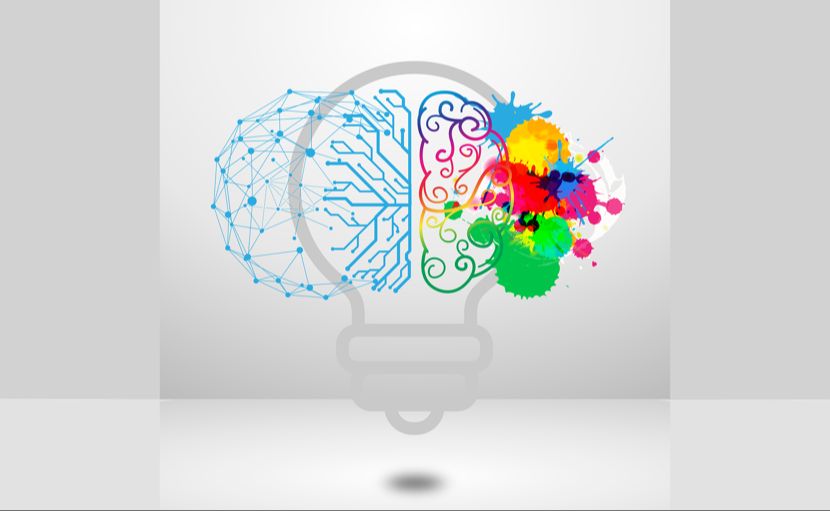
Illustration : Source : https://stock.adobe.com/fr File reference: 567276122. Free resource
References
(1) Société Chimique de France- Kékulé and the discovery of the structure of benzene https://new.societechimiquedefrance.fr/produits/friedrich-august-kekule-von-stradonitz/
(2) Antonio Damasio- Neuroscience and decision-making: the role of emotions http://www.sietmanagement.fr/neurosciences-emotions-et-decisions-a-damasio/
(3) System 1 / System 2: The two speeds of thought - Daniel Kahneman https://fr.wikipedia.org/wiki/Syst%C3%A8me_1_/_Syst%C3%A8me_2_:_Les_deux_vitesses_de_la_pens%C3%A9e
(4) Arthur Koestler - Archimedes' Cry - 2011 https://www.lesbelleslettres.com/livre/9782251200163/le-cri-d-archimede
(5) Six emerging trends that could transform the world- Anticipating tomorrow's world is notoriously difficult, even for experts. https://www.wired.com/sponsored/story/qinetiq-innovations-edge-six-emerging-trends-report/
See more articles by this author