Publish at February 12 2025Updated February 12 2025
The Art of Criticism: creative confrontation
Criticism is not an obstacle but a driving force in the creative process
Does criticism frighten or inspire excellence? Used properly, criticism is a lever for progress, helping to transform something raw into an accomplished work.
Criticism as a mirror of the creative process
Criticism must be part of the creative process. It offers an outside view of the creator's work. It allows you to see your work from a different angle, as it highlights aspects that may escape the eye of someone who is immersed in their project, with their nose to the grindstone. When we're creating, we're egocentric, i.e. often focused on our own vision. This can limit our ability to spot weaknesses or opportunities for improvement.
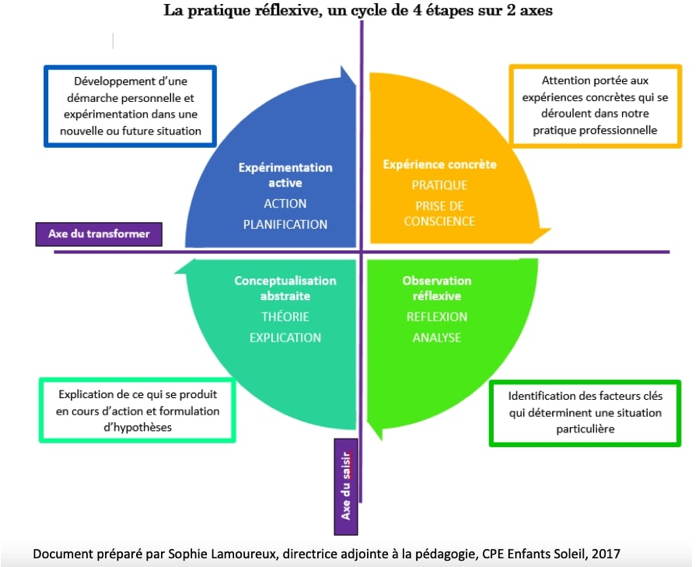
When criticism is constructive, it acts as a tool for revealing these elements and enriching thinking. This idea is inspired by Donald Schön's work on "reflective practice". It highlights the importance of observing oneself and evaluating one's work in progress.
According to Schön, the creator must be able to interact with his work and question his choices. External criticism extends this approach by providing a fresh perspective from an outside observer. It helps to break out of the isolation of creation and initiate a dialogue that leads to a better understanding of one's work.
Ref : Le Praticien réflexif, - Donald A Schön, Jacques Heynemand and Dolorès Gagnon https://amzn.to/3CzXVr3
As a result, criticism is not just an evaluation, it is also, and above all, a means of progress. It helps to identify strengths and weaknesses, to go beyond one's own limits and to refine one's project. In this sense, it is an integral part of the creative process, transforming an individual approach into a constructive exchange with others.
The benefits of exposure to a critical eye
Exposure to critical scrutiny forges two essential skills: resilience and openness to feedback. These qualities, far from being innate, are acquired and strengthened through the experience of feedback, provided it is positive or constructive. For a designer, accepting that his or her work be scrutinized, analyzed and even questioned requires inner strength. It is this confrontation that allows us to grow.
Resilience - and we're talking about it more and more because it's so important - is built when the designer learns not to perceive criticism as a personal attack. You have to be able to dissociate the work from its author. You have to see it as an opportunity for improvement.
Carol Dweck 's work on the growth mindsetis a good illustration of this principle. According to Dweck, those who adopt a growth mindset perceive challenges and feedback as opportunities to learn and progress. They avoid perceiving them as definitive judgments on their abilities.
In the creative context, this approach encourages people to see each criticism as a step towards a more accomplished version of their work, rather than as a failure.
Openness to feedback is the second element. It involves actively listening, understanding other people's perspectives and incorporating relevant suggestions. This attitude strengthens the ability to evolve. Indeed, it enables the designer to step out of his or her comfort zone and explore new directions. Feedback, even when it's hard to hear, acts as a catalyst for innovation, prompting people to question their choices and refine their ideas.
Transforming ideas with constructive criticism
Constructive criticism acts as a lever for refining and improving ideas, transforming raw concepts into finished works.
When an idea is born, it is often imperfect, marked by blind spots or inconsistencies that an outside eye can help reveal.
Criticism (benevolent and precise) acts as a tool for iteration. It helps sculpt the initial idea to extract its full potential. It doesn't just point out what's not working; it suggests avenues, perspectives and adjustments to enrich the creative process. This mechanism is directly inspired by the principles of design thinking, which places iteration at the heart of creation.
In this approach, an idea is never set in stone: it is tested, evaluated and refined through feedback cycles. Constructive criticism plays a key role in these cycles, providing feedback that identifies weaknesses and reinforces strengths.
For example, a teacher designing a lesson might discover, through a critique, that his or her explanations lack clarity for students, or that a proposed activity is not adapted to their level. A pedagogical trainer might realize, following feedback, that his visual support is too busy and distracts learners rather than helping them to concentrate.
These observations, far from being obstacles, become springboards for improving the quality of teaching. The transition from a raw idea - a lesson or project activity - to an accomplished learning experience thus relies on this constant dialogue between the teacher and criticism, whether it comes from colleagues, students or observers. Each feedback is an opportunity to reassess, readjust and perfect, until the lesson reaches its most effective and engaging form.
Cultivating a culture of continuous learning and improvement
For criticism to become a driver of creativity, we need to value questioning and evolution. This is based on the idea that learning is a continuous process. Every project, every idea, is a step towards a better version of yourself and your work. By encouraging curiosity and openness, we transform creators into perpetual learners, capable of adapting and innovating in the face of challenges.
Critical dialogue is at the heart of this dynamic. When integrated into a collaborative environment, it fosters collective learning and innovation. Collaborative learning theories, such as those developed in work on group dynamics, show that ideas progress more rapidly when individuals share their perspectives and enrich each other's work.
Discernment: when to listen and when to ignore criticism
In the creative process, everyone needs to know how to discern criticism in order to make the most of it. Not all criticism is equal. Their value often depends on their source and motivation. Constructive criticism, formulated with kindness and precision, can shed light on aspects of the work that need to be improved. Conversely, destructive or irrelevant criticism, motivated by jealousy, misunderstanding or a simple desire to harm, can be counter-productive and damage the creator's confidence. Measuring the legitimacy of criticism is therefore a key skill. To distinguish constructive from destructive criticism, several criteria can be taken into account.
the intention of the critic: is he or she trying to help or discourage?
it's important to assess the relevance of the feedback: is it based on a real understanding of the work, or on personal prejudice?
the way in which the criticism is formulated also counts.
Interpersonal communication models, such as Marshall Rosenberg's non-violent communication, stress the importance of respectful and specific language. Constructive criticism :
focuses on concrete aspects of the work,
offers suggestions for improvement,
avoids general judgments or personal attacks.
For example, saying "this part of the text lacks clarity, perhaps by simplifying the structure" is more useful than "this text is confusing and badly written". Knowing how to ignore certain criticisms doesn't mean rejecting all feedback, but rather protecting your creative process from negative influences. This requires discernment and self-confidence, while remaining open to perspectives that can enrich the work. You need to find this balance to move forward without being paralyzed by unconstructive opinions.
Always better
When used properly, criticism is a powerful tool for nurturing creativity and innovation. It acts as a catalyst, pushing creators to go beyond their first intuitions, to refine their ideas and produce more accomplished works. By exposing themselves to constructive feedback, designers learn to see their work in a new light, identify their strengths and fill in their gaps.
Today, the proportion of new students remains relatively stable but the needs are diversifying. Politically, the movement is towards inclusion. National education is happening at the local level, where schools are located. Educational needs and practices are changing so rapidly that school organization and design are on the agenda.
Exploring parallel fields of activity in a world increasingly invaded by AI is a necessity. At this level, experience and skills acquired along the way need to be revisited. This involves a digital detox and an exploration of the various possibilities that will lead to the choice of an inspiring activity.
Based on educational trips, a vision of the forms of educational leadership in England, India, Quebec, Finland and France. We can take different reference systems to orient ourselves towards quality learning.
Trace, history, the past: 3 interrelated but distinct notions. The memory of all and the ecosystem of the thinker will make interpretations go right or left, adding another layer to the general story.