Creativity is an ambition that many schools include in their curriculum. Imagination comes with it. Only there are a few challenges to overcome in order to make this skill a reality...
Physically, we are forced to create from pre-existing elements. In the world of ideas, we might think that the possibilities are more open, but at the risk of being misunderstood, we prefer to create from shared referents. The acquisition and development of knowledge goes hand in hand with the capacity for imagination. In other words, the more referents we have, the greater our imaginative potential.
But a new reality is transforming the world of creation: artificial intelligence. They have access to more referents than any human mind will ever be able to grasp. What's more, connected to us via networks, they feed off the whole of contemporary human production. Even the most disconnected creator will be included as soon as he or she makes a public appearance - and the same applies to prehistoric artifacts that are in the process of being unearthed.
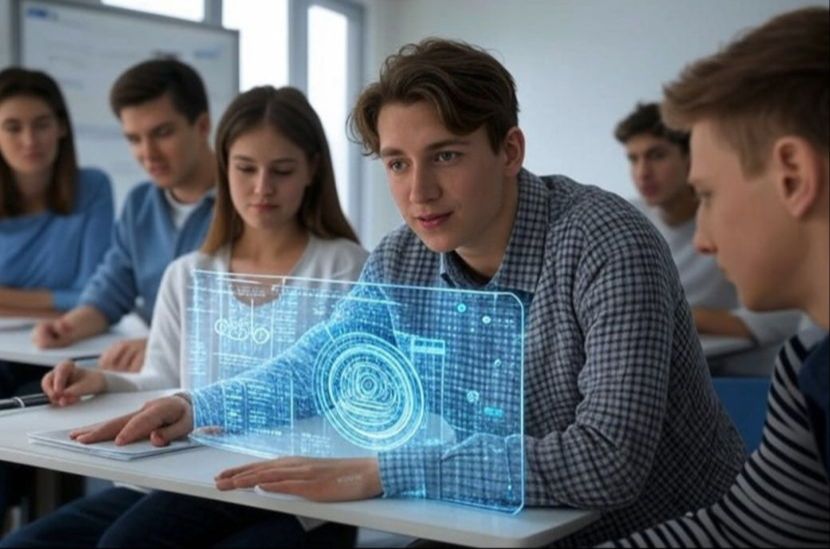
So shrewd creators see A.I. as a tool that enhances their possibilities tenfold, rather than as a creative entity in its own right, as it may appear once launched. Behind every A.I. production a human has assigned a mandate, defined goals, challenged it. People with no technical artistic skills can now become creators.
Normally, without technique or know-how, it's difficult to bring a vision to fruition. Writing, drawing, method, expression, organization.... until technique is mastered, production remains deficient. A.I. is not concerned with developing a technique: it has access to the best developed techniques. It can imitate all known styles and hybridize them at will. With Tolkien, Le Corbusier and Pratt, it can suggest a medieval adventure for Corto Maltese in a post-war architectural city... but it's not certain that the public would be very interested in such a story.
Confrontation and criticism are necessary to arrive at a meaningful work, if only to discover what is acceptable and what is not, and how to present it. Here again, A.I. has an advantage: through historical analysis and/or user feedback, it can quickly estimate what works and what doesn't towards the creator's goals. The risk of standardization is very real, and the Narcissus effect lurks. Fortunately, the true creator can direct A.I. towards more edifying goals than those of the prevailing materialism.
The potential of A.I. challenges our approach to creativity. If schools really want to promote creativity and imagination, they must go hand in hand with access to knowledge and skills. Knowing how to use A.I. is obvious at every level: in the arts, in science, in relationships, in organization, in ambition. All that remains is to be inspired.
Denys Lamontagne - [email protected]
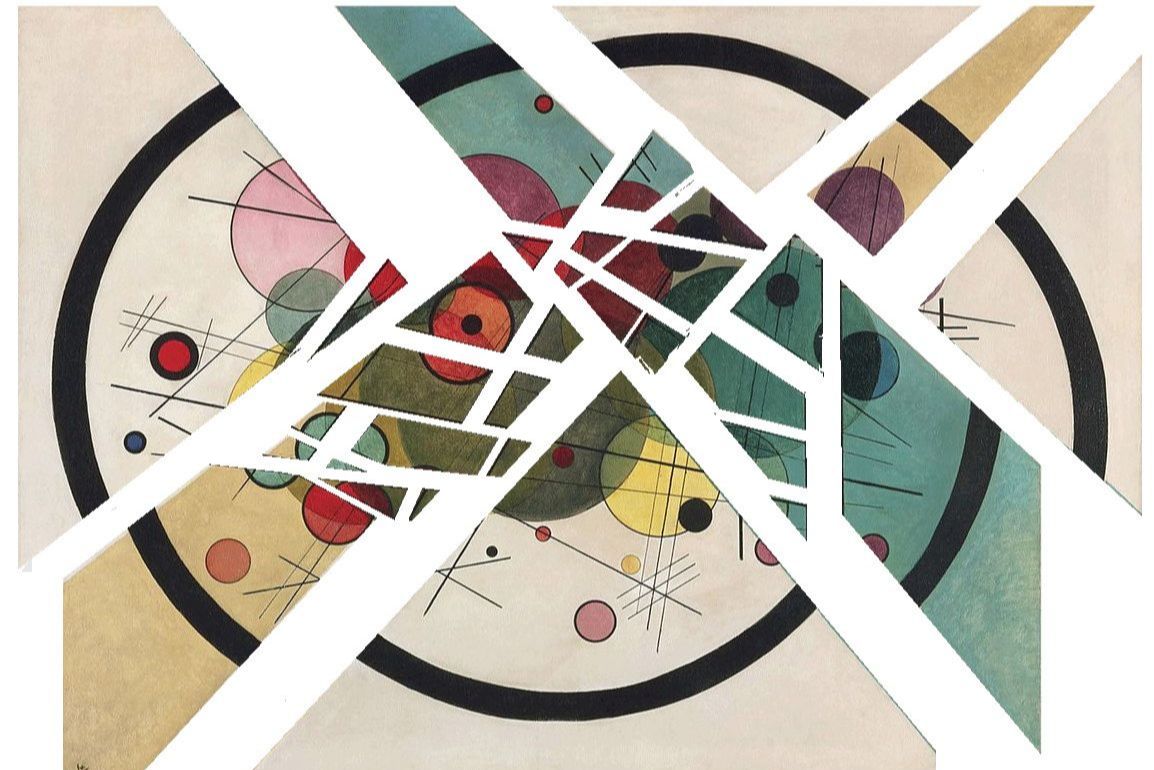
Illustration: Deconstruction of a painting by Vassily Kandinsky - Original