Towards the economy of functionality and cooperation (EFC)
An alternative to the mass production economy that focuses on uses and immaterialities
Publish at February 12 2025 Updated February 12 2025



The Middle Ages is a period in history that has never ceased to inspire people. Since the 16th century, thinkers and artists have revisited this period of history, or copied it to imagine imaginary possibilities. In this podcast, medieval historian William Blanc explains the phenomenon of medievalism, that is, this phantasmagorical vision of the Middle Ages. Tolkien, with his Lord of the Rings, is far from having invented this approach. For centuries, thinkers have been reflecting on the period following antiquity, and the historical figures and elements of that era.
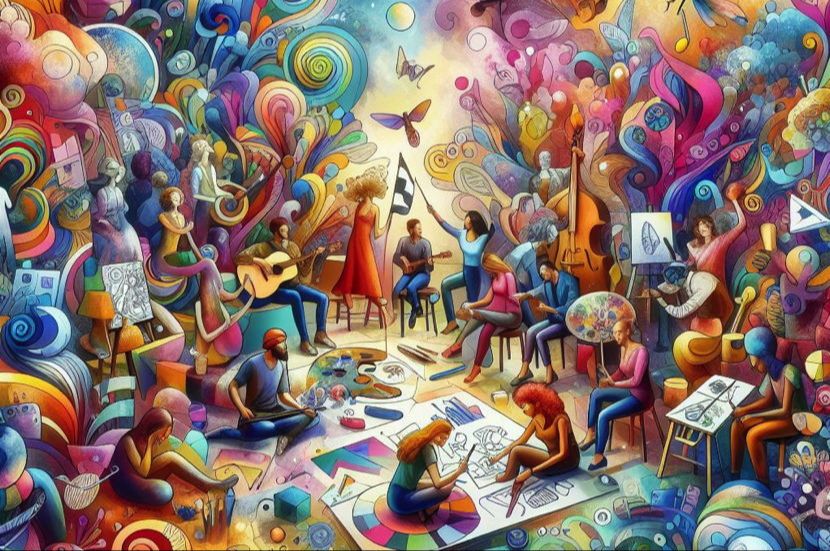
We can discern two medievalist approaches: golden or dark. The former show fantasized images of knights and magnificent castles, and have fun adding magic or depicting it in very colorful ways.
On the other hand, some portray it as a very obscurantist, outdated period of war, disease and betrayal for power. Author George R. R. Martin took this approach with his Iron Throne series in reaction to the Disney vision displayed in his films and theme parks. Medieval festivities will often take on a gilded look, but some re-enactments will focus on the darker aspects.
It all depends on the creator's vision, his era and what he wants to show. But is this medieval fantasy dangerous for the real vision of the Middle Ages? Yes and no, answers William Blanc. It is when it serves political propaganda that distracts from true historical facts. But it does no harm to those who simply want to immerse themselves in a mythologized universe outside our own. In fact, many people who enjoy this imaginary approach are also interested in historical facts, and the historian is regularly invited to parties to add nuance and answer questions.
Running time: 49 minutes
Learn more about this resource
You might also like:
Towards the economy of functionality and cooperation (EFC)
An alternative to the mass production economy that focuses on uses and immaterialities
The innovator's posture and conditions for success
When the innovator's posture meets favorable conditions, then it's possible to scale the difficulties inherent in innovation.
Regularity and creativity: two incompatible concepts?
Creativity and regularity are not very compatible concepts, since the former refers to the ability to innovate, to step out of one's comfort zone, while the latter refers more to routine constancy in a field. However, it seems plausible to consider regularity as a pivotal step towards creativity.
Neuromyths that persist in schools
Neuroscience is young. Indeed, they are fascinating, and may hold the key to our brains. But for the time being, researchers still know very little. As a result, early hypotheses are often overturned by new discoveries. Yet these myths continue to be perpetuated by schools, much to the dismay of scientists.
Carrying out a distance learning course in a few days... but how?
The progression of the Covid-19 epidemic, once thought to be linear, is proving to be exponential. In a minimum of time, and to meet containment constraints, trainers and teachers must adapt their courses for distance learning. How can they do this? We interviewed two specialists, Christine Vaufrey and Jean Vanderspelden, to get some advice for those who would be starting in a hurry without being used to e-learning, and for the others.