Publish at February 19 2025Updated February 19 2025
Will translators be replaced by robots?
The growing power of automatic translators
The question of translation automation is not new. For over a century, researchers have been trying to find a way to decode one language into another using machines. Computers immediately stimulated this dream, and IBM tried to translate Russian scientific articles into English using their system. It wasn't ideal, being able to recognize only 250 vocables, but it remained a model for a long time.
Then came automatic translators like Google Translate and others. They learned by memorizing linguistic rules. For example, in French, the verb is usually in the middle of the sentence, whereas in German, the verb ends the sentence. A more efficient approach... but one that still led to thousands of absurd translations, many of which were mocked online. Nowadays, translators learn by neural networks and by assimilating documents. By dint of reading files in French and English, they come to understand the similarities and offer impeccable transcriptions.
The danger, however, lies primarily in the predominance of English, which has become the "lingua franca" online. This can hamper translations between languages with fewer common corpora, e.g. transpositions from Japanese to French. Another problem is that today's bots now learn a great deal from their own achievements. Anyone who has spoken to a conversational bot knows that the language used is average: correct language level, no errors but no frills or understanding of homonyms put together. Will we end up with average translations and writings?
Perhaps this is where translators hold the key to keeping their jobs: they can make the work they do more humane.
All our lives have an online component. As a result, a large proportion of Internet users are at risk of being tricked by hackers. A short game invites Internet users to remember certain elements of cybersecurity using a space theme.
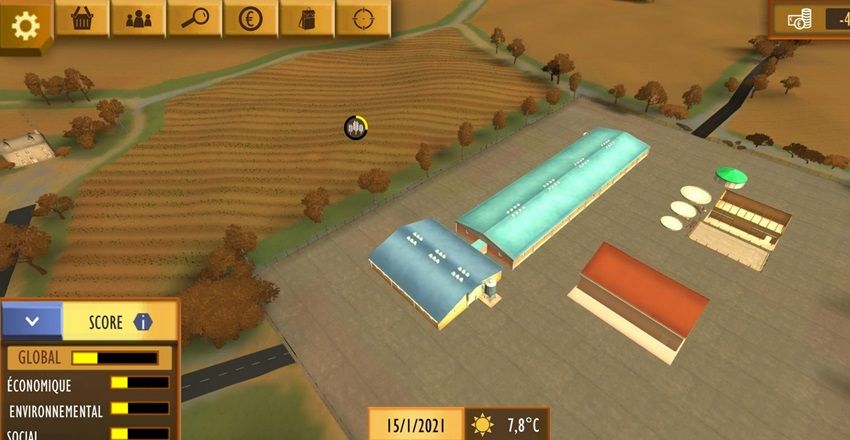
There's nothing simple about being a farmer. You have to plan your activities throughout the year, make sure you have the right machinery, maintain it and so on. All with a view to ecology. A serious French game seeks to teach agroecology.
Many serious games address the topic of sustainable development. Yet before such solutions were proposed, innovative people had to go against the social grain and fight to improve their environment. A humorous adventure game, hosted by the National Film Board, teaches children the attitudes they need to adopt to make a difference.