Many people have the impression, looking at recent events, of seeing a resurgence of the totalitarianism that took place around the 1930s in the 20th century. As a result, the thinking of one philosopher is back in the spotlight: that of Hannah Arendt.
Having herself had to flee the Nazi regime in Germany in 1933 and occupied France in 1940, she witnessed the rise and fall of these regimes. Her thinking is therefore built around this phenomenon. First of all, she differentiates totalitarianism from dictatorship in that it seeks to seize all social elements and individuals and isolate them by creating a climate of conspiracy and paranoia.
Next, she talks about the fact that alienating work has led to the banality of evil. For her, in a normal society, work leads to work (i.e. concrete traces) and action, which enables individuals to rise. Nowadays, however, and even then, the emphasis is solely on work, leading humans to become "animal laborans", incapable of transcending themselves. Which, of course, totalitarian rulers love. So, to get by, everything relies on action or activity, forcing us to confront other people, to reveal ourselves and discover them, in order to build a common world.
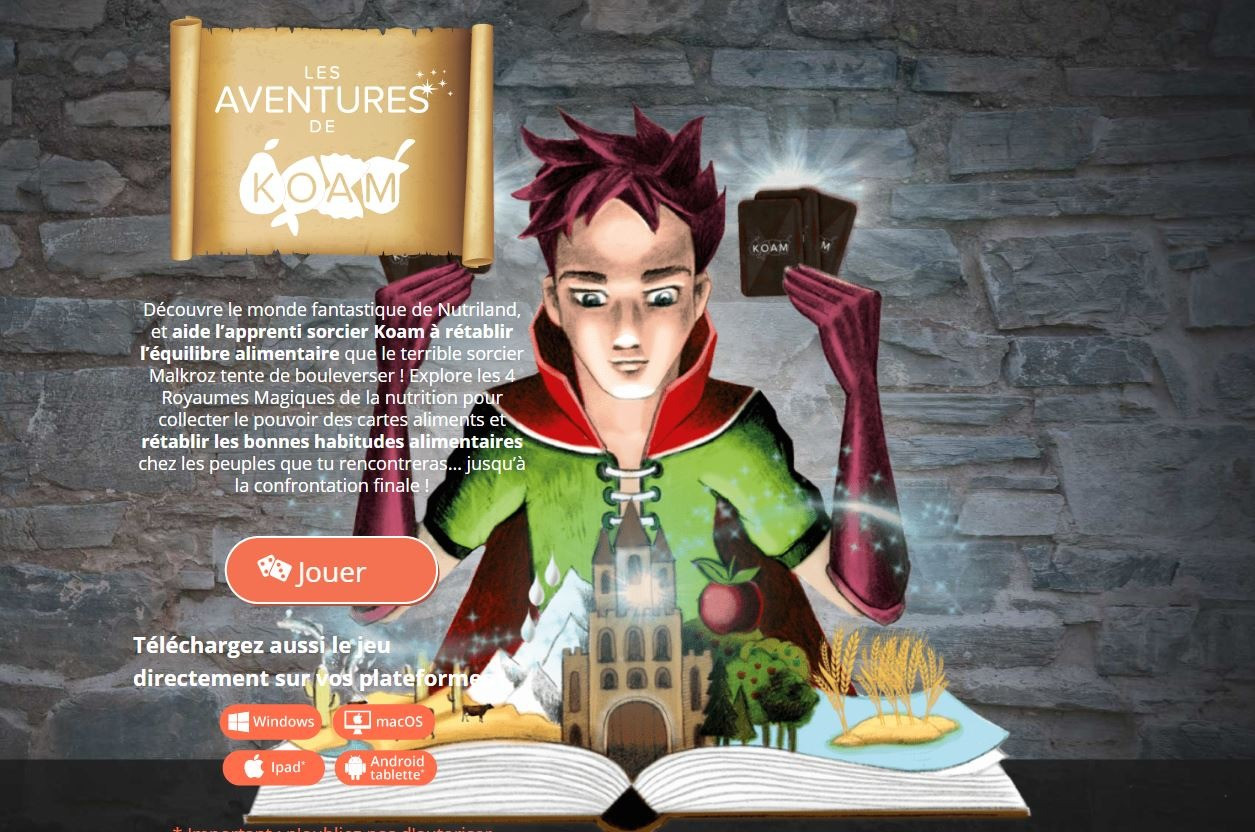
A veritable showcase for public health, Koam was developed by Nutrikeo, a consulting firm specializing in nutritional strategies. Supported by BPI France, the Nouvelle Aquitaine region and Europe, Koam is the result of two years' work by a team of leading specialists in nutrition, childhood, pedagogy, sociology, digital and behavioral theory.
The sharing economy has led to small changes in various economic sectors such as transportation, housing, etc. This approach has changed the relationship of citizens for different services, now cheaper and offered by their fellow citizens. However, who actually benefits from this new economy? The people or the companies in question? A U.S. newsgame shows how the life of Uber drivers isn't as lucrative as one might think.
Many serious games address the topic of sustainable development. Yet before such solutions were proposed, innovative people had to go against the social grain and fight to improve their environment. A humorous adventure game, hosted by the National Film Board, teaches children the attitudes they need to adopt to make a difference.
Measuring attention remains a concern in many settings. Some work tasks are not very error tolerant.
Here are a series of sample tests to measure attention in children and adults.