It's enough to find yourself in an exceptional situation where survival is at stake (flood, fire, earthquake) to discover in others a tenfold capacity for mutual aid and an empathy hitherto unknown. Those moments when each person does his or her part without question, and when each small contribution, put together, forms a great whole.
Could human beings rediscover the WE with the ecological challenges ahead?
A question of scale: economic metaphor and the first steps towards collective resilience
J.P. Goux's reflections help us take this step. Imagine yourself as part of a greater whole. If humanity were in fact only a small part of a whole, this small part - though connected to the other small elements - would not visualize the whole, the whole to which it belongs. In the same way that a liver cell is not aware of the whole human body.
In the same vein, JP Goux imagines "the economy as the metabolism of humanity, i.e. the set of chemical reactions that enable humanity to live"(sources).
"If we think of humanity as a whole, all its activities represent the metabolism. When we look at the transition from the point of view of the whole, we realize that we have a creature (an economy) in overdrive, like some kind of autoimmune disease or cancer. To survive, the economy would necessarily become circular and regenerative, permaculture and agroforestry become self-evident."(sources)
Let's run with this metaphor.
The (metabolic) individual is just one element in a more general metabolism that is currently in overdrive. The functioning of the individual metabolism could clarify the functioning of the larger metabolism.
Our diet and our relationship with food accurately describe who we are.
In 2011, the Arte TV channel began broadcasting documentaries on the beneficial effects of fasting. Counter-intuitively, reducing or even eliminating energy intake would be beneficial to the body, and even a solution to many contemporary illnesses.
What would fasting be like in the image of planetary metabolism? The confinement caused by the covid 19 crisis gave us an extract. After the surprise, there was solidarity and calm, allowing everyone to refocus and get back to basics. Many people have made radically healthy life-changing decisions in the wake of the crisis. How can we reproduce the confinement model in an economically sustainable way? The paradox of this question provides us with a real problem - in the scientific sense of the word - to tackle.
In what way could the example of fasting in the diet of the individual and his multitude of cells, i.e. caloric intake stopped or even reduced to a minimum, be an avenue of survival for the economic system, a way of reinventing itself?
The importance of narrative
Since his work in the film"Demain" (2016), Cyril Dion has put forward the idea of a "narrative" need to understand the ecological crisis.
Cyril Dion is an environmental activist. He realizes that the struggle is above all a "battle of narratives" for humanity. In 2025, he directed "A New World", in which he "travels the world meeting actors who have revolutionized a region, a country or an activity, and sketches out a new narrative: that of a fairer, more ecological world."
In his view, human beings are "a fabulist species. Since the dawn of time, we have built our lives around myths. But what about today's ecological narrative? Will it succeed in supplanting the dominant mercantile narrative? With what images can we tell this new story?" Sources
The activist sees fiction as a powerful tool for transformation. Stories can also be bearers of solutions, hopes and concrete, viable alternatives. For example, sustainable development, the symbiotic economy, permaculture, participatory democracy. Television, cinema, advertising and, above all, social networks shape our perception of the world and can reinforce or challenge dominant narratives. The representation of certain groups - for example, a black president in 24 Hours - can open or close the way to social transformation.
In his view, the battle of narratives is a balance of power. Changing society involves bringing out, sharing and gaining acceptance for new narratives, while confronting those who defend the status quo, often for economic or ideological interests. Moments of crisis or historical catalysts - such as the suffragettes, the ecological crisis, or the Gilets Jaunes movement - can accelerate these mutations.
In the same vein, J.P. Goux identifies what he calls "a major narrative problem behind the ecological transition"(sources)
What is the role of humans in the living world? In his view, this is the major question that needs to be addressed in order to shed light on what this question presupposes. Not to question the usefulness of humans in the field of life would be tantamount to acknowledging that life is the work of human beings.
"What's the point of humanity is a major question that hasn't been asked! The fact that we have never said what purpose humans serve in relation to living things is problematic, and presupposes that living things belong to humans'(sources).
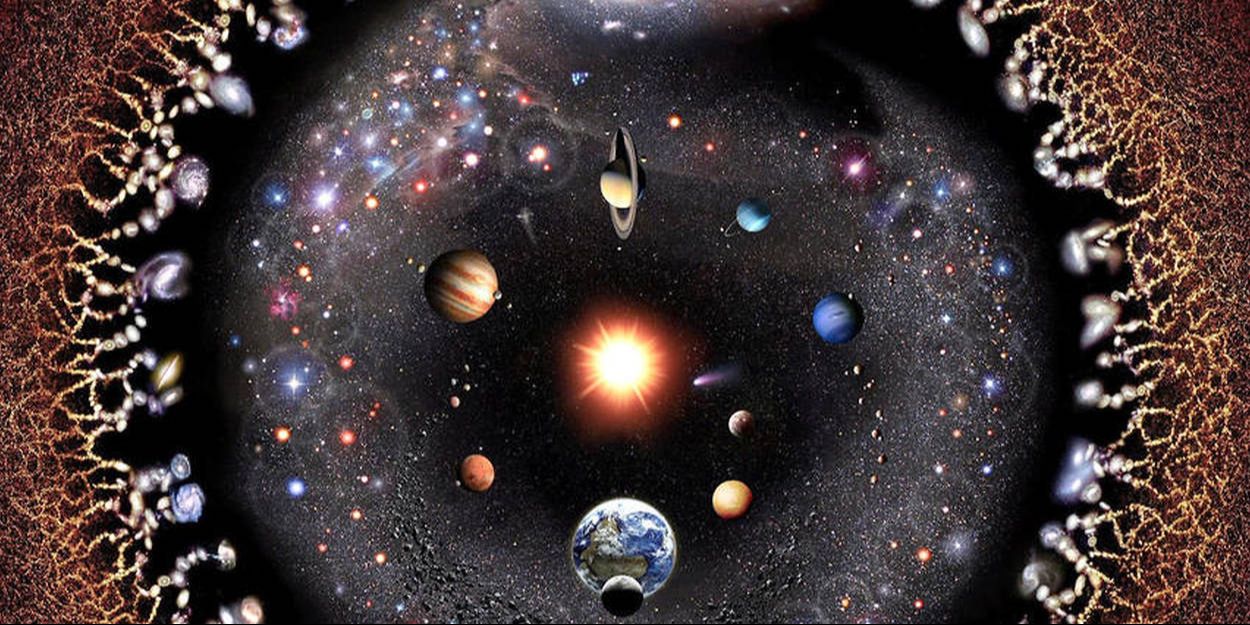
The Gaia hypothesis, formulated by chemist James Lovelock, is one possible answer. According to this hypothesis, the earth is a living being that maintains habitable conditions for all species.
This is the "global self-regulation hypothesis".
"It is only by considering our planet as a living entity that we can understand (perhaps for the first time) why agriculture has an abrasive effect on the living tissue of its epidermis, and why pollution poisons it just as much as it does us. "
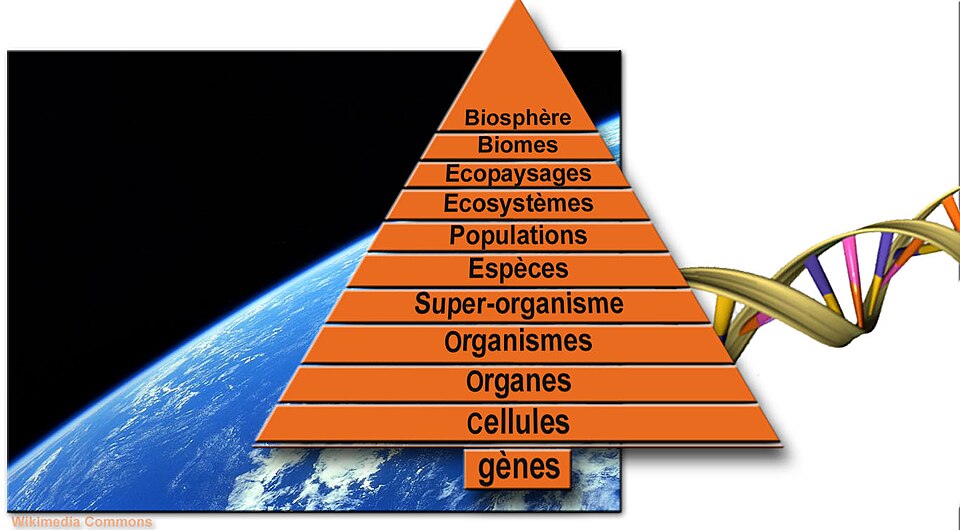
The concept of the Biosphere - coined by Austrian geologist Eduard Suess in the late 19th century - provides the theoretical framework for the Gaia hypothesis. The biosphere is "the totality of living organisms and their living environments, i.e. the totality of ecosystems present" on the planet(wikipedia sources).
James Lovelock even uses the term symbiosphere "to emphasize the interdependence between species and the whole they constitute.
Change of state
Percolation: much more than a coffee-making technique, percolation is thought to be the key to the formation of planetesimals, the precursors of planets(sources).
Percolation is a phenomenon we're all familiar with, and one that describes how coffee is made. "water works its tortuous way through the ground coffee beans" and "imbibes the coffee's aromas, giving your beverage its full flavor."(Sources)
More than that, percolation theory - a mathematical theory - describes changes in states and behaviours at the individual level, and also a change on a collective scale enabling a tipping point at the societal level. The propagation of a wave of planetary awareness is a tipping point that many hope to observe from the collective.
Sean Bailly (2018) "Percolation, key to planetesimal formation" Pour la science , February 9, 2018 , https://www.pourlascience.fr/sd/geosciences/la-percolation-cle-de-la-formation-des-planetesimaux-12793.php
"the massification of higher education has led to the arrival of "new students", including, for example, the "in spite of ourselves" of higher education. (...) The opposition between success and failure has led some students to place themselves in an in-between position. Another way of looking at university.
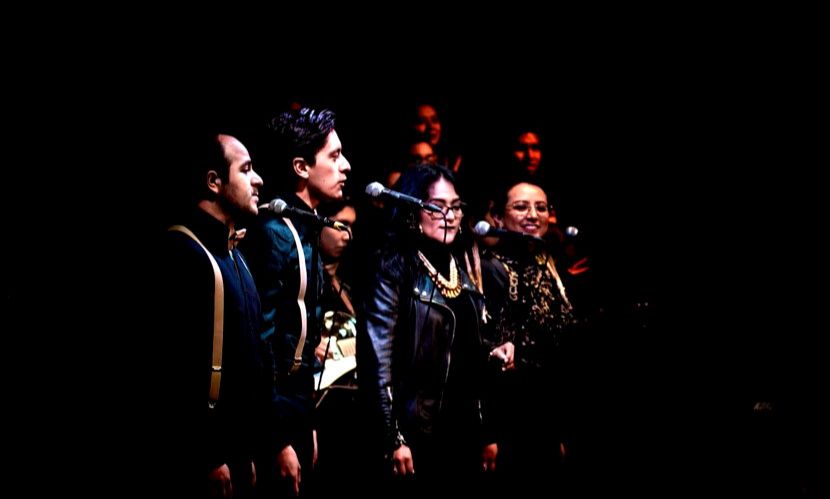
This article examines a variety of community songs and their effect on our ability to do and learn together, to strengthen our communities and to vibrate with the same impetus rather than become disunited.
Living in a city means gradually making it your own, knowing shortcuts, transport arrangements, timetables, rules of behavior, and precautions to limit the risks of aggression. But what if this knowledge gradually becomes obsolete? Indeed, thanks to Big Data and artificial intelligence, cities are "learning" and adapting to the habits of their inhabitants...
Taking the time to do things for yourself or for others... You just have to get your head out of the game before it's too late. You'll be able to take advantage of it, feel useful or develop personally.



 Percolation: much more than a coffee-making technique, percolation is thought to be the key to the formation of planetesimals, the precursors of planets