We are used to learning alone. The system was designed for students to acquire the material by themselves. However, it is possible to learn as a team, even at a distance. A pedagogical approach that requires preparation, but which bears fruit.
Publish at May 21 2025 Updated May 21 2025


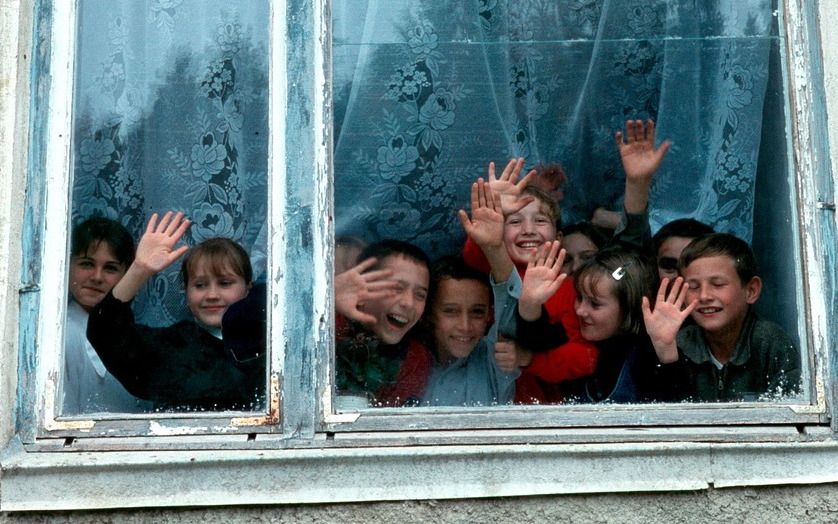
School, or at least the education of children, becomes compulsory around the age of 5 or 6 in most developed countries. From that moment onwards, it has become one of the main vehicles for children's socialization. Like the family, which until then had been the prism through which children perceived the world, school became a place of emancipation, reflection and, above all, a place where they forged their first social bonds as they sought their own equilibrium.
This influence takes on particular significance for children from precarious backgrounds: single-parent families, economic instability, cultural uprooting or social marginalization. In such cases, school becomes much more than a place of learning. It becomes a stable point of reference, an anchor, sometimes even a refuge.
The school presents itself as an egalitarian setting, where social differences are supposed to be erased in favor of a common foundation of knowledge and values. It is also a space for intellectual and social development, enabling children to detach themselves from the representations of their family environment. It fosters access to other points of view and other models, encouraging each child to build his or her own personality, no longer solely through the influence of his or her family, but through contact with outsiders.
But this ideal comes up against a stubborn reality: the gap in cultural capital. According to the French Ministry of Health and Solidarity,
This linguistic disparity is not insignificant. It represents an invisible but very real barrier that has a direct impact on the educational integration of children from disadvantaged backgrounds. Indeed, mastery of language is at the heart of learning and socialization at school. It is a prerequisite for understanding instructions, expressing oneself, participating in exchanges, asserting one's ideas and even developing a sense of belonging to the school community.
The challenge is twofold: to enable children from disadvantaged backgrounds to integrate fully into the school system, while ensuring that the school is a place where their cultural diversity is recognized and respected.
In this context, the school plays a fundamental role, provided it is more than a distributor of programs. It can be a place of support, thanks in particular to the human links that are forged. Teachers, supervisors and educational staff can become reference figures, providing emotional support in lives where balance is fragile.
When a child finds at school a listening ear, a sincere attention, a benevolent presence, it can make all the difference. How many children become so attached to their teacher that they project a kind of parental bond? This kind of relationship, however discreet it may seem, can profoundly influence a student's career path, restoring trust that has been damaged elsewhere.
Studies such as the ENFAMS survey conducted by Samu Social show that homeless children in Île-de-France often see school as a protective, even structuring, space in their chaotic daily lives.
Arriving in a new country often disrupts the living conditions of immigrant families, who can find themselves confronted with a variety of precarious situations. In Quebec, for example, a quarter of recent immigrant two-parent families with young children live on an annual pre-tax income of less than $30,000. Added to this are major difficulties in finding stable housing, with 92% of these families moving regularly, often to substandard accommodation.
Access to healthcare is also a challenge, hampered by a lack of information about the healthcare system and language barriers. The accumulation of factors creates a climate of social and economic instability that directly affects young people.
In this context, school appears to be a real pillar of stability and a structuring space for these children. It offers a regular, predictable and reassuring framework within which children can rely to get through the upheavals linked to their migratory journey. Children form bonds with their peers and learn the cultural codes of their new country.
The school can also act as an entry point for supporting families in their efforts, by facilitating access to information and services, and building bonds of trust with parents. Under these conditions, it helps to reduce the social vulnerability of immigrant children. Much more than a place of learning, this setting becomes a stable point of reference, an essential support in a path often marked by instability and precariousness.
In Education and Sociology, Émile Durkheim reminds us that school transmits a "common morality", necessary for social cohesion. It initiates students to community life, theoretical equality of rights, tolerance, solidarity and respect. These values are all the more crucial when a child grows up in an environment where symbolic violence is omnipresent.
Through the inculcation of these values, the school creates a framework for children who can create a routine and a school ritual articulated around this institution. But these values must not be perceived as being imposed from outside. If the school fails to establish a bond of trust with families, if it is perceived as a place of relegation or judgment, it loses all legitimacy.
We can't talk about the structuring role of schools without mentioning their relationship with families. Education specialist Joyce Epstein has clearly shown that parental involvement, whatever their social background, improves academic success. She identifies six forms of involvement, from simple communication with the school to co-construction of educational projects.
The problem isn't that parents from disadvantaged backgrounds aren't interested in their children's schooling: it's often that they don't understand the expected codes, or that they feel illegitimate in the school environment.
Creating this link between school and family is essential. Without this bridge, children run the risk of finding themselves in an in-between situation, torn between sometimes contradictory values, or confronted with a lack of educational continuity. In priority education, many initiatives aim to strengthen this connection, notably by inviting parents to take part in school exhibitions or events, where pupils present their work and share what they've learned.
The "La main à la pâte" program, inspired by 35 countries around the world, is a perfect example of this approach. By offering learning based on experimentation and discovery right from elementary school, it encourages the active participation of children, while promoting the involvement of families. These actions play a fundamental role in building a dialogue between home and school: children see a continuity and a link that encourages their development and stimulates them.
Can the school deliver on all these promises? Can it be a place of learning, socialization, stability, social justice and reparation? The answer depends on the human, financial and symbolic resources allocated to it. It's not enough to declare that school is a pillar, we have to give it the means to be so, to make up for the mirror of illusions it could become.
Illustration: Moldavia School - Pixabay
References
The importance of stability in child development: observatoire des tout-petits
https://tout-petits.org/fichiers/dossiers/cfd/3_Chapitre_SQC_stabilite.pdf
"Specificities of the school well-being of children in precarious situations" : Stéphanie Pinel-Jacquemin and Chantal Zaouche-Gaudron
https://shs.cairn.info/revue-enfance2-2017-1-page-105?lang=fr
Education and Sociology, Emile Durkheim
https://fr.wikisource.org/wiki/%C3%89ducation_et_sociologie/Texte_entier
Fondation "La main à la pâte" - https://fondation-lamap.org/preparez-votre-classe/themes-scientifiques-et-pedagogiques
Joyce Epstein (2001) - Framework of Six Types of Involvement
https://www.oregon.gov/ode/educator-resources/Documents/6typesj.epstien.pdf
You might also like:
We are used to learning alone. The system was designed for students to acquire the material by themselves. However, it is possible to learn as a team, even at a distance. A pedagogical approach that requires preparation, but which bears fruit.
Today's school: an educational project or an administrative construction site?
The increasing bureaucratization of schools is making administrative tasks more onerous for teachers, distancing education from its primary mission. Simplifying procedures, supporting teachers and encouraging innovation are essential to refocus schools on their educational role.
Sociologist Erving Goffman posed the question "What's going on here?" as an invitation to discernment and criticism.
Animals have over 400 million years of history and learning that can teach us about ourselves
And what if we shouldn't be immune to self-sabotage?
How can we move from apprehension to understanding self-sabotage? The key to doing things differently lies in a thorough analysis of the reasons behind self-sabotage, so that we can move on without forgetting what's most important: the life lessons it has taught us. Self-sabotage may appear as a bitter taste, but its flavor changes over time.