Publish at September 10 2025Updated September 10 2025
Traditional women as marketing tools
This resurgent trend is the brainchild of marketing specialists
They are present on social networks, the "trad wives", antifeminist women who propose a lifestyle like that promoted during the interwar period or after the Second World War. For them, a woman's role is to look after the house, cook for her husband and be a mother. They'll often be dressed in classic 1950s or '60s garb, looking like contented wives in a kitchen.
What if the whole image of the happy housewife wasn't just marketing manipulation? This France Culture capsule reminds us, for example, that one of America's best-known names, Betty Crocker, is a fictional character - though many people will mistake her for a real person - who promotes baking, cooking and the like. All this, initially, for a brand of flour.
Switzerland and France also had their perfect housewife role models, but in the end, they were just one of the tools used to promote the housewife: Betty Bossi and Françoise Bernard. Each of them entered the households of millions of people, anchoring the almost ideal image of the good wife.
It would be easy to believe that the art of drawing requires paper and that art classes can only be taken in person. However, the pandemic has shown that creativity is not hampered by distance. Teachers have found effective methods and Internet users can even learn by themselves thanks to software and multiple tutorials available online.
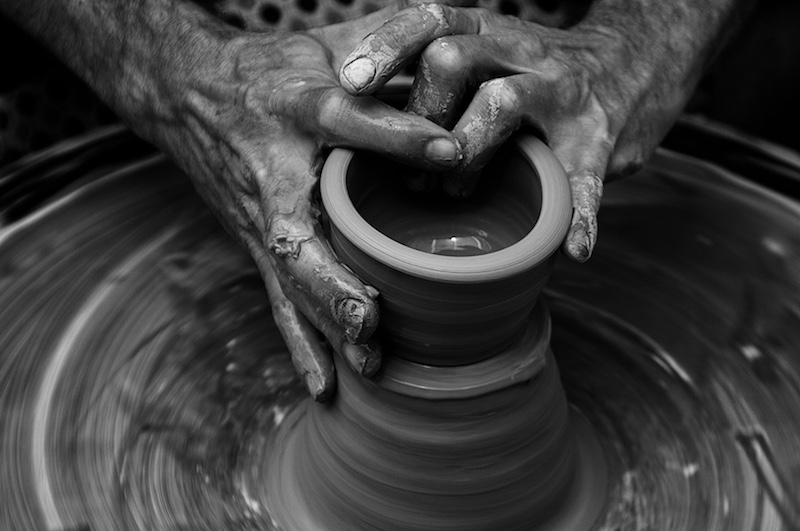
"Experiencing daily, often painfully, the complexity of clay transformations, constantly questioning the rightness of what is felt and whether it can be shared with others, students do not learn to know so much as to acknowledge their ignorance, as to experiment from what they cannot control."