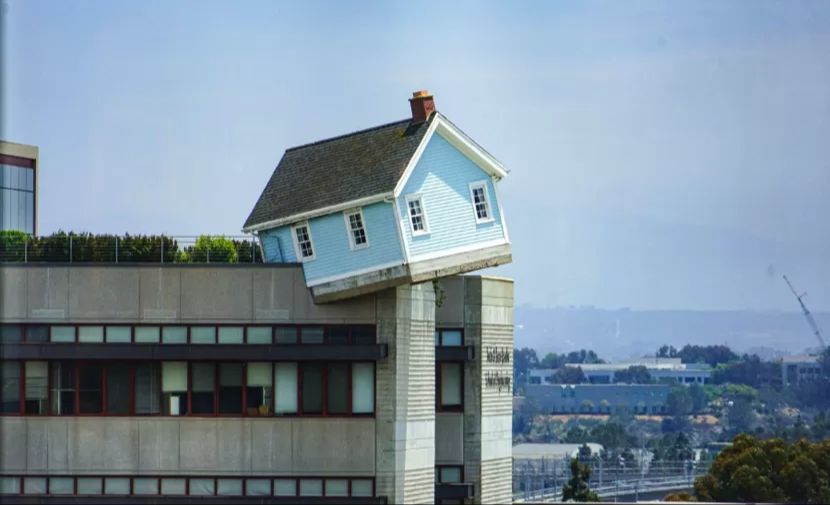
Hyper-places: a geography of intensity at the service of learning
In Hyper-lieux, Michel Lussault (2017) defines these spaces as "points of intensity", where local and global scales, material and digital flows, narratives and imaginaries condense. Far from being mere settings, they constitute experiential environments that shape social practices. For learning, this means that space is not neutral: it affects attention, memory and creativity.
Hyper-places are characterized by three dimensions that Lussault highlights:
- Co-presence: the density of encounters and interactions.
- Multi-scalarity: the superposition of near and far.
- Performativity: the capacity of space to produce meaning and behavior.
These characteristics are in line with the hypotheses of embodied cognition (Varela, Thompson & Rosch, 1993): learning is always learning somewhere, with one's body, senses and affects. Lussault doesn't speak explicitly of pedagogy, but his theory sheds light on the way in which intensive places become allies of training.
Answering the question of anchoring: how does a place support the act of learning?
Attentional availability and commitment
A hyper-place stimulates attention because it offers a variety of sensory and social signals. Lussault describes a train station or airport as spaces saturated with information, forcing the individual to select, prioritize and improvise. In an educational context, this intensity can be mobilized to train shared attention.
For example, some architecture schools organize workshops in railway stations or brownfield sites undergoing conversion: the environment encourages observation, mapping and dialogue with multiple users, creating a posture of active listening that the classroom struggles to elicit.
Memory and inscription
Memory is anchored in material reference points. Lussault reminds us that the hyper-place is a "palimpsest": every passage leaves a trace, every gesture becomes sediment. In a training course, returning several times to the same site - a shared garden, a village square - enables learning to be linked to a spatial and affective memory.
Seminars in residence, widely practiced in higher education, are based on this principle: topography, smells and light become memory markers.
Creativity and recomposition of meaning
Because they blend the local and the global, hyperlocations open up the imagination. Lussault refers, for example, to cultural or digital "third places" where artists, residents and researchers come together. In these hybrid spaces, learners are invited to experiment: making an object, inventing a story, coding a device. Creativity is born of the friction between worlds and the opportunity to make a temporary place their own.
Practical examples of place-based pedagogies
Urban workshops on cultural wasteland
The conversion of former factories into art spaces or "third places" offers a rich terrain. Master's programs in geography and sociology organize workshops in which students map uses, carry out inhabitant surveys and then propose development scenarios. The site, with its scarred walls and residual industrial noise, acts as a partner, prompting both historical analysis and creative projection.
Educational itineraries and learning walks
Walking, already studied by Yi-Fu Tuan (2011) and taken up by experiential education researchers, illustrates the performativity of space. Engineering schools organize "walking study trips" to areas undergoing an energy transition. Students travel through villages and landscapes, meeting elected representatives and local residents. Anchoring is built through the rhythm of steps and the repetition of gestures, joining the "active practice" that Lussault identifies as constitutive of the hyper-place.
Campus as hyper-place
Some university campuses themselves become hyper-places when they host festivals, hackathons and science cafés. The boundaries between study, culture and daily life are blurred. The space favors co-presence and multi-disciplinary interaction, two conditions that Lussault considers central to the emergence of new forms of knowledge.
In situ vocational training
In the field of continuing education, a number of organizations are designing "off-site" seminars: for example, a management program held in a supply market or seaport. Learners observe logistics in real time, talk to economic players, then relate these observations to their own management practices. Here, the economic hyper-place acts as a living laboratory.
Towards a pedagogy of hyperlocations
Answering the question of the co-construction of knowledge and space presupposes an evolution in pedagogical posture:
- Conceive of the place as a co-actor: it's no longer a question of looking for an "inspiring" setting, but of imagining a set-up where the place influences the objectives, the temporality and the dynamics of the group.
- Enhance sensitive experience: smells, sounds, textures become memory supports. Field notebooks, audio recordings or sensitive maps extend this dimension.
- Accept the unexpected: the hyper-place, by its very nature, is fraught with hazards. The teacher becomes a facilitator, able to integrate events (weather, encounters, noise) into the process.
Training partners
Michel Lussault's work shows that learning is never abstract: it is situated, embodied in spaces traversed by flows and histories. The intensity, complexity and co-presence of hyper-places make them powerful allies in lifelong learning.
Whether it's an urban wasteland, a market, a campus or a mountain landscape, every place can become a laboratory of knowledge, as long as it's seen as a partner in training, not just a container.
Reference
Lussault, M. (2017). Hyper-lieux : Les nouvelles géographies de la mondialisation. Paris : Seuil.
See more articles by this author