Unesco has developed the "learning city" label, but what happens when you change scale? What are the effects of megacities on learning? How do we redefine "what is authoritative"?
Publish at November 26 2025 Updated November 26 2025


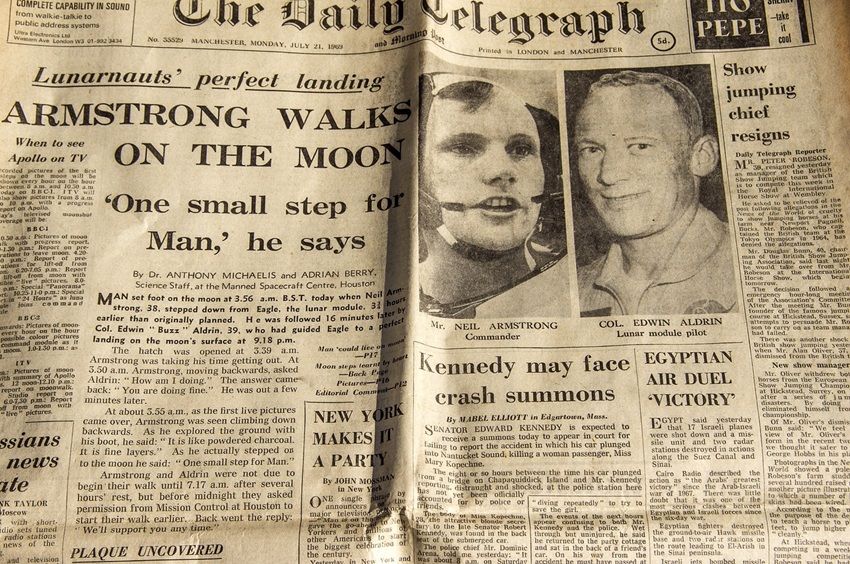
There are some topics to avoid if you want to keep the conversation pleasant. In general, people will say that it's best not to talk about politics and religion. Money can also cause tension. To this short list, we could add a corollary topic to politics: history.
It seems that more and more political currents are positioning themselves in relation to history. Whether it's a flashy glorification or an unmitigated destruction, the past of different civilizations no longer seems to leave anyone indifferent.
We now know that there's a new toy within everyone's reach: artificial intelligence. While the technique isn't inherently bad, it's very easy to use it thoughtlessly or deceptively. As a result, all you have to do is type in a request to a video or image creation tool, and in a few minutes it will design a production that is just as easy to put online, without any fact-checking having been carried out.
This is problematic when it comes to historical issues, because platforms are looking for engagement, not truth. It doesn't matter if it's false, if the video is viewed it's profitable. The problem is that AI doesn't really create, it recomposes without any respect for the facts. This results in aberrations that have the capacity to make historians uncomfortable.
And above all, it provides a superficial version of history, seen from a contemporary angle without any real context. Ultimately, this wouldn't be such a big deal if it weren't for the fact that individuals are making this kind of "creation" by cutting corners with AI. In 2025, for example, to mark the 80th anniversary of women's right to vote, or to highlight the French Resistance, the French government produced videos using AI. All with huge errors, including literally a German soldier in the background celebrating the liberation of the French capital in the streets of Paris...
As a result, not only are we treated to major historical errors, but the message is sent that, regardless of the facts, it's enough to immerse oneself in a sanitized, incoherent vision of the past. Such a message from public authorities is enough to send shivers down one's spine. For example, women's right to vote wasn't won on a given day under the sun, greeted by big smiles everywhere. It was the fruit of struggles and tensions that did not cease entirely on the day the right was granted.
We could be delighted by the popular interest of Internet users in these short historical videos. However, if this is done at the expense of the truth and serves only to multiply clichés, then it is not a healthy initiative for general culture.
Historical context counts. It is of vital importance in understanding texts, images, findings and so on. In fact, it's the job of historians to unearth and understand this context. For example, finding a letter from a mother explaining to the addressee that her daughter will, after her marriage, be heading for California wouldn't be all that impressive in itself. On the other hand, if this letter were dated 1849, it would mean something else. It means that her husband is probably a gold prospector, that they'll be embarking on a perilous journey, that the wife is potentially afraid of not seeing her daughter again, and so on.
In this way, the context also enables us to understand the words of authors of the time. The novel "The Adventures of Huckleberry Finn" may seem rather racist today in the way it describes African-Americans, but it corresponds to the perception of this population at the time. That's why it's so important to interpret the story in a way that allows us to grasp the thoughts and currents of each era. This is not to say that they are approved of today, but only that they cannot be judged in contemporary light.
As the philosopher Paul Ricœur put it: "To explain more is to understand better". In seeking to understand better, we have to go through a certain objectification in order to describe something. The school is at the heart of this work.
However, the debate remains as to which approach to take. Many suggest a historian's approach that requires students to embrace a complete scientific attitude when it comes to talking about history. The Historical Thinking project was conceived with this philosophy in mind. We now see lessons or suggested readings to be adopted in class to tackle different subjects using different lenses, based on known facts and which will shed a more exhaustive light on the various periods of the past.
References
Aitho. "The impact of historical context on the text." Aithor.com. Last updated August 21, 2024.
https://aithor.com/essay-examples/the-impact-of-historical-context-on-the-text.
Fink, Nadine, and Sylvain Doussot. "Contextualization in history: a didactic study of the relationship between scholastic epistemology and epistemology of reference." OpenEdition Journals. last updated December 1, 2024. https://journals.openedition.org/rfp/13867.
Fleming, Grace. "The importance of historic context in analysis and interpretation." ThoughtCo. Last updated May 6, 2025. https://www.thoughtco.com/what-is-historical-context-1857069.
Gauthier-Mamaril, Felix. "Paul Ricœur: seeking truth in interpretation." Acfas. Last updated: March 20, 2025. https://www.acfas.ca/publications/magazine/2025/03/paul-ricoeur-chercher-verite-interpretation.
Guglielminetti, Bruno. "When AI rewrites History: between fascination and falsification." Mon Carnet. Last updated: September 15, 2025. https://moncarnet.com/2025/09/15/quand-lia-reecrit-lhistoire-entre-fascination-et-falsification/.
Orsini, Alexis. "The success of videos replaying History thanks to AI." La Presse. last updated November 13, 2025. https://www.lapresse.ca/affaires/techno/2025-11-13/le-succes-des-videos-rejouant-l-histoire-grace-a-l-ia.php.
Rossignol, Lorraine. "AI to celebrate women's right to vote: 'This video is insulting to French women'." Télérama. last updated June 6, 2025. https://www.telerama.fr/debats-reportages/l-ia-pour-celebrer-le-droit-de-vote-des-femmes-cette-video-est-insultante-pour-les-francaises-7026028.php.
The Historical Thinking Project. Accessed November 22, 2025. https://historicalthinking.ca/."History is not dead: historical context lesson plan template." Historica Canada Education Portal. Accessed November 22, 2025. https://education.historicacanada.ca/fr-ca/tools/178.
Mercier, Mathieu. "Using children's literature to tackle sensitive subjects in history: a practice story around the Shoah." Histoire Engagée. Last updated: October 16, 2025. https://histoireengagee.ca/utiliser-la-litterature-jeunesse-pour-aborder-les-sujets-sensibles-en-histoire-recit-de-pratique-autour-de-la-shoah/.
You might also like:
Unesco has developed the "learning city" label, but what happens when you change scale? What are the effects of megacities on learning? How do we redefine "what is authoritative"?
The impact of robotization on education
How do robots help teachers? Do students' interactions with robots really help them?
The other side of mining in DR Congo and Cameroon
The PISA and World Values Surveys reveal that a higher level of education improves understanding of the risks associated with environmental deterioration, which in turn affects people's behavior towards their environment in both the short and long term.
Presence: welcoming the emerging future
An exploration of Otto Scharmer's thinking on the concept of presence, which he extends from the individual to groups and the planet as a whole.
Is It really Necessary to Organize and Anticipate Everything?
Multiplying procedures to anticipate, chasing dead time, and reducing deadlines are common objectives in organizations. But what if organizations were suffering from an excess of formalization, planning, and structuring of time? François Dupuy, the sociologist, and Hélène L'Heuillet, psychoanalyst, show us each in their way how harmful management that would like to organize or anticipate everything can be.