Publish at November 26 2025Updated November 26 2025
Fear of robots dates back to the Middle Ages
An ancient fear repeated today
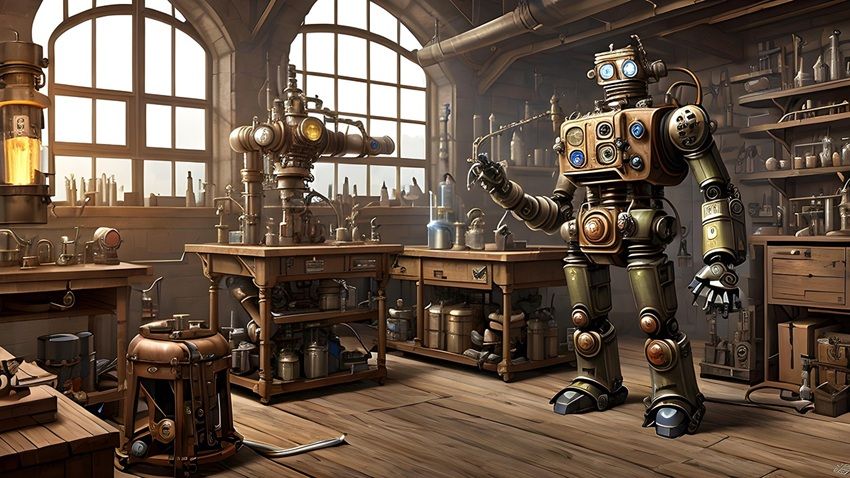
We're in a period between amazement and fear when it comes to robots and artificial intelligence. It has to be said that everything is changing with these new technologies. However, we shouldn't think that this anxiety is recent. In fact, it's been around since the Middle Ages.
Indeed, as this France Culture capsule reminds us, when Charlemagne received a water clock from the Caliph of Baghdad, in which each hour was punctuated by the appearance of mechanical horsemen, everyone at court took fright. What kind of witchcraft was this?
It has to be said that, since the third century, thinkers in the East had been imagining and manufacturing "automatic" water machines and other devices that would come close to the term "automaton" (which would appear hundreds of years later). In the West, these approaches created more unease, and even Arthurian literature picked up on the idea of mechanical knights threatening the lives of the heroes of the Round Table.
In short, it seems that our questions and fears about automation go back to the dawn of time.
In recent years, teaching and IT have become intimately linked. IT may not be to everyone's taste, but it's an inescapable field in which teachers need to be trained and managed. The nature of management can make it a pleasure or a constraint, as can the choice of tools.
The ability to express oneself well in public has been treated since antiquity as an inherent feature of the human species. It's the ability of an individual to manipulate his voice, limbs, eyes, lips, silence etc. to convince an audience, usually that of his human alter ego. But how does it relate to other animal species? Do we need to convince or persuade other species?
Whether it's summer or the rest of the year, leading a group can be complicated. Adults and teens have a particularly hard time bonding, for various reasons. Fortunately, a few very simple tricks can help set up an atmosphere conducive to sharing.