The great schisms and the scarcity of books
Books are becoming rarer in favor of metavers, that's a fact, but isn't it just a matter of media and a change in the adventure mix that's really at stake?
Publish at November 26 2025 Updated November 26 2025


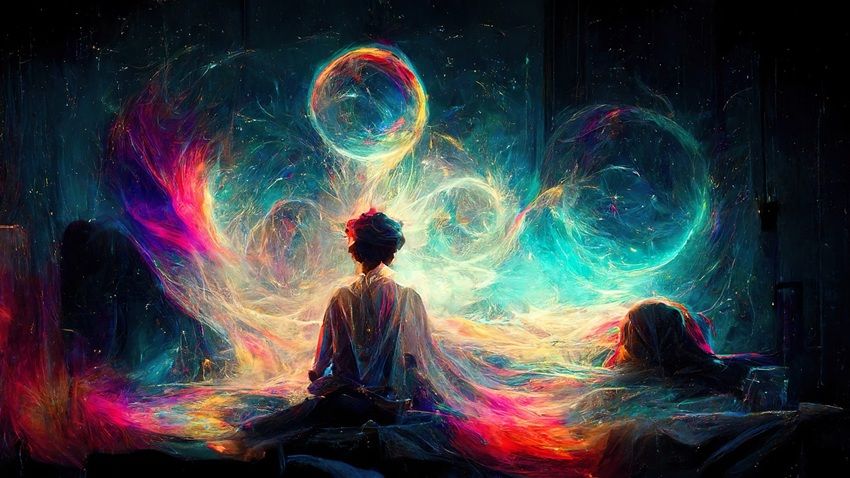
We are all involuntary artists. Every night, our brains act continuously without the cognitive filter and create unique images and scenes that sometimes defy logic and the rules of our world. Most people won't remember this imaginative period, which, according to scientists, is used to regulate emotions, or if not, only nightmares. Yet some people are able to transpose what they experience into works of art.
This ARTE report follows a number of artists who turn dreams into an aesthetic and, above all, a creative motor. There's an Austrian performer who takes naps in the most incongruous places, a way of reminding us of the importance of dreaming in this world.
A German visual artist, for his part, uses his dreams to create a false biography of his life in paintings and short films whose aesthetics and logic evoke dreams. A fellow German has exorcised his serial nightmares by composing "black metal" songs. The latter, incidentally, is more terrified of dreamless nights than of potential negative images.
Finally, a French visual artist uses brainwaves from her dream periods to create digital montages or 3D-printed sculptures.
Running time: 30min12
Image: Facusio Creations from Pixabay
You might also like:
The great schisms and the scarcity of books
Books are becoming rarer in favor of metavers, that's a fact, but isn't it just a matter of media and a change in the adventure mix that's really at stake?
Free yourself from the pressure of social networking
Getting away from the constraints of social networking means identifying emotional triggers to better manage your reactions and reconnect with nature.
Art, Architecture, Nature and Mathematics: The Golden Ratio and the Modulor
The "golden ratio" evokes a mysterious universe... This number is also referred to as the "divine proportion": 1.6180339887. What is special about this number? Why can it interest biologists, mathematicians and artists? This article offers some answers.
What if instead of complaining that everything is going wrong we focus on doing good?