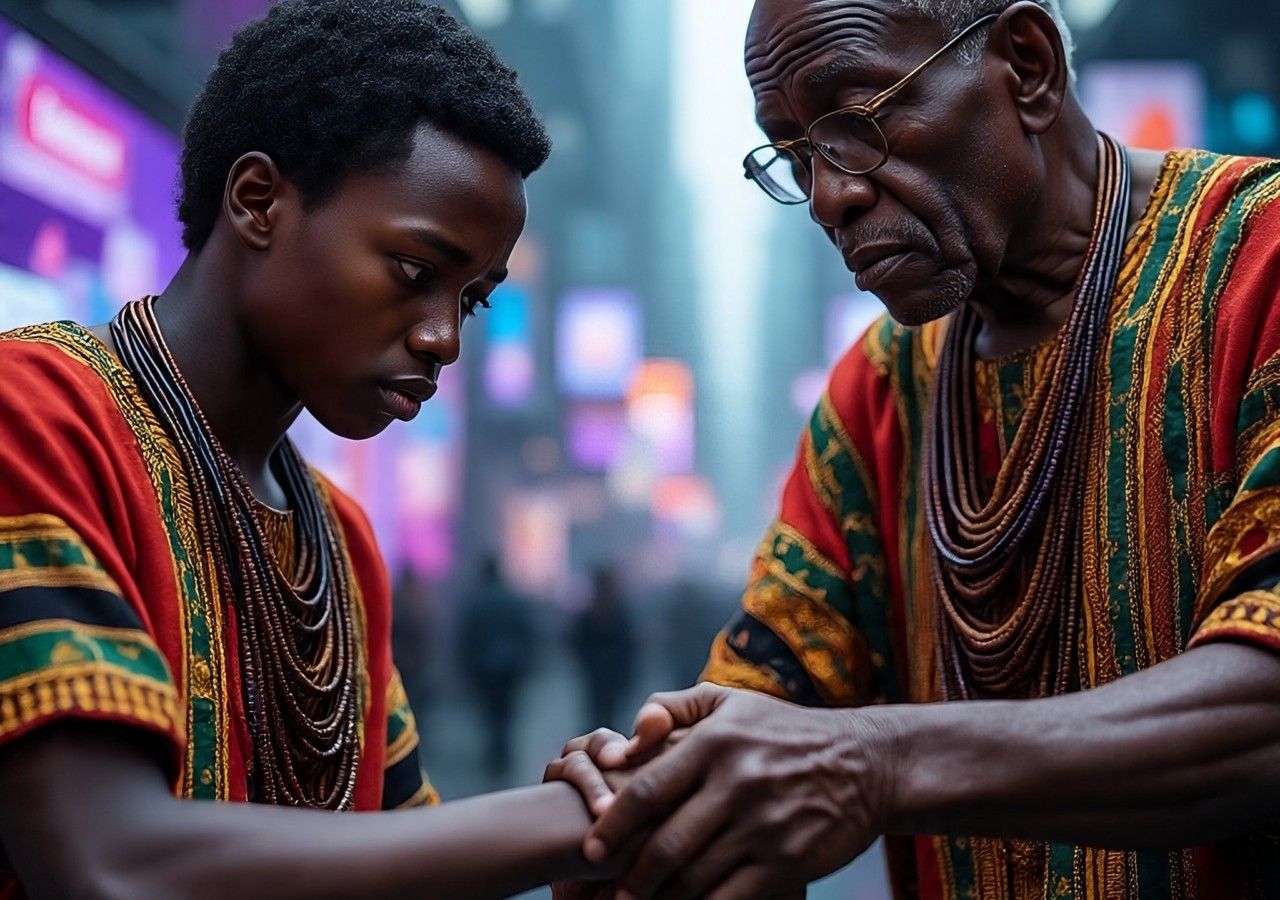
Seniors have not been hit hard by the digital revolution. They have lived fully in an era when a relationship with reality was still the only normality. They have undeniable experience of the realities of life.
In an age of cyberaddiction, when young people are plunged into a submissive relationship with the virtual, seniors can help us get back to reality. But how can this be achieved? What can they really bring to the younger generation, often referred to as Generation Z?
Seniors and young people: is the gap widening?
When we were younger, we used to go to the countryside during the school vacations. The idea was to get back to the source, to live unique experiences, to go out into the fields and, above all, to have special moments with grandparents, moments of real training in the realities of life. Today, younger people no longer have this reflex, as they are more inclined towards the city. The rural exodus in Africa and elsewhere has taken on significant proportions, as large metropolises become more populated, to the detriment of the countryside, which is less populated by young people.
What's more, digital technology is taking up far too much space. Virtual reality is our daily routine. The same person may own a laptop, a smartphone and a tablet. These are the new companions with which he spends his days. There's no time for socializing, and even less time for socializing with seniors.
To make matters worse, the metaverse is spreading in some countries via immersive worlds. Young people spend days in virtual realities, gradually losing touch with reality. Researchers have shown that virtual reality headsets are the cause of "virtual reality disease", the symptoms of which are as follows:
- Cyberkinetosis or virtual reality sickness: paleness, disorientation, feeling unwell, fatigue, vertigo, etc...
- Sensory incongruence: difficulty in regaining optimal manual dexterity and orienting oneself in the real world;
- Exposure to screen radiation: risk of short-term retinal toxicity.
To complete the picture, in some societies, the elderly are moved into retirement homes. The argument often put forward is their health condition, their dependence. This accentuates the distance and disconnect between young and old. And parents are not necessarily more available, given their many socio-professional commitments. In this situation, young people are left to their own devices and have no alternative but to indulge in the virtual world. Sometimes, to get rid of their children, parents systematically steer them towards digital devices, just to keep them occupied.
Getting back to reality: seniors have their cards to play
Thanks to their many life experiences, seniors have a lot to offer younger people. What's more, they're connected enough to the real world to disconnect young people from the virtual. We learn from their attitudes, their sometimes slow and methodical movements, and their relationship to manual activities.
One of the most quoted African proverbs highlights the strength of senior citizens' experience: "What the old man sees lying down, the young man, even standing up, cannot see." By getting closer to him, in a hyper-connected world, a kind of reconnection with nature and reality is quite possible. In fact, he knows how to interpret the signs of the times, and is a walking library insofar as he is the holder of a rich and diverse body of proverbial and ancestral knowledge.
In a study of the wisdom dimension among elders and its effect on society, the following points emerged:
- Dimension: Patience and resilience → Effect on society: example of stability and endurance for younger people
- Dimension: Listening and empathy → Effect onsociety: promotes intergenerational dialogue and solidarity
- Dimension: Oral transmission → Effect on society: preservation of collective memory and cultural identity
- Dimension: Life experience → Effect on society: enriches the community and inspires thoughtful decisions.
In view of the above, the meeting between a senior citizen and a young person would give rise to a kind of unconventional classroom. Beyond the senior's discourse, a focus on his attitude and disposition will help the young person to gain in mastery and temperance. A picture far removed from digital and virtual distractions, a true experience of the real thing.
The experience of the Middle Kingdom is highly revealing of the role of the senior citizen. Far from retirement homes, retirees in China are more than ever immersed in a variety of activities. From tai chi sessions to open-air dance evenings in the parks, they inspire the younger generation. Already, many retirees spend their time looking after their grandchildren, an ideal opportunity to train them and pass on family values. Governments have a major responsibility to keep their senior citizens fit and lively.
Initiatives to value senior citizens
Some countries stand out for their propensity to value senior citizens and give them a second life, through initiatives that recall their place and the need for their presence. Recognizing their importance to society also means taking action to support them and lift some of them out of a precarious situation. In this vein, we have :
- Karita in Kenya: a community organization dedicated to the elderly. The AFD (Agence Française de Développement) has financed a project aimed at improving access to old-age benefits and the socio-economic empowerment of abandoned elderly people. Karita and the Kibera Day care Centre for the Ederly (KDCCE) were instrumental in mobilizing the elderly, raising awareness of their rights and providing legal and logistical support.
- The Salon Panafricain des personnes âgées in Burkina Faso: The Salon Panafricain des personnes âgées (SPA) is an opportunity to help the elderly enjoy a second life in a constantly changing world. On this occasion, senior citizens who have distinguished themselves in fields such as cinema, literature, entrepreneurship, music, research and innovation received awards. Filmmaker Oumar Ouédraogo was quite satisfied; for him, "there's a need to hold such an initiative, given that the elderly seem to be increasingly abandoned."
We don't claim to have covered all the initiatives to protect and support the elderly. But it must be said that these actions have the merit of drawing attention to the rights of senior citizens, as they continue to play a vital role in the orientation and training of a youth beset by the virtual.
illustration: image generated by Meta AI
Sources
ANDESE - Metavers: the dangers of a virtual world
https://www.andese.org/contributions/chroniques-de-nadia-antonin/533-metavers-les-dangers-d-un-monde-virtuel.html
Wisdom: the elixir of life for the elderly
https://www.placessenior.com/blog/faits-surprenants/sagesse-elixir-vie-des-personnes-agees
Retired people in China: leisure and traditions - https://tourisme-chine.com/mode-de-vie-retraites-chinois/
Kenya: improving living conditions for the elderly
https:// www.afd.fr/fr/actualites/kenya-ameliorer-les-conditions-de-vie-des-personnes-agees
Pan-African senior citizens fair: 2nd edition closes on a note of satisfaction
https://burkina24.com/2025/10/06/salon-panafricain-des-personnes-agees-la-2e-edition-referme-ses-portes-sur-une-note-de-satisfaction/
Generation Z: age, date and definition in 2026 - https://culture-rh.com/caracteristiques-generation-z/
See more articles by this author