Special contribution: Jean Luc Marcellin
Faced with endemic youth unemployment, Africa is banking on "centers of excellence" in vocational training. But this strategy, which favors an elite, leaves out the majority of young people in rural areas.
In Casablanca, Morocco, in the "RIZMODE" workshop, Dounia, 24, adjusts her textile cutting machine. A graduate of the École Supérieure des Industries du Textile et de l'Habillement (ESITH), she is a master of laser cutting... and a skilled worker.
"Three months after my training, five employers contacted me".
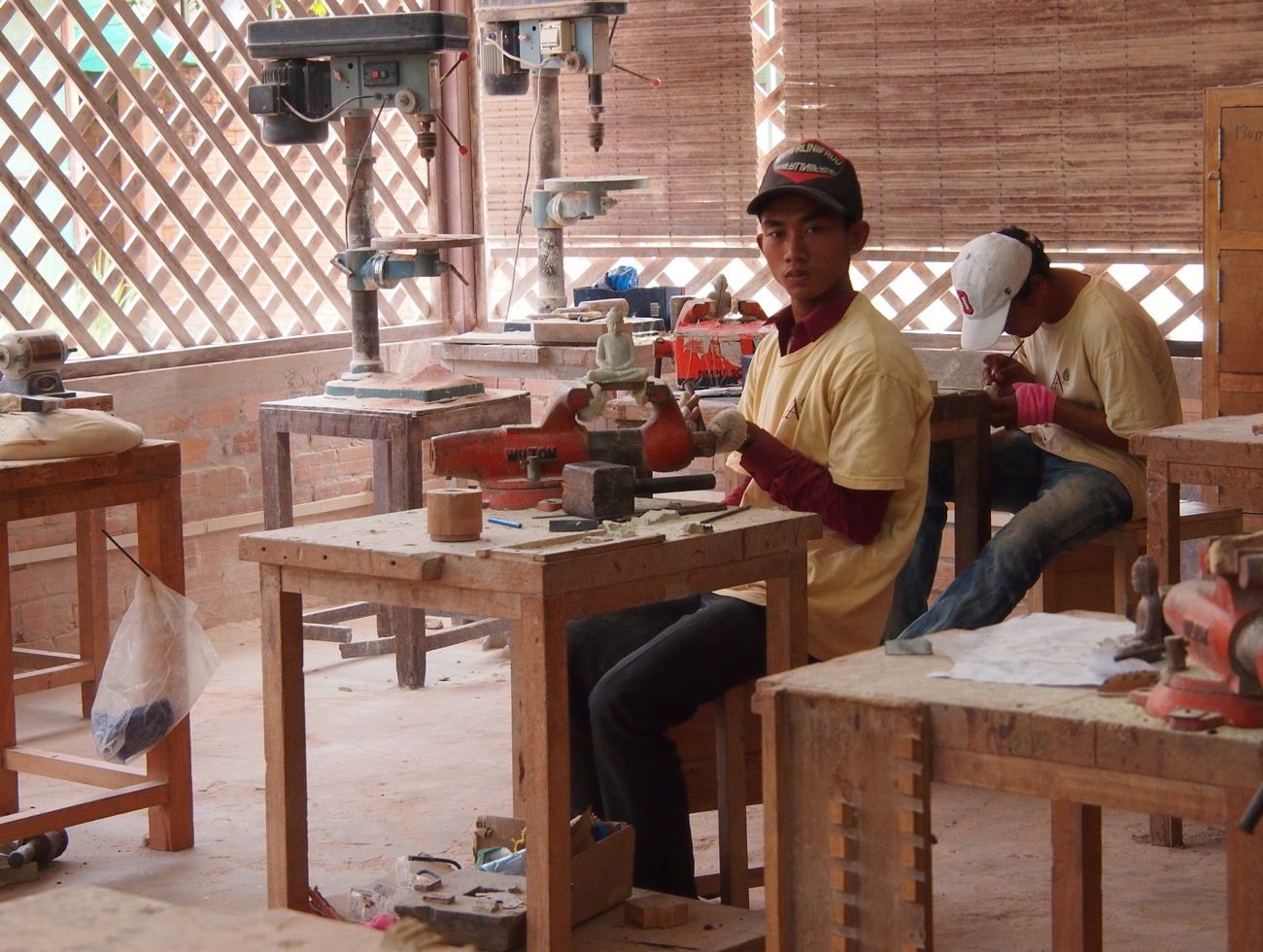
At ESITH, students train on state-of-the-art machines imported from Europe. By contrast, 260 kilometers away, in a rural center in Larache, young people share five old Singer sewing machines from the 2000s.
This inequality in access to quality training begs the question: should basic training be offered to all, at the risk of mediocrity, or should training of excellence be given to a select few?
Sub-Saharan Africa will see 122 million new young people enter the job market by 2030. According to the African Development Bank, "young people already represent 60% of the unemployed population. How can we educate and train this new generation?
Faced with this challenge, experts are proposing a revolution: concentrating human and material resources on a few centers of excellence, rather than multiplying under-equipped establishments. A strategy that raises both hopes and fears.
The centers of excellence strategy: effective, but elitist
 The solution advocated is concentration rather than dispersion. In some countries, this approach is bearing fruit.
According to a professional integration survey carried out in 2024, 65% of graduates from the Niamey vocational training center in Niger found a job within 3 months of obtaining their diploma in electromechanical maintenance. However, these figures do not take into account the limited access to such training in the northern regions, from where young people have to migrate to the capital. This is costly for families.
Between 35% and 75% of the population live in rural areas, depending on the country, but less than 20% have access to training resources. This concentration of resources is the subject of fierce criticism. Centers of excellence create a two-tier training system. They reproduce social inequalities.
M'Rabih ABDERREZAGH, Director of the École de formation professionnelle rurale de BOGHE, in Mauritania, is confronted with this paradox: "We have strong demand, but our intake capacity is limited due to a lack of facilities."
Human support: a neglected investment
 "For a long time, the vocational training system was the second class of education," explains Dr Adeye Omer Moulero, an international expert in training for employment. "The budgets allocated are not sufficient to ensure quality training that meets market needs.
Vocational training is expensive. In Africa, according to calculations made by experts, technical training is three to four times more expensive than conventional training: $10,000 per year per person compared with $2,000 for general training.
Ousmane Ndiaye, founder of Mauriverte in Mauritania and a former graduate of the Kaédi school in a rural area, notes the limitations of his own training: "The problem wasn't the program, it was the execution. 60% was supposed to be done through practice. But the trainers preferred to teach theory, because we didn't have any practical application sites."
Mr. M'Rabih confirms: "You can have excellent programs, but the availability of qualified trainers and equipment remains a problem for practicing what you learn."
Beyond equipment, the pedagogical supervision of trainers has an impact on quality. "What is their profile? How do we assess the quality of their performance? There are no resources for pedagogical support," emphasizes Dr Adeye. And, "what's the point of being trained if young graduates remain unemployed, because they're not qualified for the market?" he questions.
Nizar Terzi, world-renowned education expert and head of the "Réussir Ensemble en Mauritanie" project, stresses the importance of supporting training staff in their relationship with learners in the classroom or workshop: "Although our education systems may look very attractive on paper, their effectiveness will prove impossible without this relationship being properly established."
Towards an equitable transformation?
Investing in quality training is crucial for governments and companies alike, as it enhances employability and promotes sustainable economic growth.
This is a major challenge: how can we prepare a generation of workers to drive the continent's economic transformation without exacerbating social inequalities?
Illustration: Shutterstock - 101074609
Sources
Dr Adeye Moulero Omer (international TVET expert). Original interview conducted on October 3, 2025 by Google Meet.
Mr. M'Rabih ABDERREZAGH, Director of the Vocational Training School in BOGHE, Mauritania. Original interview conducted on October 10, 2025 via WhatsApp.
Mr. Ousmane Ndiaye, founder of Mauriverte in Mauritania, former graduate of the École Nationale de formation et de vulgarisation agricoles (ENFVA) de Kaédi (rural area) in Mauritania. Original interview conducted on October 13, 2025 via WhatsApp.
Nizar Terzi. International expert in education - quality governance and strategic management. Chef de mission, Réussir Ensemble project, Mauritania. Interview conducted on November 15, 2025 via WhatsApp.
Audio clip (SoundCloud)
The fragile pillars of the vocational training system
Schools often talk about the importance of training programs and equipment. However, it is the qualifications and skills of the teaching staff that determine the real value of vocational training. Unfortunately, the pressure to train more people in less time is threatening this human pillar.
M'Rabih ABDERREZAGH, Director of the École de formation professionnelle rurale de BOGHE in Mauritania, speaks of the consequences of the sharp increase in student numbers:
- Due to accelerated recruitment, up to 60% of new staff are insufficiently qualified.
- In addition, the lack of time and resources compromises the professional development of staff. As a result, they are unable to adapt to the pedagogical and technical requirements of competency-based training.
According to education expert Nizar Terzi, "those in charge of teaching have very limited resources at their disposal. What's more, they receive no pedagogical assistance. This undermines the effectiveness of training. The risk of staff demotivation increases considerably.
To guarantee the quality of training, the profession of trainer needs to be socially valued. Continuing professional development also needs to be adequately funded. The lack of a qualified training workforce jeopardizes the promise of offering students a quality diploma.
The quality of vocational training
The quality of a training program depends not only on its curriculum, but also on its concrete results. It focuses on the skills, abilities and attitudes needed to hold a job.
To be considered "quality", a training program must meet certain essential criteria.
- Job relevance
Training must be relevant and aligned with the skills employers are looking for. - Relevance of skills acquired
Learning must be directly applicable and useful for the job. - Success and placement rates
A high rate of graduates finding employment or setting up their own business within six months of training. - Employer satisfaction
Companies that hire graduates must be satisfied with their skills and performance on the job. - Learner satisfaction
Learners should feel that the training has met their expectations and prepared them well for their careers. - Qualification of teaching staff
Trainers must be experts in their field, with a practical and up-to-date professional background.
See more articles by this author