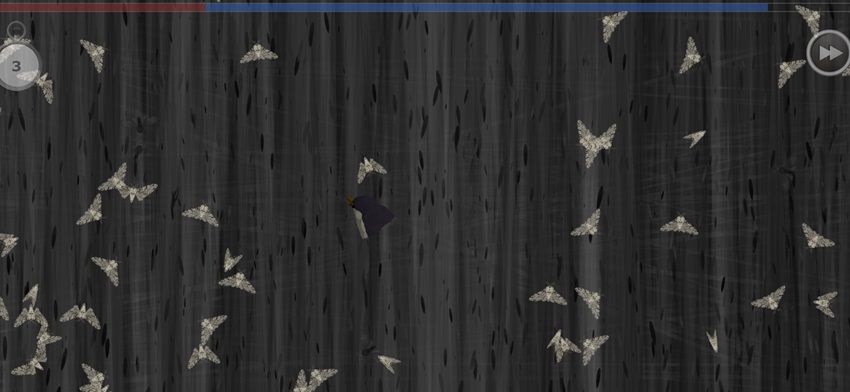
"Phalenes! understanding natural selection through play
A serious game designed to demonstrate natural selection and its effects on a moth population.
Publish at March 03 2026 Updated March 03 2026



Why do we obey powers we find disconnected or even tyrannical? In the 16th century, Étienne de la Boétie penned a small pamphlet that was distributed under the cloak during the era of the gabelle, a tax on salt, creating enormous discontent in France.
It was after his death that his friend, Michel de Montaigne, published the fifty-page text he had written as a teenager, which asserted that people themselves were placing themselves in a position of servitude, known as voluntary servitude. But why? According to de Boétie, he saw three reasons.
This is why the authorities fear social equality, which for La Boétie helps to erode existing domination. Reaching out to others, developing solidarity and, above all, rejecting this dominated status inwardly would gradually help to erode the statue of power.
Running time: 6 minutes
Image: Sebastian Hansen from Pixabay
You might also like:
"Phalenes! understanding natural selection through play
A serious game designed to demonstrate natural selection and its effects on a moth population.
A multiplayer game designed for people with disabilities
Video games designed for people with disabilities are already a rare resource. An experience that allows multiple players is even rarer. Yet this latest creation from "Ludociels for All" challenges players to light up an entire maze by walking balls of light.
Learn the mechanisms of misinformation with Bad News
Understand the strategies of online disinformation through an interactive experience that puts you in the shoes of a fake news propagator.
The Englishes MOOC course was developed by an artist and is designed for anyone interested in the (English) language. It explores the history of English, its pronunciation, and its relationship to the art world.