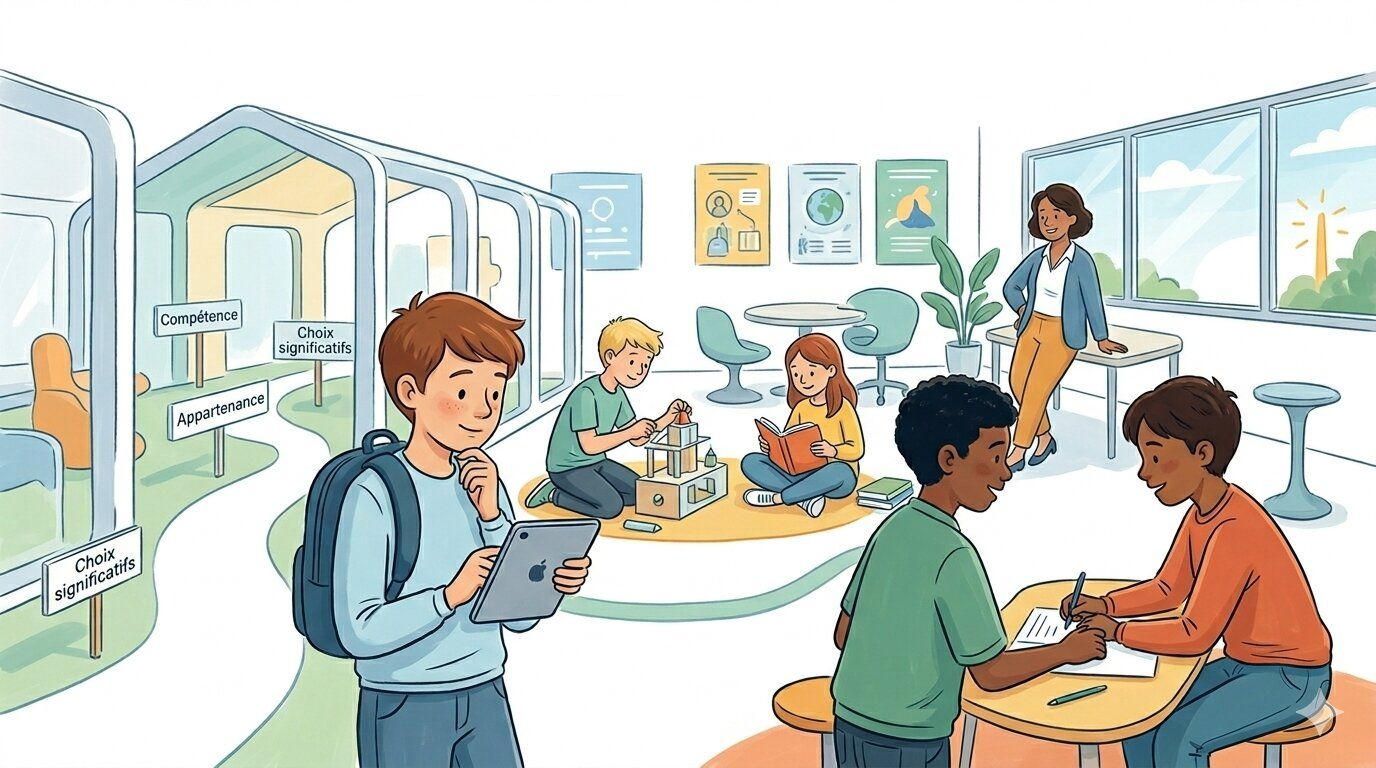
Within a framework, players share common references and undergo or accept its constraints, often both at the same time because, despite its drawbacks, a framework provides certain advantages. When an administrative framework is changed, new relationships emerge. When a legal framework is shattered, everything that depended on it loses its meaning and has to be recomposed. The absence of a framework is only theoretical, as it always remains the framework of the environment in which we find ourselves, with its raw, unregulated relationships - or so we think. In fact, a large number of unwritten conventions govern the relationships between living things, and they form the basic framework.
We come to think of ecosystems and civilizations as sets of interlocking frameworks. State constitutions are one of the most formal frameworks, but many other types of framework exist, such as "educational", "financial", "religious" and so on. Each with its own rules and preconceptions. The experience of migrants, or rather their inexperience with the frameworks of the host society, enables us to measure the extent of these "a priori" and the extent to which they are integrated into our ways of thinking from a very early age, without us even realizing it. Whether at school, in the shops or simply in public, the ways in which we behave within these frameworks shape spaces as much as they shape us.
Defining a framework of operation is the fundamental step in any organization, and indeed in any relationship, since failure to do so complicates relations and establishes them on the basis of mistrust or confrontation. Imposed frameworks do not have the same force as negotiated ones. Whether or not teachers' professionalism is recognized or school administrators are given autonomy, students quickly understand the kind of environment they are working in beyond “passing their exams” and attending classes. They will take initiative, that's for sure, as long as they are trusted and given the opportunity to do so, even more so if they see that their environment offers a dynamic framework.
In a context of high accountability and delegated responsibility, it's tricky to let people experiment without being accused of irresponsibility if a problem arises. The result is more or less strict supervision. Many examples of student initiatives are inspiring, but we often forget the quality of the framework that allowed their projects to come to fruition. What conditions need to be created to encourage autonomy? Is there an opportunity to discuss the framework and modify its parameters? The educational framework is one of the most structuring experiences for learners, so it's all the better if it's of high quality.
Denys Lamontagne - [email protected]
Illustration: 2673676197