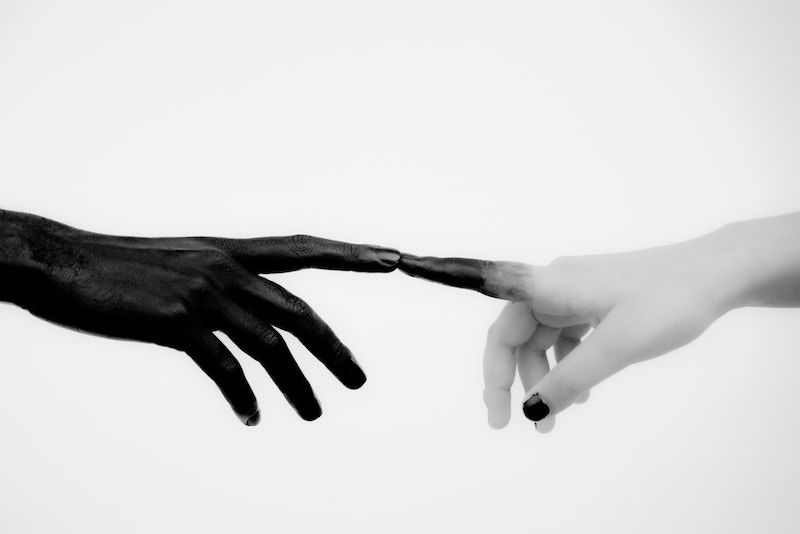
" [...] As a little girl, when she visited her sister who lived opposite a women's prison, she told herself that one day she would go and see why people are locked up."
For Michel Foucault in «Surveiller et Punir», prison is about "making individuals both docile and useful".
"Ultimately, who knows what about prisons?"
While Corinne Manceau 's thesis focused on French prisons, with their historical and organizational specificities, she can also question, wherever humans have been sidelined by their society, how vocational training "copes" with the local ecology of the prison.
Incarceration
The Council of Europe's Annual Penal Statistics (Space) show a downward trend in the number of people in prison in Europe. France is at the opposite end of the scale to the rest of Europe in terms of incarceration, with structural overcrowding and a policy of new construction.
At the time of the thesis, 70,000 people were incarcerated in France for an average of 10 months in establishments of different categories:
- prisons: for inmates serving a sentence. The sentence is heavy in the maisons centrales (more than 10 years "à perpèt "), lighter in the detention centers (more than two years);
- Remand prisons: which house prisoners awaiting trial, convicts awaiting assignment, or even those sentenced to less than two years. These are places where presumed innocent people and delinquents meet;
- penitentiary centers: which include at least two types of detention (prison and detention center, for example);
- quarters or semi-liberty centers: where inmates who work outside the prison during the day and whose sentence is nearing completion (maximum two years) are housed at night and at weekends.
The author presents a fresco of imprisonment, from which we grasp the links with historical events, starting with the aftermath of the French Revolution, with the abolition of torture in prisons (it would remain for wars and the colonies), and the introduction of proportionate sentences.
A century on, the prison population is still largely illiterate, and the question arises as to whether inmates have the capacity to change. Society oscillates between the idea that they are born delinquents, and the certainty that they can mend their ways. The counterpoint to this ability to change can, on the other hand, constitute a danger: historian Michelle Perrot has put forward the hypothesis that the education of convicts was limited for this reason.
Vocational training
"For a long time, the prisons were large textile factories, with women spinning, men weaving and children tying up the threads," says historian Christian Carlier.
The few inmates who received daily instruction were usually taught after a 12-14 hour workday.
The Liberation left its mark on the contemporary history of training. It supported the needs of the country's reconstruction (prisoners were selected for training on the basis of their ability to succeed). It began to be seen as a structural necessity.
We have seen that there are several categories of establishment, depending on the status of the prisoner. These different establishments offer vocational training opportunities: in prisons, the focus is on security and occupying inmates, whereas in detention centers, vocational training is geared towards resocializing inmates.
The irregular geographical distribution of these establishments has consequences in terms of employment pools and connections with prisoners' family and social ties.
Furthermore, vocational training is part of the ambivalent nature of incarceration, which is both a punitive space, looking to the past, and a reintegration space, looking to the future.
The capacity for reintegration needs to be moderated, as most inmates have never worked (officially), have a low level of education and are below the poverty line (60%). 61% of those released are re-incarcerated within 5 years.
In its current state, the shape of the prison does not allow us to resolve this ambivalence in a harmonious way, i.e. to set in motion what is frozen: we could imagine a prison and training pathway built from establishment to establishment, with fewer and fewer constraints.
"Just like the prison pathway [...], the training pathway also seems to be fixed, common to the entire prison population."
Conditions and constraints
Despite its apparent diversity, the training on offer is in fact more limited. The training courses most frequently offered are: hygiene and cleaning agent, logistics, building maintenance agent, green spaces/horticulture, catering, welding/metalwork, painting. Some of the respondents to the survey had already received training in prison, but there was no link between the two (plumbing after cooking, for example).
For the learners, training means getting out of the cell, doing something, it's also a way of obtaining pardons, getting paid, working in the chosen field, learning. The fact remains that some things are impossible to put in place: like "the scaffolding part" in painter training - impossible to scaffold your escape plan... while it will always be possible to repaint the refectory.
"Learning a trade [...] must above all involve practice. But practice is not always possible. Vocational training in prison therefore calls for a change in didactic and pedagogical approach."
"Prisoners are deprived of the opportunity to experience the job (which takes place in the workplace).
There are also market issues at several levels:
- At the level of invitations to tender issued by institutions, which both pose the questions and guide the responses to which training organizations (whose employees are also often on precarious contracts) must submit.
- To the development of partnerships between prisons and companies within the framework of experimental structures for "empowerment and reintegration through employment". Following in the footsteps of the "filatures-maisons centrales" mentioned above, 350 French companies now call on the services of prisoners, who are paid 40% of the minimum wage and, for the time being, have no real employment contract.
In conclusion
"This work has enabled us, particularly in the light of the theories of institutional transposition and then of didactic transposition, to highlight the extreme conditions of training implemented by trainers, diverting attention from the expected didactic stakes (learning a trade) to target societal stakes of several kinds [...]".
"The outcome of this work, whose methodology is based on an interview and questionnaire survey, testifies to the incongruity of trying to reproduce in prison what happens in the free world, and invites us to rethink the didactic organization of vocational training so that it is more effective with regard to the prison's reintegration mission to which it contributes."
Image source: Pixabay - nonmisvegliate
Read more:
Corinne Manceau, "La formation professionnelle en prison : la transposition institutionnelle et l'environnement didactique en question ", Sciences de l'éducation, Aix Marseille, 2019.
Thesis available at: https: //www.theses.fr/2019AIXM0488
References :
Council of Europe Annual Penal Statistics :
https://www.coe.int/fr/web/portal/-/europe-s-imprisonment-rate-continues-to-fall-council-of-europe-s-annual-penal-statistics
Prison population, France against the European trend :
https://www.lemonde.fr/societe/article/2021/04/08/population-carcerale-la-france-a-contre-courant-de-l-europe_6076075_3224.html
Prisoners to benefit from employment contracts :
https://www.ouest-france.fr/societe/prison/les-detenus-remuneres-beneficieront-bientot-d-un-contrat-de-travail-7180666
Digital development in prisons :
https://transformations-droit.com/webinaire-retour-d-experience-faire-evoluer-des-outils-de-service-public
See more articles by this author