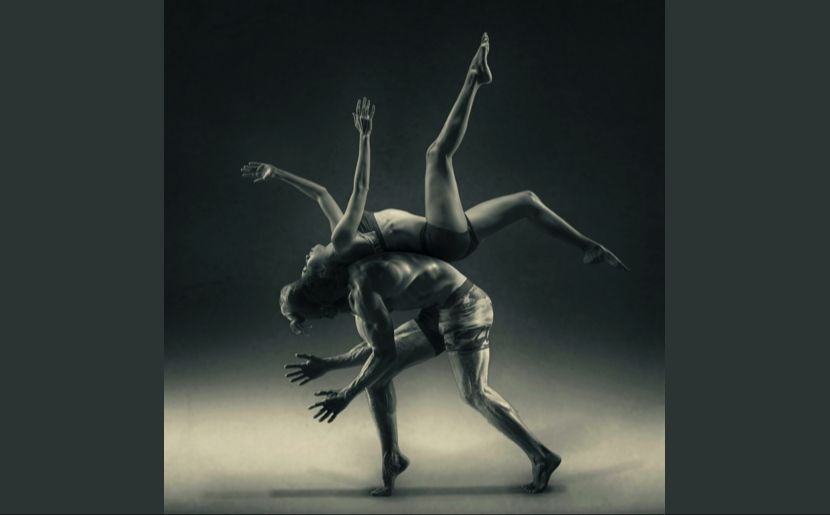
Contemporary improvisation methods are full of ideas for learning and developing collective body intelligence skills.
Publish at April 08 2026 Updated April 08 2026


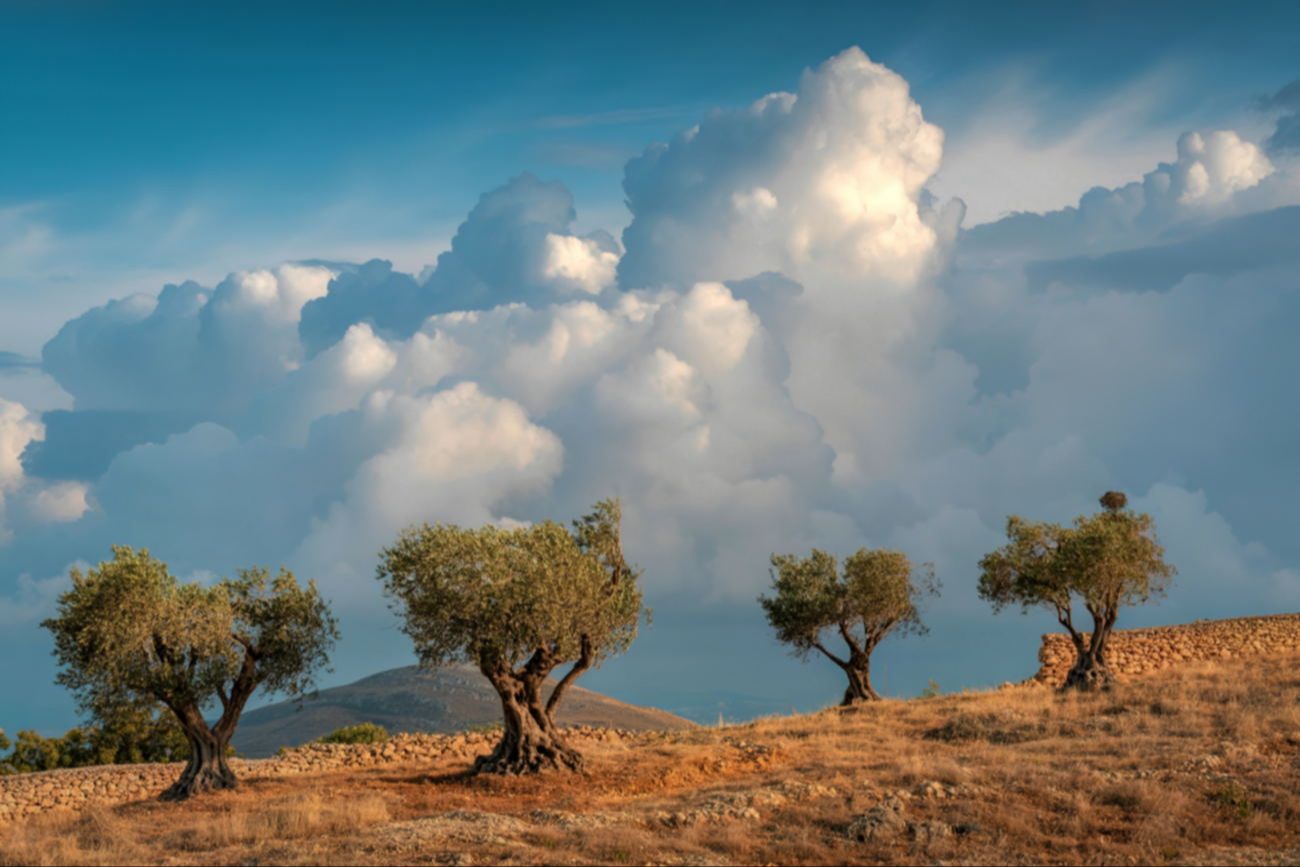
I could say that I make olive oil, but what I experience is more precise: I compose with machines, gestures and living things. Nothing is totally ancient, nothing totally modern. It's an interweaving.
When I enter the olive grove, I no longer use my grandfather's hard-on. I take a vibrating telescopic arm, connected to a battery by an electric wire. The gesture changes immediately. I no longer hit the tree. I listen to its response. The vibration travels along the branches, and the olives fall off if the moment is right. Too soon, they resist, too late, they fall off by themselves. The machine doesn't do it for me, it forces me to adjust.
I sense a kind of sensitive mechanics here. It's not brute force that acts, it's a frequency, an intensity. My body tires less, but my attention must be finer. I watch the battery, I anticipate the gestures, I look for the right angle. Technique doesn't really simplify things, it just shifts the effort.
Under the trees, I spread plastic sheeting. They collect what falls. Before, some of the olives were lost in the grass. Today, the fall becomes a resource; the tarpaulins transform the ground into a harvesting surface. I pick, I sort, I see better what I've produced. There's a kind of economy of detail here, almost an attention to the smallest fruit.
I then fill 15-kilo food boxes. I know this weight by heart. It structures my day. Not too heavy, not too light, stackable in the car, transportable without breaking my back; here again, the mechanics are discreet: they're in the norm, in repetition, in the possibility of organizing the flow.
I sometimes think of my grandfather's balucelle, the belly bag he always carried, his large scale, his patient gestures. I left these tools behind. Not out of rejection, but because my environment has changed; my constraints, my time, my body too. What I've kept is my attention to the trees. What I transform is the way of doing things.
I load the crates into the car and head off to the mill. There, another mechanic takes over. The press, the extraction machines, a whole ensemble that crushes, kneads and separates. I deposit my olives and find them in the form of oil. It's always a special moment, as if the gesture leaves my hands and enters another world, more continuous, more industrial, but still linked to the material.
The oil is served to me in 5-liter cans. I go home. I decant into opaque glass bottles. I know that light alters the oil. The choice of container becomes a gesture of protection; nothing spectacular, but a continuity of care.
Then I sit down at my computer. I draw a label. I modify and rework it. The wifi connects me to other images, other ideas. The printer materializes it all. It's a strange moment: I go from the earth to the screen, from fruit to information. Yet it's still the same oil. It simply takes on a form that can be shared and identified.
At the same time, I look after my trees. I put donkey dung at the foot of them. I don't use any treatments or pesticides. I water a little when necessary, with rainwater that I collect from the roof. An electromechanical pump redistributes this water. Here again, technology is present, but it supports a form of sobriety. It doesn't replace the living, it accompanies it.
When I look at the whole, I see a chain. But it's not a rigid chain. It's a succession of adjustments. The vibrator, the tarpaulins, the crates, the car, the mill, the bottles, the computer. Each element transforms my relationship with the gesture. None is enough on its own.
I'm neither in entirely traditional agriculture, nor in industrial production. I'm in between. A place where mechanics enable me to carry on, without giving up on what's important to me: quality, respect for trees, a certain slowness in spite of everything.
Basically, what I'm making isn't just oil. It's a way of bringing different worlds together. The body and the machine. The past and the present. The living and the technical.
References
Haudricourt, A.-G. (1962). Domestication of animals, cultivation of plants and treatment of others. L'Homme, 2(1), 40-50.
Simondon, G. (1958). Du mode d'existence des objets techniques. Aubier.
You might also like:
Contemporary improvisation methods are full of ideas for learning and developing collective body intelligence skills.
Sanjit Bunker Roy: Crossing distances, all distances, in education.
"The basic idea is to use local knowledge before resorting to outside expertise".
The Chauvet-Pont-d'Arc cave: a discovery that overturns concepts of cave art
The Chauvet Pont-d'Arc cave is a relatively recent discovery: December 1994. Totally intact, the cave is an exceptional object of study. On site, you'll find paintings of remarkable visual quality. Over 400 Paleolithic paintings and engravings depict mammoths, rhinoceroses, lions, horses, bison, bears, reindeer, aurochs, ibexes, an engraved owl and dozens of undetermined animals.
How do you approach recycling in a class?
School is as much a place for learning the rules of life as it is for learning theories. For this reason, teaching the right recycling reflexes is a particularly interesting approach. From the smallest classes to the highest, it's possible, depending on the level of the pupils, to take a broader view of the product life cycle.
When everyone follows instructions to the letter, intelligence disappears along with interpretation, and everything comes to a halt.