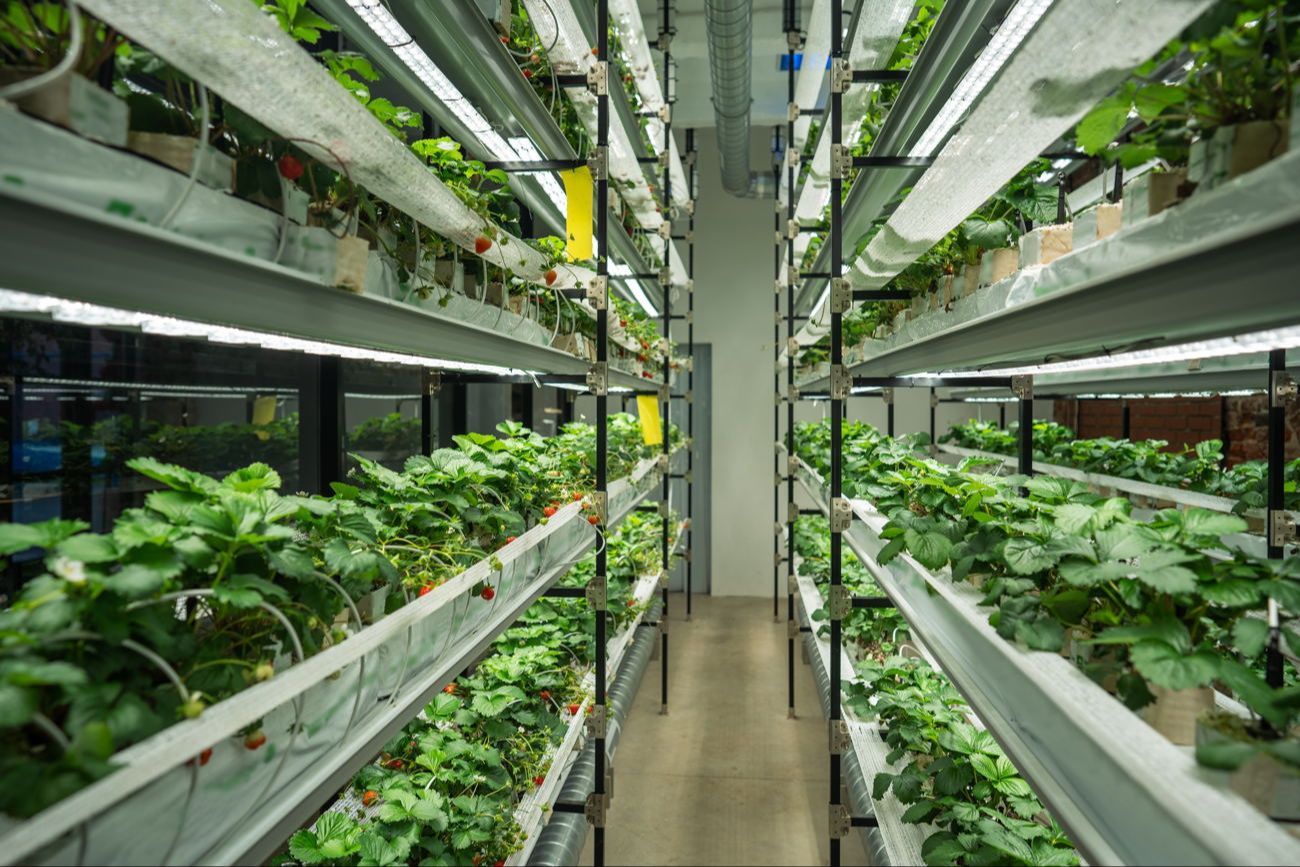
As urban sprawl encroaches on arable land, the future of food and agriculture is at stake. Where will we be able to grow our food if we continue unabated and unthinkingly to take land away from farmers? Many people are thinking about vertical farms, i.e. indoor buildings where different vegetables can be grown.
Until now, however, most said that vertical farms could only be useful for leafy vegetables such as salads, herbs, etc. After all, much of it, especially fruit, requires bees and their pollination. Yet entrepreneur Hiroki Koga makes it clear in this talk (in English with French subtitles) that he has managed to grow strawberries in large quantities and with a much better taste than what was available in American supermarkets.
And why? Because vertical farming is not subject to the vagaries of weather and seasons. Strawberry plants can produce all year round, unlike those outdoors, and managers can analyze and test conditions to obtain the best results.
As for the bees, which would not normally be able to pollinate well indoors, they have set up the optimum conditions by talking to beekeepers so that they act as they would outdoors, and even pollinate 90% of the flowers - something that hardly ever happens in traditional market gardening.
Of course, it could be argued that vertical farming is expensive. As Mr. Koga explains, this is true, but less and less so. In fact, like all technologies, the initial costs are astronomical, but as uses develop, they become as affordable as cell phones, computers or printers.
For example, if their first strawberry containers cost $50, they'd be $10 by 2024. And that price could continue to fall even lower than traditional strawberries, given the large and tasty production they achieve.
The amount of data generated by learners during an e-learning course is immense. Who, what, where, how, when? What were their results at the end, etc.? We can know it all!
But what are we going to do with this data? How can we absorb it? How do we organize power between trainees, trainers, training centers and customers?
Listening to music from the past or from all over the world is possible thanks to the virtual presence of musical instrument museums. Here are just a few examples worth visiting, where musical sounds are displayed virtually.
The metavers would offer an exceptional virtual experience with a strong educational impact. So, how would the metavers be the educational tool of the future?