
Free yourself from the pressure of social networking
Getting away from the constraints of social networking means identifying emotional triggers to better manage your reactions and reconnect with nature.
Publish at April 08 2026 Updated April 22 2026


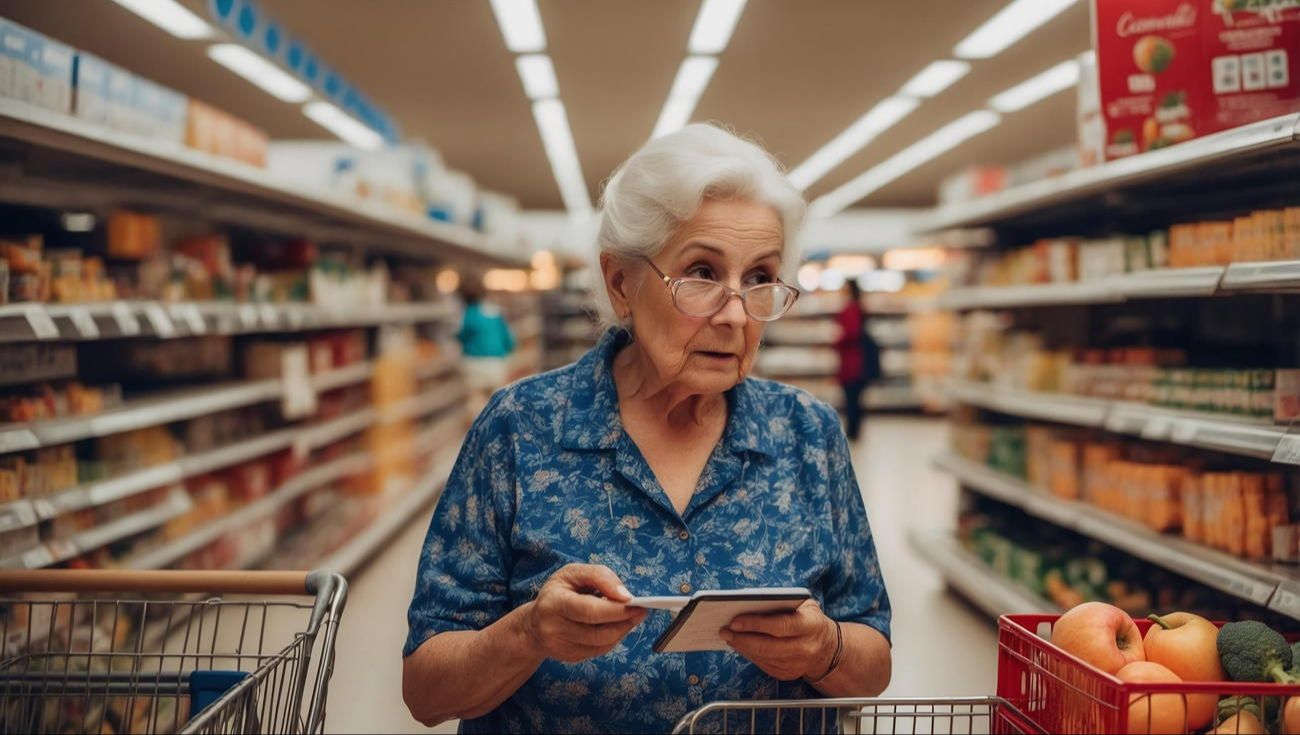
In today's affluent societies, the basic act of eating has become an ethical and sanitary headache. Between pesticide residues, nutritional impoverishment and a flood of ultra-processed products, consumers are at a loss. Making the 'right choice' is no longer just a matter of taste; it's a luxury that demands time, technical expertise and, all too often, a budget out of reach for many.
At the end of this weakened chain, the first link breaks: that of the producer. While globalization dictates prices, the French agricultural world is disappearing. We have gone from 10 million farmers in 1945 to just 400,000 in 2019. Behind these figures lies a brutal reality: a profession strangled by supermarkets, fighting every day for its very survival.
By now, all or almost all human beings are aware that life is counting down, that species are disappearing one after the other, and that global warming is gradually making the planet less habitable.
Against this backdrop, initiatives of all kinds are springing up to try and turn the situation around. Some of these initiatives are institutional, but the vast majority are private, as governments seem slow to act on the issue,
Within the question of respect for living beings and protection of the planet, one of the issues is to give ourselves the means to consume responsibly. This means not only taking care of ourselves by eating as healthily as possible, but also taking care of the entire food chain and those who produce our food, based on the idea that, without solidarity, we're all heading for disaster.
According to ADEME (Agence de l'environnement et de la maitrise de l'énergie, the French Environment and Energy Management Agency), " Responsible consumption must lead the buyer, whether an economic player (private or public) or a citizen-consumer, to make a choice that takes account of environmental impacts at every stage in the product's life cycle (goods or services) ". "More broadly, responsible consumption includes not only the purchasing process, but also the use made of the product right up to its end-of-life ". Economiecirculaire.org.
This means learning to buy and consume well, taking into account
Of course, these responsibilities are not reserved for the individual citizen, but everyone has a share in them. It has even been said that consumers are the ones with the real power, since they have to buy for a product to be profitable.
This raises the question of the information available to these consumers, and what they do with it. We're drowning in a constant stream of information, and the difficulty lies in sorting it out.
Every player in the food chain has a vested interest in appearing to be the "good guy" in the system, especially manufacturers and supermarkets, who pursue a policy of lowest possible price. This policy of the lowest possible price is supposedly there to preserve consumers' purchasing power, but they are never informed by these same players of the implications of this drastic price reduction for producers, on the one hand, and for their health, on the other.
For some years now, institutions, public authorities and ministries have been implementing food education strategies in schools and colleges. This education in healthier, more responsible eating, however, is offered little or not at all to adults, at a time when the consumption of processed products is exploding all over the world, to the point where some architects no longer include kitchens in the homes they design.
The effects of these products on health are increasingly well known (e.g., the obesity epidemic is now directly correlated with them, as are diabetes, hypertension, etc.), but there are very few brakes on their production, as they are economically very profitable.
C'est qui le patron? (CQLP) was created in 2017, from a cooperative of milk producers in the Ain region who could no longer find outlets for their product at prices that would allow them to make a decent living.
At the origin of the approach, the pair who launched this cooperative of collective interest (CIC) started from this simple conviction: if every consumer agrees to pay a few cents more for a carton of milk, hundreds of producers' families could be saved.
A first responsible product was thus created: a carton of milk, packaged in a simple, easily recognizable blue cardboard box, with an affordable selling price that includes sufficient remuneration for the producer. At the same time, negotiations were launched with supermarkets, so that the carton could be offered to buyers there. " The brick quickly became the biggest agri-food success of the last thirty years " (Wikipedia).
In 2020, the company's profits are used to support struggling producers and retailers, as well as bee protection programs. In 2021, the company supports 3,000 French producers and brings together 10,000 members, for 300 million products sold and 16 million regular buyers.
By 2024, total sales had reached 126 million euros, and sales by committed farmers had increased 2.1-fold between 2016 and 2024. In 2026, the brand markets more than 17 different products and launches into fruit and vegetables.
In 2024, CQLP became a foundation.
The values at work at CQLP:
The process
For each product offered, or in the event of a change in production conditions, the members vote on the origin (Europe, France, production radius in kilometers), the level of quality requirements, the type of packaging, the producer's remuneration, etc. Each choice made has an impact on the price. Each of these choices has a transparent impact on the final price, so the vote is also taken on the final price.
The products are sold in supermarkets and not in small specialty stores, " where small and large wallets meet " (Nicolas Chabanne, founder of CQLP). The model enables producers to plan ahead, secure their income and restore meaning to the link between consumption and production.
To keep abreast of production methods and constraints, members are invited to visit producers, take part in webinars and attend local meetings. The cooperative operates via a collaborative platform that lists products, points of sale and news (participation in trade fairs, radio and TV broadcasts, press articles and other examples of initiatives with similar aims).
Members are encouraged to take their products to the supermarkets in their region, using the communication tools provided, and to check that the products are actually available on the shelves of their favorite supermarket. They are also encouraged to organize information meetings with their friends and family and/or local players in their area.
Of course, this type of initiative has its dark side and raises a number of questions.
10,000 members is still a drop in the ocean and, as certain studies on the atypical profile of responsible consumers have shown, we may well wonder whether this type of approach can be truly democratized.
Apart from goodwill and the solidarity and/or ecological values of each individual, what is the real basis for the choices made by each member when they vote? Does everyone take all the necessary information before voting? Don't most of them vote strictly on the basis of their personal interest in the product concerned? And, if so, is this a problem or not?
Almost all the major retailers are represented. What's in it for them? Don't we have to keep prodding and convincing to ensure that the products are really promoted in the sales areas? Doesn't this involvement remain relatively anecdotal and a form of "greenwashing", amidst the mass of cheaper, higher-profile products on the shelves?
Even if institutions seem to be more interested than before in this type of approach, the question of respect for living organisms and remuneration for those who try to care for them without over-exploiting them clearly remains a secondary issue for them. Just look at the number of protest demonstrations by farmers from one year to the next.
However, in a society hypnotized by profit, these initiatives give power back to collective intelligence. For teachers and citizens alike, they represent a formidable learning ground: they teach us to decode prices, to recreate a link with the land and to understand that our credit card is also a ballot paper.
More than an isolated initiative, it's an invitation to break out of passivity and become, at last, the architects of a fairer society.
Resources :
- Who's the boss? On: https: //cestquilepatron.com/
- Bricas, Nicolas. Le consomm'acteur, moteur du changement? In: Une écologie de l'alimentation, ed. Quae, 2021. Read more at: https: //www.chaireunesco-adm.com/Chapitre-Le-consomm-acteur-moteur-du-changement
- Le consommacteur : un acteur clef dans la transformation de la consommation. On: https: //www.esi-business-school.com/ecole/developpementdurable/consommacteur-definition/
- Responsible consumption. On: https: //www.economiecirculaire.org/static/h/consommation-responsable.html
- Delaroa, Louise. Who's the boss? How a brand pays farmers better. February 2026. On: https: //www.pleinchamp.com/actualite/c-est-qui-le-patron-!-How-a-brand-remunerates-farmers-better.
- France Bleu Vaucluse. The C'est qui le patron brand becomes a foundation. December 2024. On: https: //www.francebleu.fr/emissions/3-questions-a-ici-vaucluse/la-marque-c-est-qui-le-patron-devient-une-fondation-4572630
- Leborgne, Jonathan. 5 things you need to know about the C'est qui le patron? brand. April 2021. On: https: //www.jebosseengrandedistribution.fr/2021/04/19/5-choses-savoir-sur-la-marque-cest-qui-le-patron/
- Makaoui, Naouel, Taphanel, Ludovic. Interacting with the responsible consumer, an atypical customer subject to identity tensions? 2018. On: https: //www.researchgate.net/publication/327074076_Interagir_avec_le_consommateur_responsable_Un_client_atypique_soumis_a_des_tensions_identitaires/link/600e8dd545851553a06b2948/download
You might also like:
Free yourself from the pressure of social networking
Getting away from the constraints of social networking means identifying emotional triggers to better manage your reactions and reconnect with nature.
Transhumanity of language: Who am I talking to?
Transhumanism and language, are they compatible? Can we converse with an AI as we converse with a human? Can the machine speak our language? Can we talk about myth or reality?
The university entrepreneurship ecosystem
Some institutions have understood the value of supporting and even acquiring shares in the most promising companies. Even without owning an equity stake or intellectual property, the value of a privileged relationship with successful companies ensures the long-term future of the institution in one way or another.
Welcoming foreign students is often a priority for universities and business schools. There are many aspects to the success of this process. Facilitating administrative procedures, working with the region and local authorities to improve reception, taking cultural differences into account in the design of training and assessment situations...
Here are a few suggestions.
How can video games be used in the classroom?
The use of serious or non-serious electronic games in the classroom offers a vast field of study for teachers who want to take the plunge. Of course, they need to be familiar with the title used, delimit its uses and, above all, develop a didactic strategy to ensure that the game really does serve as a learning tool, not a hobby.