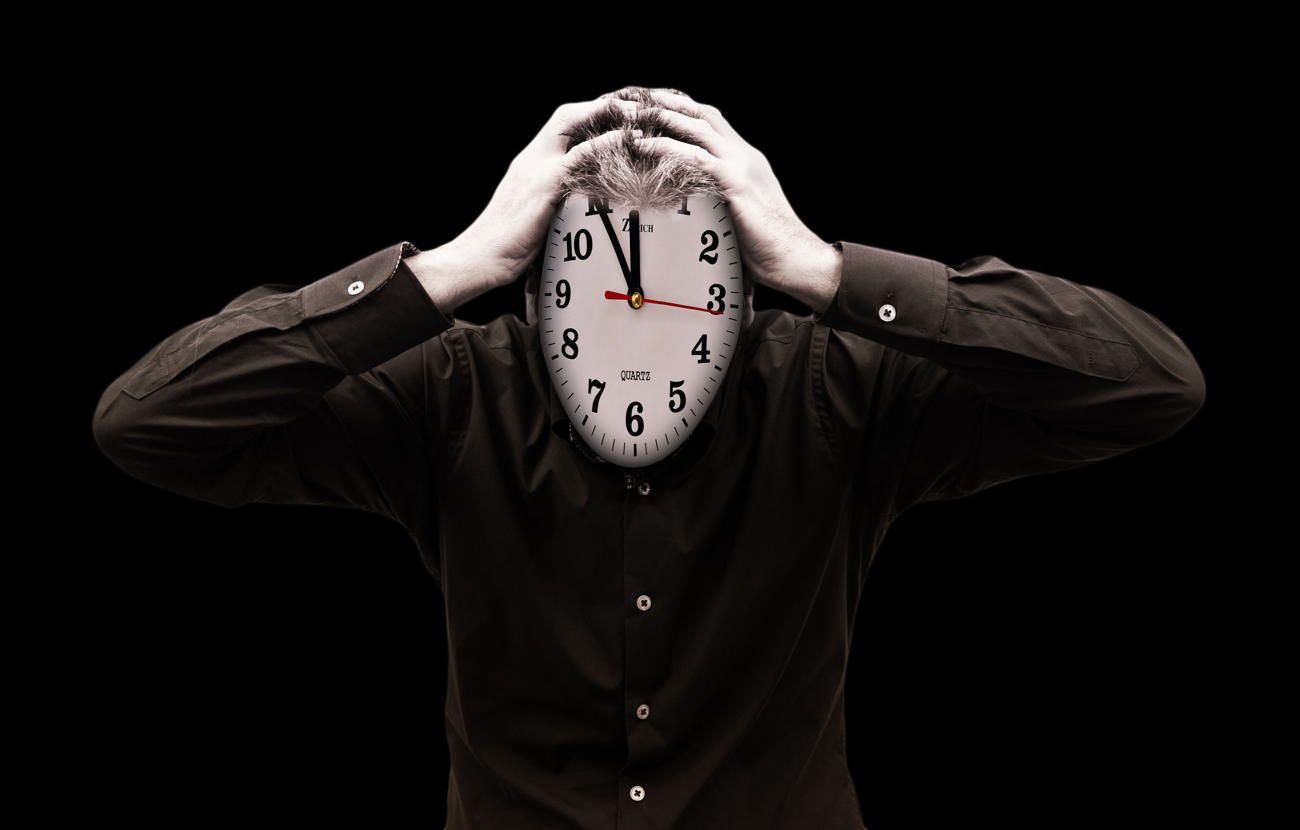
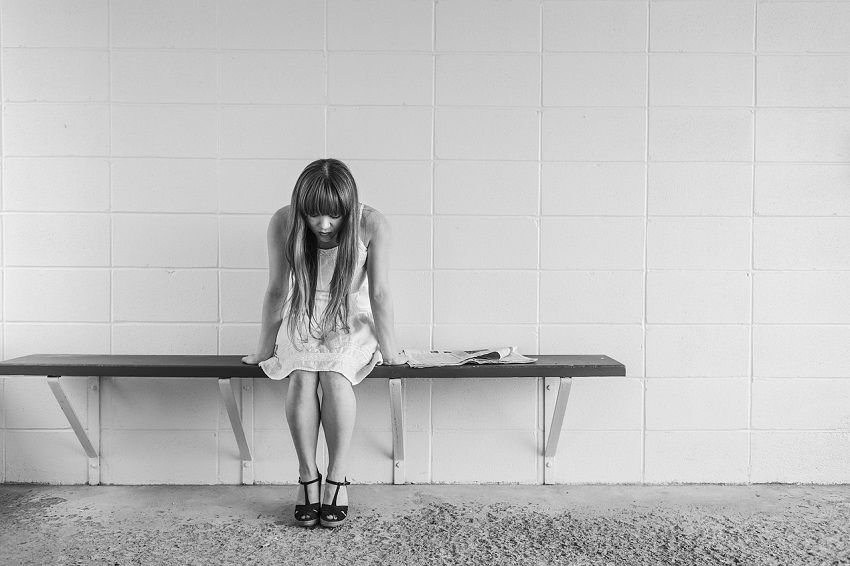
Many human beings live day after day, year after year, in a continuous race against time. The need for urgency exerts a strong pressure on their lives. There seems to be a widespread belief that going fast is necessarily better, more efficient and less costly, or that doing things differently is no longer an option. We've become everyday sprinters.
Yet professional sprinters only run short distances and for a short time, then rest before starting again. Are humans made for this constant pressure of speed? How does our body cope with the constant rush? Isn't burn-out one of the consequences of this imperative?
And what happens as we get older, when, out of physiological necessity, we move more slowly to think and act? Does being older necessarily place us outside the world because we're out of time in this hurried society? Is it still possible to balance our time and respect our internal rhythms?
Time in the right place
Whatever we think of it, linear and stable time, objective time, is merely a human convention that enables us to find our bearings and count. Our years, months, weeks, days, hours, minutes, seconds, tenths of seconds etc. only became stable, universal durations with the invention of the train and the need for a collective, shareable time.
Before that, in Antiquity for example, the length of a day could vary according to the season (shorter in winter, longer in summer), and until the 19th century, from one region to another and according to lifestyles, time could be understood differently. Einstein demonstrated that time is always relative. Its duration depends 1) on how we perceive it, 2) on the context in which it is perceived (environment, speed of light, etc.). At certain points in space (black holes), for example, time stops and a second becomes infinite.
Alongside this linear, standardized and unalterable time, considered in everyday language to be the only possible measure, there are at least two other approaches, this time integrating biological reality.
- There's individual time. When we're born, we receive a certain amount of time (a lifespan), the limit of which we don't know. We then experience this time in different ways, depending on the period of our lives and what we do with it.
How we feel about time may differ from what the clock says. The same ten minutes of conversation may seem interminable to some, and far too short to others, depending on whether we were bored or passionate. Children's time is longer than that of older people. A
At six, one year never seems to finish becoming the next. At sixty, the years go by before you know it. In everyone's time, only the present is truly lived, the past having ended and the future not yet arrived. We can dream about the past or the future, but we can only concretely experience the present.
"Dr. Michael Ashworth says that people who lead a hurried lifestyle "live in the future, not the present. They rarely notice the roses on life's path, because their eyes are always fixed on the goal. It's not incompatible to be goal-oriented and have a good sense of time. Balance is the key". (Ichi.pro)
- And then there's Nature's time. Nature operates according to unchanging cycles and stages that have been repeated since the dawn of time. There's gestation, then birth, unfolding, maturity, then aging, decay and death. And so it begins again.
In Nature, death is not an end, because "nothing is lost, nothing is created, everything is transformed" (Antoine Lavoisier, 1789). Nature operates in cycles, not linearity. It has seasons, which can vary from one region of the planet to another, in their duration, intensity and dates of appearance, and which recur every year.
Among humans, women are intimately familiar with this cyclical principle, which they experience in their bodies from puberty to menopause. Chronobiology also teaches us that the human body functions according to circadian rhythms, which constitute cycles of around twenty-four hours based on an internal clock that regulates itself if left undisturbed. Research data shows that almost all biological functions are subject to this rhythm. We'll come back to this later.
To sum up, as Benoit Labourdette puts it, "(We must) free ourselves from the belief that time is imposed on us as an external, objective continuum. Realize that time as we represent it is a social yoke. We are capable of creating our own time.
The time economy: when profitability dictates our lives
In our capitalist society, where profit is a fundamental value, time is a resource to be used wisely. In short, "time is money" (Benjamin Franklin, 1748).
The vocabulary associated with time has thus incorporated notions of loss and gain, accumulation and economy, valorization and waste. There are "good" and "bad" ways of using it. We talk about saving or wasting time, or optimizing or making the most of time. You can spend your time. We can also buy it by paying people to do certain tasks for us (shopping, cleaning, bookkeeping, childcare... in the domestic sphere, and what we call subcontracting in the business sphere), so that we can use our time in other ways.
You can also give of your time by volunteering or by helping others around you who need help.
Socio-economic studies identify three types of time use:
- market" time (work, buying and selling),
- domestic" time (looking after home and family), and
- free" time.
Merchant time fell from 60% in the 19th century to 30% in 1920, before dropping to 14% today. Today, we use, as an annual daily average,
- 12h11 for sleep and hygiene (washing, meals),
- 3h22 for work,
- 3h22 for domestic time and
- 5h12 for free time.
This so-called "free" time is steadily increasing in terms of hourly accounting, and is the subject of conflict in the way everyone considers what should be done with it (to make it "profitable").
In France in particular, the debate is currently focused on the time that should be spent working (market time, in other words), deemed the only profitable (and therefore valid) time. Without anyone ever defining what "work" actually means. The basis of its estimation is hourly time, and, in this case, especially that of salaried workers, who are the only ones whose working time is more or less measurable.
No mention is made of the time devoted to work by the self-employed, artists, stay-at-home parents or volunteers of all kinds... even though such work naturally also contributes to the smooth running and "profitability" of society.
Urgency as the norm or the dictatorship of ever-faster work
This purely economic vision of time inevitably leads to the idea that it's better to spend as little time as possible to achieve the best possible results. We have therefore come to expect everyone to go faster to do what they do, even when this seems absurd in terms of the end goal.
- Factories have to produce faster, stocks have to be emptied faster, deliveries have to arrive faster, and consumers have to consume faster too. Doctors are also asked to treat faster, trainers to educate faster, politicians and managers to decide faster.
- In France, a general practitioner or specialist must complete a consultation in fifteen minutes, including data entry, whether or not he knows his patient well, and whether or not the patient has a complex condition. In companies, the objectives set are systematically (and often implicitly) accompanied by the requirement that they be achieved as quickly as possible, whatever the constraints and resources available.
- Trainers are asked to achieve pedagogical objectives in two days that would take twice as long, or to replace one-day face-to-face training sessions with two-hour webinars. We no longer wait for the season when a fruit or vegetable is supposed to grow. No sooner have we acquired a computer, a telephone or even a piece of clothing than it's already obsolete or out of fashion.
Language, too, is renewed, incorporating new words and turns of phrase at such a speed that even the younger generations can't keep up. It is said that every week, the Internet accumulates the equivalent of all the knowledge acquired by mankind since its origins. Some people are astonished that, despite the advances of modern medicine, we still have to wait nine months to produce a human infant. Everything is necessarily urgent, without us even asking why.
In this world of revered speed and frenetic pace, the slow and the old no longer have a voice. Previous generations built on the past, learning from it. Contemporary society tends to reject anything that dates back a few years, and to want to rewrite in history and culture anything that no longer corresponds to today's mores (the wokist movement). And Western society, despite its overall ageing (as a reminder, by 2050, half of all Europeans will be over sixty), is increasingly denying the contributions of the past, and life experience is no longer a value in itself.
In this respect, in the vocabulary associated with time, we find two expressions in particular: "living with the times", which is valued and implies constantly keeping abreast of current events and adapting one's behavior, and "having done one's time", which means making way for the more reactive.
What's behind all this? We can assume that the digital explosion has a lot to do with it. We are now faced with AIs that need only a few seconds to read and analyze hundreds of documents. Will human beings condemn themselves to constantly chasing after what they themselves have invented, in an attempt to avoid falling into decay long before their time?
"In a society where external pressures (work, family, social obligations) often dictate our schedules, the feeling of alienation is growing. This alienation, already analyzed by philosophers such as Georg Simmel in the early 20th century, is accentuated by mechanization, the speed of exchanges and the omnipresence of modern communications". (Sandie Carissan)
The myth of multitasking
To "save" time, we get into the habit of doing several things at once. Lunch on the go while shopping, listen to music or a radio program while driving, running or walking down the street, make a phone call while working on a document, take part in a meeting while texting or e-mailing, etc.
Multi-tasking teenagers and young adults work on their laptops, music blaring in their headphones, all the while checking their favorite social network feeds with one eye and texting their friends from afar.
In fact, unlike a computer or an AI, our brains don't multitask (and a computer needs a certain amount of power to properly manage many tasks simultaneously). Even if we can't perceive it, because what is really a rapid shift in attention can be played out in hundredths of a second, the brain is really only devoted to one thing at a time, hence the need for it to automate certain processes such as breathing or digestion.
Switching very quickly from one non-automated task to another ends up having the same effect on our brains as the constant search for the network when we're on the train has on our phone battery: it gets exhausted and ends up making mistakes (or crashing). This can also happen when none of the tasks managed in parallel are carried out with the necessary concentration.
In reality, everything is simply skimmed over, and it can be almost impossible to memorize anything under these conditions. Neuroscientists have long since identified this as "attentional interference", creating a "cognitive bottleneck".
The French government has identified it too, at least in the field of driving, since it is now strictly forbidden, on pain of hefty fines and loss of license, to phone while driving (studies carried out in France and Canada show that it reduces our attention span as much as a blood alcohol level of 0.8 gr/l).
Living time in learning
Learning means memorizing, with the mind and/or the body, then associating and reconstructing knowledge already possessed with new knowledge, and, finally, confronting it with reality through practice. This complex process has its own rhythms and stages, varying in duration and structure according to the individual. It's also a fragile process, which means it may need to be repeated several times before it takes root. In this way, we pass successively from conscious incompetence to unconscious competence, when this knowledge is fully integrated and becomes part of us.
Teachers and trainers know (in principle) that the body must be taken into account to facilitate this process, which means respecting its rhythms. Living time also means regular breaks, time for movement, sufficient hydration and nutrition, as well as breathing (a training room needs to be regularly ventilated, as mental work consumes a lot of oxygen) and natural light.
These days, however, the development of webinars and other distance learning workshops leaves the responsibility for the body's needs to the learner. It's up to them to keep a bottle of water close at hand, as well as the comfort of their chair and screen. Often, breaks are no longer an integral part of the learning process, with everyone free to turn off their camera and microphone at regular intervals to stretch their legs or have a coffee.
The question of the parameters for maintaining the group's attention remains a subject of discussion among pedagogues, but curiously enough, consideration of bodily needs is rarely mentioned. Once again, biological rhythms and individual, natural rhythms are ignored, in favor of the quicker, the more economical, if not the more efficient.
Health and haste, the physical consequences of acceleration
"Simmel observes that the modern city provokes an "intensification of nervous life", a phenomenon still relevant today in our over-connected societies. We are often out of phase, unable to adapt to natural rhythms or even to our basic physical needs such as sleep". (Sandie Carissan)
This hurried lifestyle is gradually leading us to distance ourselves from our natural rhythms and deny our body's needs. We eat faster, at the risk of digestive problems and stomach ulcers; we sleep less, at the risk of various cognitive deficits, including memory dysfunction and premature senility; we do several things at once, without taking into account the reality of how our brains work; we breathe badly, not enough and too fast, at the risk of a lack of oxygenation of our cells and neurons, leading to various disorders.
Advertisements and employers encourage us to "perform" 100% of the time, whatever the cost. Like computers that can't be turned off, we're expected to be reactive and available at any time of the day and any time of the week, to respond to various solicitations wherever they may come from (with institutional encouragement to disconnect, which has so far had little effect).
As far back as 1941, Paul Morand published L'Homme pressé, a novel about a businessman whose life is cut short by a sudden cardiac arrest. The novel was adapted for the screen in 1977, starring Alain Delon. In 2018, another film, Un homme pressé, starring Fabrice Lucchini, takes up the idea, but this time the hero, having escaped a stroke as a consequence of his hurried life, learns from his mistakes and changes his life priorities.
What chronobiology, or the study of biological rhythms in the body, teaches us
As already mentioned, the body has its own rhythms and cycles, and over the last few decades, researchers have discovered numerous mechanisms for regulating internal clocks, and shown that their disruption can have major impacts on health, affecting not only sleep but also metabolism, the functioning of the cardiovascular system, the immune system and so on.
Our central internal clock, located in the hypothalamus (an almond-sized brain region at the base of the brain), is a veritable orchestra conductor, regulating appetite, sleep, body temperature and the production of various hormones useful to the body's overall functioning. The cycle imposed by this clock lasts between 23:30 and 24:30, depending on the individual. It is resynchronized (reset) every day by events outside the body. Light is one of the main factors influencing this clock, with varying effects depending on its color, blue being the most impactful.
There are also secondary and peripheral clocks, which regulate every important biological function. They enable us to adapt our activity on a case-by-case basis (night work, richer or poorer diet, more intense physical activity). The role of the central clock is to synchronize them, but diet is also an important synchronizer. A diet too rich in fat, for example, will have desynchronizing effects on certain secondary clocks, notably those of the liver and brain.
When the body's circadian rhythms are disrupted, sleep is the first to suffer. Failure to respect the body's natural rhythms (choosing the right time to go to bed or wake up) and failure to take account of the effects of light are increasingly common causes. This disruption of circadian rhythms is associated with an observed increase in a large number of so-called "chronic" problems.
The main sources of this disruption, pointed out by researchers, are night work, the school rhythms imposed on young people, the time change twice a year, artificial light, particularly blue light (light diffused by screens of all kinds, as well as by LED street lighting), and the lack of regularity in mealtimes. Many of these causes stem directly from our hurried lifestyles, which ignore the body's needs.
Take your time and find your "cruising speed
Time lived is first and foremost time felt, before being time calculated. There are moments that seem almost motionless, that seem to last longer than others, and these moments are found in calm and silence. This is what meditators experience, for example, or people who gaze blankly at a sunrise or sunset, or poets.
"The silent hours are those that sing the clearest" or "There is a beauty that is reached only there, in this great intelligence offered to the spirit by empty time and pure sky". Christian Bobin.
Other moments, on the other hand, pass so quickly that we barely have a chance to experience them, and generally forget what's essential. Perpetually busy and hurried time is a time that leaves no room for thinking, let alone dreaming. It's a time that no longer allows for reflection, and leaves no room for breathing in the broadest sense. I
t's also a time that doesn't allow for admiration and wonder - which means watching and being silent. It leaves no room for boredom, now deemed unbearable and systematically avoided. Yet boredom, as many artists and psychologists have pointed out, is a fertile space for the imagination. And, finally, it leaves less and less room for silence, the only space in which the brain can truly regenerate.
"Bodily silence, the silence of daydreaming, the silence of listening... silence in all its forms is beneficial for creativity, memorization, and even the construction of our 'self'". (Michel Le Van Quyen)
A desire for more slowness, more stillness and more silence is gradually emerging, among other movements to return to more sobriety and greater closeness to our deepest nature.
"Against the contemporary injunction to be always on the move, reactive and flexible, here's a desire and a challenge that's resonating more and more: to oppose the vibrating world with an end to "non se mouvoir"; to fix ourselves at a point, just for an instant, to stand still in order to reconnect with ourselves and what surrounds us" (PhiloMag).
"(We) need to take the time to reflect on our life instead of rushing from one activity to another, need to inhabit our existence instead of filling it up." Christophe André
We all need to find our own rhythm, by listening to our body, which is a reliable barometer. We need to find our "cruising speed", the speed with which we can move forward and act without exhausting ourselves, the speed that respects both our temperament and our needs, the speed that should enable us to maintain our vital momentum, our joy and respond to our essential desires. We seek to "take our time" or "take time as it comes", rather than endure it as a permanent constraint.
This quest is a genuine act of resistance to the constant pressure exerted by our social environment. It presupposes not only being firm in one's desire, but also organizing oneself, sorting, postponing solicitations, prioritizing - in other words, clearly defining one's choices and giving oneself the means to make them.
There's willpower. There are now technical means to ignore spam and other "undesirables", to block notifications, to avoid multiple newsletters, to stop "doom scrolling" to nowhere. You also need to plan your time so as to leave time for emptiness, for breathing space between two activities.
Taking several real breaks in a day can sometimes make all the difference, or training yourself to avoid multitasking and to do as often as possible one thing at a time, but in depth, with concentration, and with the satisfaction afterwards of being able to move on to something else with serenity because you've finished it. And finally, you need to listen to your body's needs and give it the sleep, movement and food it requires, at the times it demands and not those imposed from outside.
Here's a suggestion for dividing up individual time to avoid exhaustion: equal parts action, reflection for action, inspiration - nourish your reflection (reading, walking, training, music, dreams, discussions with others...) and take the time to rest sufficiently, without doing anything specific.
"Depending on the individual, cruising speed can vary considerably. It's not a question of timing, but of self-use: the challenge is to know yourself well and to live in accordance with your specific drive". (PhiloMag)
Sources
At what speed do we want to live (Dossier) - May 20, 2018. On Philomag.com: https: //www.philomag.com/dossiers/quelle-vitesse-voulons-nous-vivre
André, Christophe. La pleine conscience permet de distinguer l'urgent de l'important. Le Monde, June 14, 2016. https://www.lemonde.fr/tant-de-temps/article/2016/06/24/christophe-andre-la-pleine-conscience-permet-de-distinguer-l-urgent-de-l-important_4957058_4598196.html
Hubert, Nicolas. Le culte de l'urgence, la société malade du temps. Flammarion, 2018.
Carissan, Sandie. Tension between the rhythm imposed by our society and our inner tempo. 2024. On Mouvement-Otium: https: //www.mouvement-otium.com/post/comment-battre-la-mesure
Chronobiologie: les 24 heures chrono de l'organisme (Dossier). January 2026. On Inserm: https: //www.inserm.fr/dossier/chronobiologie/
Daghe, Jake. Hurry and urgency are not the same thing. 2020. On Ichi.pro: https: //ichi.pro/fr/la-precipitation-et-l-urgence-ne-sont-pas-la-meme-chose-59514089309056
Dieguez, Sébastian. L'homme pressé: toujours plus vite! Cerveau&Psycho, May 2023. On Cairn-Info: https: //stm.cairn.info/magazine-cerveau-et-psycho-2023-5-page-94
Giraud, Pierre-Noël, Veltz, Pierre. Du pain et des jeux, une économie politique des usages du temps (Conference-debate). January 2025. On Academy of Technologists: https: //www.academie-technologies.fr/wp-content/uploads/2025/03/250107_Du_pain_et_des_jeux_Une_politique_des_usages_du_temps.pdf
Le Van Quyen, Michel. Brain and silence, the keys to creativity and serenity. 2021. On Cairn-Info: https: //stm.cairn.info/cerveau-et-silence--9782080243546
Rosa, Hartmut. Acceleration, a social critique of time. La Découverte, 2013.
Honoré, Carl. In Praise of Slowness. Marabout, 2021
Labourdette, Benoit. Presence and time. July 2022. At: Benoitlabourdette.com:. https: //www.benoitlabourdette.com/les-ressources/propositions-philosophiques/philosophie-de-la-presence/presence-et-temps
Morand, Paul. L'homme pressé. Gallimard, 1990
Octavie. Le mythe du multitâches, ce que dit la neuroscience. November 2025. On Cyberpsychologie. Net: https: //cyberpsychologie.net/le-mythe-du-multitache-ce-que-dit-la-neuroscience/#section-1
Why permanent urgency makes us powerless? En société program, January 18, 2026. On YouTube: https: //www.youtube.com/watch?v=E9hbrWrQIZA
Time. And nobody cares, episode 24. https://www.youtube.com/watch?v=ZbWTEbEx9D4
See more articles by this author