Artificial intelligence is not the paragon of supposed neutrality that it is often made out to be. As a creation of predominantly Western minds, it tends to reproduce sexist, racist, and other biases that are still deeply rooted in our societies. As a result, people from diverse backgrounds often find themselves looking into a mirror that does not at all reflect the image of the Middle East, Asia, or Africa that they know or that their parents have told them about. They perceive a distorted reflection of colonization that persists centuries later.
Behind the miracle of machine learning lie thousands of very human hands. These workers, crammed into cramped offices in sub-Saharan Africa and elsewhere, must analyze photos and videos of all kinds to train the algorithm to recognize what is right and what is wrong. This “digital moral development” carries a significant psychological burden: many workers must view horrific images of violence, corpses, and other disturbing content to train chatbots not to reproduce certain content, to refuse to comply with certain requests, and so on. More than 80% of the workforce behind this training reports symptoms of post-traumatic stress.
Fortunately, some are deciding to take up the same tools and use them to deconstruct these ways of thinking. They are actively developing AIs that are more attuned to the major figures of anti-colonialism, that challenge traditional biases, and that contribute to an educational effort so that those affected—as well as everyone else—can learn more about the disparities that still exist, those who have spoken out against them, and what can be done.
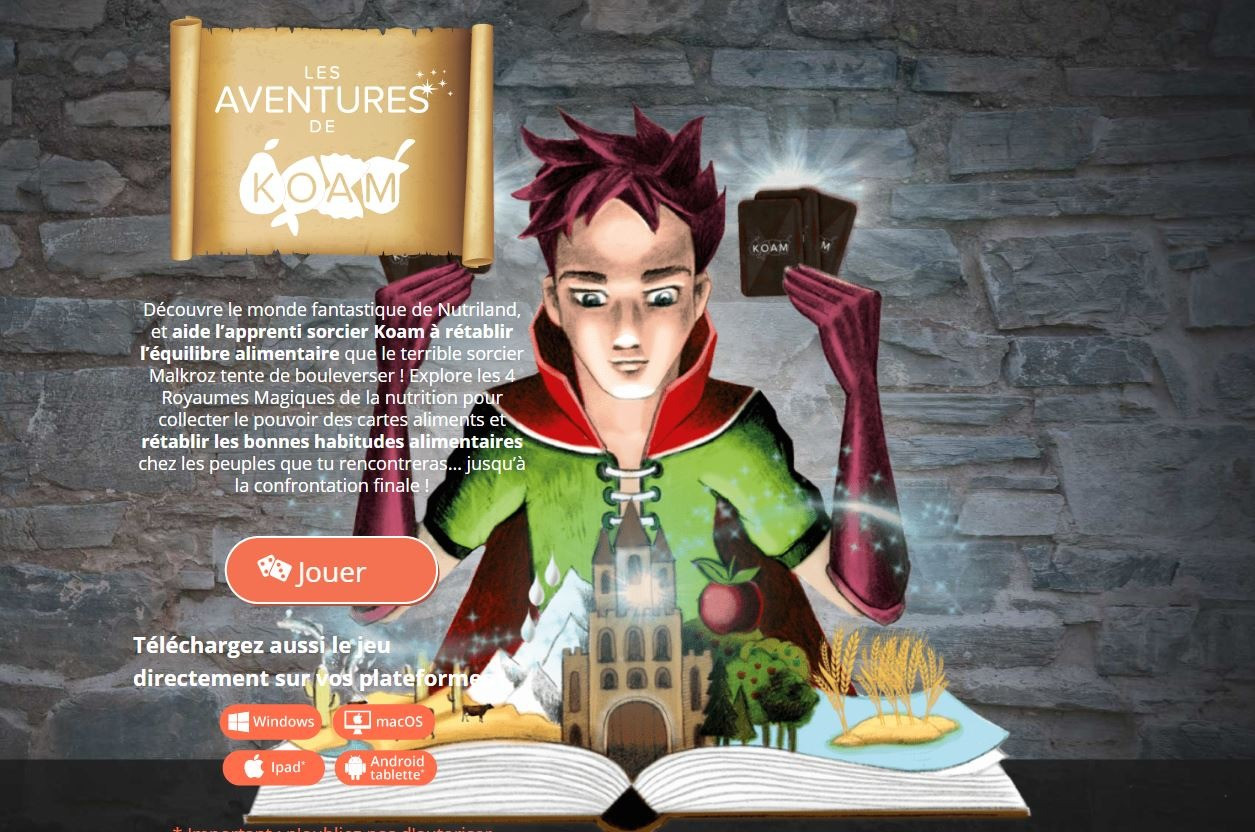
A veritable showcase for public health, Koam was developed by Nutrikeo, a consulting firm specializing in nutritional strategies. Supported by BPI France, the Nouvelle Aquitaine region and Europe, Koam is the result of two years' work by a team of leading specialists in nutrition, childhood, pedagogy, sociology, digital and behavioral theory.
How do you talk to children about genetics and heredity? A British museum has come up with the method: design a game in which you create a line of adorable creatures with precise objectives. The game is fun, colorful and easy to learn. Even adults will succumb to the charms of the bugs and their large families.
Many serious games address the topic of sustainable development. Yet before such solutions were proposed, innovative people had to go against the social grain and fight to improve their environment. A humorous adventure game, hosted by the National Film Board, teaches children the attitudes they need to adopt to make a difference.
An original approach to depression. The game's metaphor is well conceived, a little dark and informative about a problem that affects millions of people.