This short table shows that while the world's population is growing, the power of processors and machines is keeping pace, but on a much larger scale.
| Year |
Population |
Processor
|
Memory |
|
Speed |
|
| 1960 |
3 billion |
IBM 7000 |
5 |
k
|
|
|
| 1975 |
4 billion |
Intel 8080 |
64 |
k |
500 |
KHz |
| 1988 |
5 billion |
Intel 80960 |
1 |
MB |
5 |
MHz |
| 2000 |
6 billion |
Pentium 2 - Celerom |
300 |
Mb |
500 |
MHz |
| 2011 |
7 billion |
Pentium - Xeon |
8 |
Go |
3 |
GHz
|
2024
| 8 billion
| Intel Core 7
| 16
| Go
| 6
| Ghz
|
These factors combine to herald many profound changes, as processors and their capabilities rapidly approach and often surpass human performance in a growing number of areas...
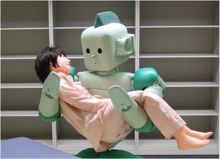
Machines using these capabilities are able to optimize mass processes and increase productivity to levels unattainable by humans. No one would dream of competing with the production quality and quantity of machines like spinners or weavers, or that of mechanical shovels, and the same will soon be true of robots and information processing machines.
We are dressed in machine-produced clothes, we travel in robot-produced vehicles, we eat food prepared and handled by robots, soon we'll be guided and driven by robots, and so on.
And that's not counting genetic programming or organisms symbiotized with nanotechnological processes to produce molecules, structures or materials with the desired properties at costs at which no equivalent human activity can ensure its survival.
What remains
Apart from the activities involved in supplying raw materials to these robots, designing, producing, programming and maintaining these robots, machines and their accessories, and distributing their production, in the long term there is no human production activity left in volume that can really compete with that of robots and processors.
This brings us to a necessary redefinition of the sharing of the benefits generated by these sustained increases in productivity.
There will always be work
Sharing the work: 50 hours? 40 hours? 30 hours? I'd like 15 hours. Work can be seen as civil service. I have so many other things to do that have nothing to do with production but a lot to do with quality of life and cultural or social development. But without diminishing my living conditions. We're talking about sharing the benefits of productivity, so that we can continue to buy production from robots.
Productivity gains can be shared directly: either the price of the products is reduced to a level that enables us to continue our activities without impoverishing the society that buys them, or a substantial part of the income is redistributed to this same society. It's a "tax", but a tax also means democratic representation, otherwise we're talking about more or less harsh spoliation or unlimited concentration of power...
With regular income, we can create jobs in functions other than "production". We free ourselves from the constraints of survival.
All artists
Although machines can sometimes generate aestheticism, they are not in a position to appreciate it. Machines can be seen as the sophisticated brushes of the creators who manipulate them.
Some people spoke of a leisure society during the last productivity boom in the 60s. This has not proved to be a sustainable axis. We don't like being idle as much as we like being creative and social. If there are any human activities that cannot be effectively replaced by a machine, it is those that involve socialization and imagination. Creation can be organized productively, but socialization itself has nothing to do with it, and neither does imagination; they are linked to other considerations. Researchers, artists, creators, explorers - we are all these things at different times and in different ways. We could be them a little more often. Just as we could spend more time with our friends, neighbors, family and children rather than connected to processes.
A utopia can be thwarted in many ways, but essentially by human failings far more than by robots and A.I., failings which fortunately can be controlled. So let's bet on a positive future.
Orientation
Of course, professions are changing and will continue to do so. It's obvious that all non-repetitive professions, or those that can't be industrialized, that can't be carried out by machines with realistic economic advantages, such as "teacher", "planner", "conciliator", "communicator", "local food producer", "personal coach", have the field open to them, and that of politician takes on strategic and vital importance: we'll have to agree on what we collectively want to create.
In short, an enlightened choice of course among human activities must necessarily take into account the profound integration of technologies, including intelligent robot-workers.
Reference: Competing Visions of a Computer-Controlled Future
See more articles by this author