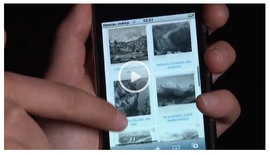
Viewing the magnificent illustrations by travelers of the past and reading their accounts of their discoveries before setting off on a vacation is possible and accessible to everyone, thanks to a project by the Universities of Lausanne and Paris-Sorbonne.
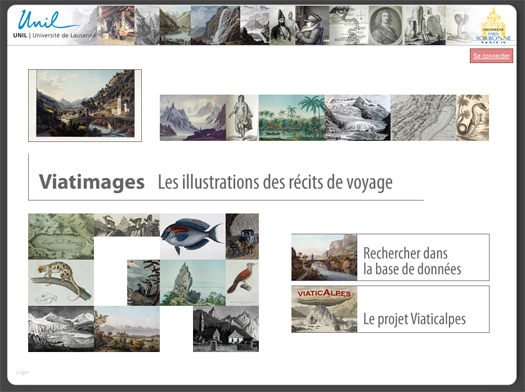 In collaboration with the Center for Research on Travel Literature ( CRLV), the team of researchers in Lausanne has collected and cataloged images and accounts of journeys through the Alps from the 16th to the 19th centuries, drawing from the collections of Swiss heritage libraries and media centers. The high-resolution digitization of the documents selected by the university team was carried out in the libraries themselves: thousands of images and texts drawn from 800 works have thus become more easily accessible through searches in an online database, Viatimages. As early as 2010, 2,000 documents were already available there.
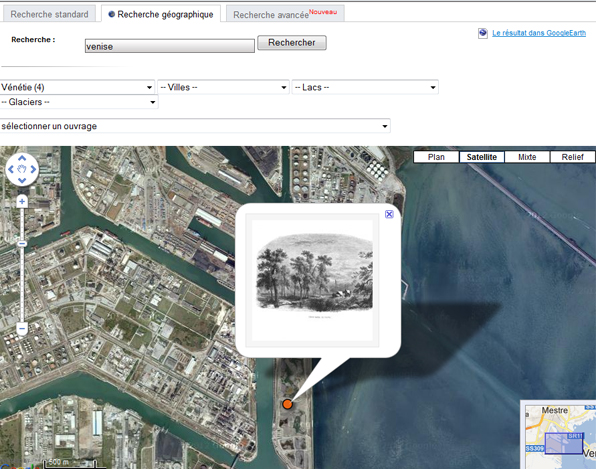 Several types of searches are possible in Viatimages: by keyword, by artist’s name, by book title, and by image content. Users can zoom in to view details of the illustration’s content. Users also have access to data related to the image, including the text of the story and biographies of the authors and illustrators. For some documents, hyperlinks provide access to the complete digitized texts. The search function using the interactive map is impressive; for example, you can view both a satellite image of the current location—zoomed in as closely as needed—while simultaneously viewing the historical illustration.
Five short, very well-structured videos—with high-quality imagery and dynamic editing—introduce the project from various angles: general overview, database, role of participating libraries, partnerships, and films produced as part of the ViaticAlpes project. Several short films can be viewed on the website, some of which were co-directed by the project director, Professor Claude Reichler (“From Martigny to Chamonix” and “Who Is Looking at the Landscape?”), while others are student projects created using images from the database during a course offered at UNIL in 2009.
In the highly engaging video presentation of the project, Director Reichler emphasizes that this project is open to the general public and, thanks to information technology, breathes new—and transformed—life into the illustrations of travel narratives. Users can now access them from home or while traveling using mobile devices, thereby discovering the stories of travelers from the past, following in their footsteps, and learning about the history of these places through their accounts. Itineraries can be downloaded onto smartphones or tablets to pack in your luggage. One can imagine the many applications—touristic, educational, and others—of this tool designed by scientists.
LINKS:
Viatimages: http://www2.unil.ch/viatimages/
ViaticAlpes: http://www.unil.ch/viaticalpes
See more articles by this author