Distance learning tutor: one function, multiple tasks
An interview with a tutor who explains how remote support functions are actually put into practice.
Publish at October 22 2013 Updated November 16 2023


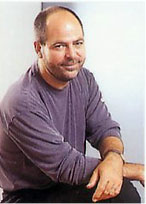
George Siemens is an author, theorist and researcher in the fields of learning, networks, technologies, analytics and data visualization, open access and organizational effectiveness in digital environments (presentation on the TEKRI Institute page at Athabasca University). In 2008, he produced the first MOOC, in collaboration with Stephen Downes. For this week's feature on the future of higher education, we caught up with George Siemens on September 24, via Skype.
The original interview in English is HERE.
From Winnipeg, Manitoba, you moved to Alberta to take up a position at Athabasca University (Canada's Open University). What motivated this change?
Winnipeg's Red River College, where I taught in the 1990s, was the first college to offer an educational program using laptop computers. It was then that I developed an interest in e-learning research, the impact of e-learning on students, learning itself and access to the curriculum. In 2005, I joined the University of Alberta to pursue research on learning and teaching with new technologies. Then, in 2009, I joinedAthabasca University, the largest of the very few Canadian universities to offer online training. So I switched from face-to-face to distance-only teaching at AU, where I'm also a researcher at TEKRI(Technology Enhanced Knowledge Research Institute) and supervise master's and doctoral students.
Open online learning: is there still resistance?
Athabasca University has no recruitment problems, with its 42,000 students. Students who commit to online training are not traditional learners; they need flexibility, due to life circumstances, for example people employed full-time or who can't move to study. Some students want to try out a course before enrolling in the full program to see if they like it.
However, there is still reluctance towards e-learning and online learning compared to traditional learning. There is concern that this type of teaching could reduce professionalism in faculties and put more pressure on teachers, some of whom would become stars while others would be their assistants. We need to communicate the value of e-learning and online learning. The fact that many prestigious universities are embracing open online education is part of this recognition. Online education is the fastest-growing educational market today, whether at primary and secondary levels, in universities or in corporate contexts. Growth is very strong.
How do you see the future of student-teacher relations in this changing world of higher education?
It's difficult to predict. More students now have access to education. They are more adept at self-organization. They interact more directly with faculty members. They create their own learning platforms to get involved and engage in a wide range of activities: the learning experience is driven by the students themselves.
What role do MOOCs play in higher education?
In their current form, MOOCs depend on universities. It is necessary to maintain the cost of studies in order to obtain formal recognition of master's and doctorate degrees. It's the content that's open. MOOCs will not replace universities; rather, they will help make them more open and bring more of the population into education. MOOCs can also be used as a marketing tool to help universities promote their programs.
Validation is essential to learning in traditional contexts; how might it evolve in a context of open online education?
MOOCs will have a greater place in the future, but the need to validate and demonstrate learning will always be there. Currently, validation of learning for MOOCs is very basic or non-existent. It hasn't yet been defined. There are a few examples, including one from Georgia Tech in collaboration with Udacity and AT&T (editor's note: Massive Online Master's Degree in Computer Science that students can complete exclusively in a MOOC context for a fraction of the price of the traditional program). Another example can be found on the edX platform, which offers various types of assessment and a signature track program (editor's note: honor code certificates and ID verified certificates). But these exceptions do not represent the norm. In the future, we may be relying on other entities or organizations (e.g. companies like edX) to validate learning.
We're seeing an increase in experimentation in the field of learning, and that's just as well - it's what we need. New models and various systems are being developed. We need these experiments, both inside and outside traditional learning environments, whether on P2PU platforms, Coursera, edX (academic) or Udacity (mixed academic and non-academic).
G. Siemens on the web, selection :
You might also like:
Distance learning tutor: one function, multiple tasks
An interview with a tutor who explains how remote support functions are actually put into practice.
Initiating a learning territory
An approach to developing a learning region that starts by listening to its inhabitants, moving slowly and without preconceived ideas.
Prevention of musculoskeletal disorders in training
Christiane Daban is an occupational health practitioner. Her basic training is in physical therapy. Located in the southwest of France, she intervenes in particular in companies to carry out prevention actions. She agreed to answer a few questions.
The Lab-School concept extended to existing schools. No need to rebuild everything.
Interview with François Demers, principal of the Léonce Boivin school in the municipality of Les Éboulements in the Charlevoix region of Quebec.
François Muller: "When you sweep a staircase, you start at the top".
In France, innovation is struggling to gain a foothold in education circles. François Muller, head of the Paris education authority's "innovation and experimentation" academic mission, explains why. He also describes the main avenues of progress being explored by educational establishments, and the changes that schools are facing today.