
Recognizing interpersonal skills in the age of AI
When AI takes on a considerable role thanks to its computational power, it's up to humans to promote soft skills, but will organizations dare to recognize them?
Publish at September 21 2015 Updated February 19 2026


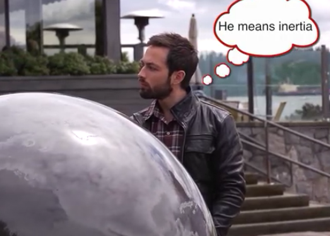
Derek Muller designed Veritasium - a popular science video service with tens of millions of views - as experimental proof of his doctoral thesis, which posed the question "How can we produce better science films?"
Curious to find out how effective the explanations in science films really were in terms of learning, he developed an original evaluation system that not only took into account the accuracy of the students' responses, but also the extent to which the films had a positive impact on learning.but also the degree of confidence they had in their answers, regardless of whether they were right or wrong.
What he discovered was simply staggering: according to the tests taken before and after, the students learned virtually nothing from watching "standard" science films.
These films, which they themselves rated as "clear, concise and easy to understand", had only reinforced their beliefs, even if they were wrong. They couldn't even remember correctly what had been presented to them 5 minutes earlier.
Pity!
So how could they?
Well, these "objective" films are based on a false premise: the assumption that students know nothing about the subject. On the contrary, they know a great deal about it through their interactions with the real world, even if what they do know is often scientifically false.
As a result, students don't pay attention to what they already know, and practically only notice what confirms their impressions, even if it means distorting everything to fit what they "know".
To tackle the problem, Muller produced films in which two people discuss their opposing conceptions of the same phenomenon.The students felt that these films generated confusion in their minds and were neither clear nor easy to understand. These films would not have won any popularity awards.
As a result, their test scores doubled!
The key factor
So what was the factor that brought about such a change? It seems that the mental effort required in the second type of film was vastly superior to the first, as was the level of attention required.
He apparently had the answer to his science-film scripting question: the viewer has to make an effort. A good way to do this is to start with what the viewer thinks he knows and confront it. Less easy, less pleasant, but much more effective!
For example, ask people why gravity is weaker on the Moon: most of them will tell you it's because there's no air on the Moon! A good way to start a good discussion!
In practice, it's a matter of asking several people what they think about .... and then devising explanations to first provoke doubt and then communicate the new data that will make the person open up and learn something.
This certainly applies to online courses as well as videos, as Veritasium does. With the success of its videos - over 100 million views - we'd be tempted to think so.
References
Derek Muller - The key to effective educational science videos
https://www.youtube.com/watch?v=RQaW2bFieo8
Derek Muller of Veritasium Interview on The Tomorrow Show
https://www.youtube.com/watch?v=2N7NfjJD6JQ
Veritasium
https://www.youtube.com/user/1veritasium
You might also like:
Recognizing interpersonal skills in the age of AI
When AI takes on a considerable role thanks to its computational power, it's up to humans to promote soft skills, but will organizations dare to recognize them?
How to increase the value of a training course
What contributes to the added value of a training course? One might be tempted to answer directly: "the content, the objectives, the learning situations, the pedagogical support...". This article proposes to discover other aspects, which seem to be peripheral but which often explain the effect of a training course in the medium or long term.
Teaching subjects such as social sciences and even certain scientific theories can lead to a direct confrontation with convictions, beliefs or references that are not shared by all. How to teach in this context?
How does a peer help us learn?
Peer-to-peer learning, also known as pair-emulation or pairagogy, is all the rage right now, but how does it work in practice? It's the purpose of this analysis to go back to the roots and specify how it works.
What teaching techniques should you choose?
Depending on the learning objective and the knowledge and skills to be imparted, some teaching techniques are better suited than others. How do you choose the right one? Check out this mindmap to help you make the right choice at a glance!