How students understood local and global history by studying unsuspected historical symbols
While it's difficult to get a 100% accurate picture of history, it has left thousands of traces. Some, like the Acropolis in Athens or Machu Picchu, are still in relatively good condition, despite the constant surveillance required.
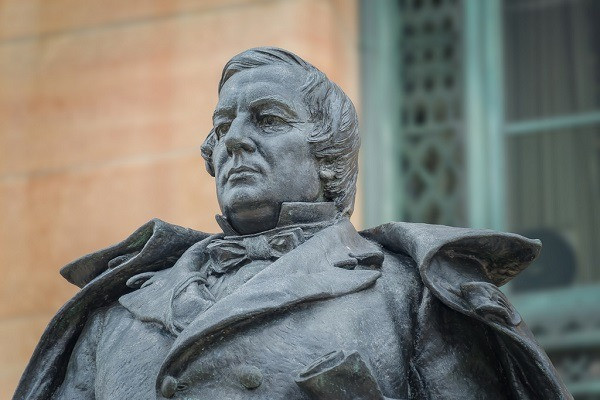
History has also bequeathed symbols that can be found in works of art and monuments made in memory of the departed. Anyone could easily recognize the signing of the United States Declaration of Independence, or the statues of General de Gaulle.
The role of the history class is therefore to explain to young people these symbols, the context and the lives of those who have had an impact on the course of History with a capital "H". It also means reflecting on how some of them can lose or take on a different value over time. For example, the YouTube channel "C'est une autre histoire" shows how the figure of Marianne was born and transformed in France:
We know that Adolf Hitler's regime literally undermined the swastika, a sacred Hindu emblem, to turn it into a hateful, warlike icon. In other cases, such as the United States, artifacts and statues from the Civil War Confederacy are increasingly controversial, as they are generally venerated by racist groups. Even in Canada, certain names are being removed from buildings and streets because they are often associated with racist imperialists who made native nations suffer. In short, symbols change and take on meanings that it's essential to teach children. But better still, what if they themselves looked for symbols of their local history?
Student archaeologists
This is what happened in the Estaque district between 2008 and 2013. CM2 pupils were invited to explore and analyze the industrial remains of l'Estaque and the Séon basin. They noted how they left artefacts and symbols explaining the development of Marseille. Whether it's remains of tiles, walls, chimney stacks or plaques commemorating workers who fought for the Liberation, these apprentice archaeologists have discovered parts of their local history that were unknown to them. Much of this work was published in the Canard de l'Estaque, the students' newspaper, where they were able to teach their fellow students about the rich past of the last century.
It all started with a walk around town and a photo rally. It wasn't long before pupils started asking questions about the tuileries and the names on the plaques. These discussions led school teacher Jacques Vialle to work with historian Laurence de Cock to offer information and plan "archaeological digs" in which children could explore and understand the neighborhood and even the wider history. Because for the teacher, this curiosity about local aspects makes it much easier to explain major historical issues. It's much easier to talk about the Second World War and the Resistance using examples rooted in the neighborhood. The same goes for the Industrial Revolution and workers' working conditions, of which there are still symbols. It's also a way of looking at how the industry has changed decades later.
This experience underlines the importance of using both global and local symbols to help young people understand and learn from the past. These pictograms, statues, plaques, heritage buildings and archaeological remains are there to remind us of both the bright and dark sides of humanity.
For example, the kiosks still standing in Vichy are a legacy of Napoleon III. Perhaps some will disappear as values change. Nonetheless, these reflections could be the trigger point for sparking curiosity in the learner to find out more about this symbol and the evolution of its meaning over time.
"Les Kiosques De Vichy, Au-delà De La Musique, Un Symbole Historique Du Thermalisme." Www.lamontagne.fr. Last modified June 2, 2018 . https://www.lamontagne.fr/vichy/travaux-urbanisme/histoire/2018/06/02/les-kiosques-de-vichy-au-dela-de-la-musique-un-symbole-historique-du-thermalisme_12870210.html#refresh.
Pedagogical innovation is the stuff of dreams for trainers and teachers. The regular reappearance of alternative pedagogy proposals such as "the inverted classroom" or "the ignorant teacher" always provokes the same craze followed, in many cases, by a certain disappointment. Even if the proposal of alternative pedagogy is interesting, it also has its limit, the one given by the field of application. The problem is not the method but the expectation that one has with regard to it.
Already present in the coaching and therapy professions, supervision is beginning to find its place in the support of other relationship professionals such as trainers, managers and educators. What role can supervision play in the professionalization of those involved in relationships?
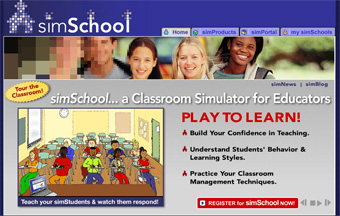
A classroom is a complex environment, and field placements are irreplaceable in learning how to navigate it. In the United States, the first virtual classroom environments have emerged that prepare future teachers to face real students.
Once you get to school, it starts. I don't know whose idea it was to create such a dangerous environment. I've heard there's even lead in the water, mold in the walls and the air is stale. The other day I saw the teachers laughing at the videos. Mr Robert gave me the link to watch them. I can't say I found them very funny. At least I'm reassured to know that not all teachers are adults.
Very useful for attracting attention and making ideas, abstractions and technical explanations concrete, the analogy is a very effective tool for persuasion and clarification. Analogy is also a great way to get us to accept poorly constructed ideas and reasoning.