Hyperplaces as pedagogical anchors
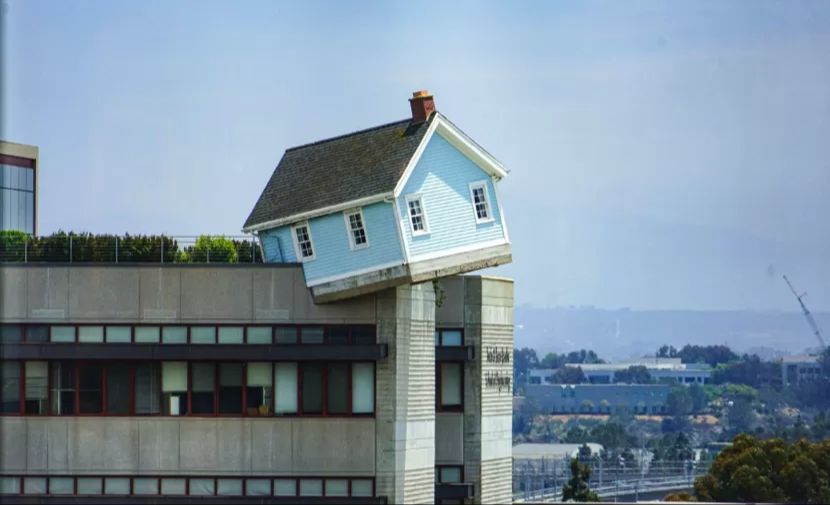
Every place can become a laboratory of knowledge if it is seen as a partner in training. Michel Lussault's book talks about hyperlocation, a resource for learning.
Publish at September 16 2018 Updated June 15 2023


Today, we live in an immersive world, thanks to technology, social networks, the internet and cell phones. We have adapted very well to this environment, and it would be impossible to turn back the clock. The asynchronous constraints of yesterday’s world, such as waiting for a letter to arrive in the post before receiving important information, have been erased in most areas of our lives. Why have we unanimously adopted this state of affairs? To understand this, we need to go back to the nature of our natural behaviours.
“The spectral representation of a sentence visualizes the frequency composition and characteristic spectro-temporal patterns of the speech signal over time. Two main time scales can be identified from sound wave and spectral representations: the sound envelope, which corresponds to slow modulations (< -20 Hz) of sound amplitude and reflects syllabic information (Rosen, 1992), and the fine structure, which contains temporal cues whose changes occur much more rapidly (40 à 200 Hz), and encode phonèmic cues.
These two temporal scales are therefore used to produce the basic patterns of human speech (phonemes (vowels and consonants) and syllables). The auditory system is capable of extracting and processing these two temporal scales in parallel.
Source: Traité de neurolinguistique - Du cerveau au language by Serge Pinto and Marc Sato - Décembre 2016 éditions De Boeck supérieur SA
Because one encodes the action and the other the meaning of that action and they are not processed in the same way in the brain.
“The oscillatory segmentation mechanisms of the acoustic signal that we have described so far form the basis of the processing carried out to extract information from the speech signal. Following the first stage of processing, i.e. the segmentation and coding of the basic units, i.e. phonemes and syllables, it is necessary to extract and reconstruct the meaning of the perceptual sentence.
Thus, the brain not only takes into account what has been said up to that point, but also anticipates or predicts, depending on its experience and the context in which the words are perceived, what might be heard next. Such predictions are continually generated by the brain and then compared with what is actually encoded and perceived. This notion of the preceptive brain underlines the constructive nature of perception and suggests that the brain contains an internal model of the world around it, used to manage, test and eventually update its predictions about future events (Friston, 2005)
.CF. Neurolinguistics - From brain to language
This is what we call pro-active prediction, as it is always in a process of comparison with reality. Its nature is pre-chronic, because it is pre-dictive. The brain bets on the immediate future and compares its modelling with reality. The term prerecute;-chronic is used généraliste in cases of disturbance of the mind where the person imagines something to come and does not validate it with réalité. In our case, the latter is a way of learning by modelling.
“All learning begins with a starting point, whether theoretical or practical. This is the point of comparison. It will test the experience and enrich it each time it is repeated. This knowledge can be compared to a cloud of control or comparison points, whose periodicity from one point to the next will more or less fortify the knowledge and its transmission in the brain.
.The rarer the information, the more neural highways and roads it will create for the integration of close or complementary experience. There is an iterative logic to learning, and a back-and-forth movement from one experience to the next that manages modelling and integration;The integration of intellectual schemas that will foster the opportunity to integrate new physiological, physical and bodily knowledge.
Spontaneous learning; starting from a model: adjustment and reinforcement.
By Virginie Guignard Legros , May 16, 2018 - Thot Cursus
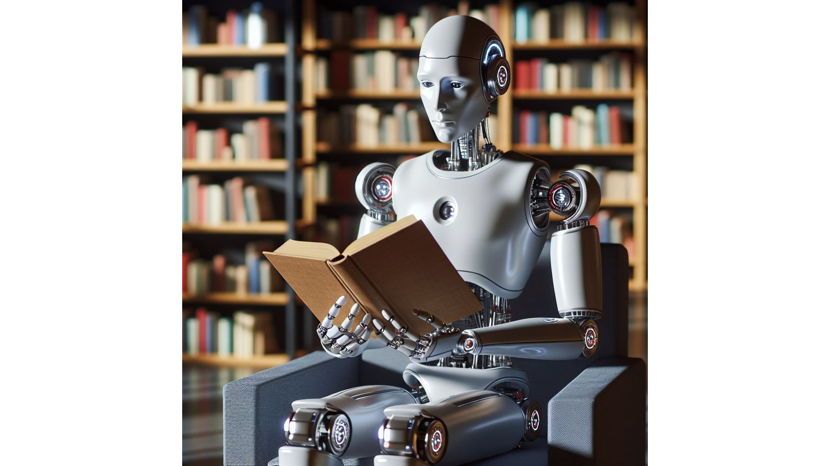
Neuronal highways can therefore be created through speech, but also through gesture. And it's not hard to imagine how one, combined with the other, can doubly reinforce learning. This is the way in which intelligent artificial intelligence learns, and is used to simplify the understanding of complex situations.
“The algorithms used enable, to a certain extent, a computer-driven system (a robot &eventually), or computer-assisted system, to adapt its analyses and behaviors in response, based on the analysis of empirical data from a database or sensors.
The difficulty lies in the fact that the set of all possible behaviors, given all possible inputs, quickly becomes too complex to describe (this is known as a combinatorial explosion). Programs are therefore entrusted with the task of fine-tuning a model to simplify this complexity and to use it in an operational and rational manner.
Wikipedia: Machine learning - Chapter - principles
https://fr.wikipedia.org/wiki/Apprentissage_automatique
“Le modèle simplifies complexity; and évite le phénomène of combinatorial explosion that can saturate the capacities of thinkingée. Today, our world is becoming more and more complex, and the field we're exploring is that of synchronic time, which is perfectly aligned with the way our brains work, perhaps precisely in the sense of simplification.
CF. Spontaneous learning from a modality: adjustment and reinforcement.
Our time has gone from asynchronous to synchronous in just a few years. The brain engine that manages complexity does so by modulation, and the more complex our world becomes, the simpler the input of information becomes, leaving more space for the brain;The more complex our world becomes, the simpler information becomes, leaving behind asynchrony, the temporal dislocation of the letter carrier's letter, for example, and replacing it with the synchronous time of tweets, cell phones and so on.. of the other.
Image: Pixabay TheDigitalArtist
You might also like:
Hyperplaces as pedagogical anchors
Every place can become a laboratory of knowledge if it is seen as a partner in training. Michel Lussault's book talks about hyperlocation, a resource for learning.
The role of religion in colonization: a dynamic of cultural dispossession
A critical look at the link between colonization and religion, with examples of cultural dispossession illustrating the consequences.
The rise of robotics, constantly enhanced by artificial intelligence, raises questions about the future of humanity. In view of the socio-professional stakes involved, we need to ask ourselves some essential questions to prevent society from drifting off course, inundated by these technological innovations.
Extracting bias from artificial intelligence
We might have thought that the machine could judge more impartially, since it has no feelings. However, studies and experiments tend to show that algorithms have strong sexist or racist biases. Their designers come from a world where prejudice still persists. These are reflected in AIs, which can lead to unfortunate judgments.
The role of education in Africa's smart cities and initiatives
Smart city projects and initiatives take into account the educational aspect of transforming Africa into a true engine of growth. However, it is crucial to develop ways of not only bringing the benefits to all Africans, but also ensuring better follow-up for their long-term effectiveness.