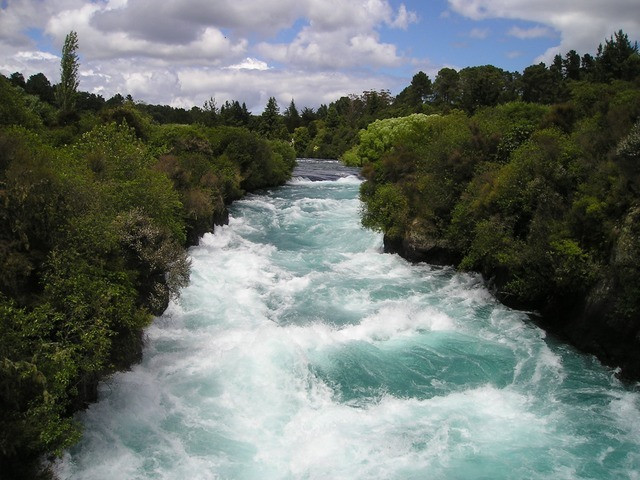
If we say "water," you think of the water you drink daily, the rivers and lakes, the seas and finally the oceans. Yet, we forget about a huge part of the water reserves that lie under our feet. Indeed, groundwater is of great importance. It is among those most used in agriculture and in human consumption in general.
In 2022, for International Water Day, the United Nations released an alarming report on water reserves. The resource is reportedly being mismanaged, wasted and polluted at a rate that worries many. In a context of growing demand, this can lead to problems. The cities of Houston, Venice, Tokyo and Jakarta are slowly sinking because they have been too quick to tap into these groundwater sources.
Getting to know the invisible water better
One of the big problems with this groundwater is that it is less well known than other water sources. If we can observe the continent of plastic in the oceans or the poor sanitation of a river, it's harder to know what's going on underground. Not that no one is interested in them, but they often take a backseat to the visible aquatic planes. Fortunately, more and more researchers are looking at these risky sources.
Canada alone is said to possess 20% of the freshwater resources on the planet. Yet the myth of abundance doesn't hold a candle to reality. A province like Quebec is seeing an increase in shortages and groundwater analysis can offer an accurate picture. For example, all it takes is one drought for farmers to tap into the water table, putting them in trouble. Quebec municipalities are benefiting from the work of scientists to analyze the water on their territory and make better decisions in that regard. Indeed, the PACES(Groundwater Knowledge Acquisition Program), led by the University of Quebec at Montreal, has been observing and noting what's going on in the Laurentian-Les Moulins region since 2008. Their report published in the spring of 2022 allows us to understand that the recharge is correct for now but observations will have to be continued in the future to see possible changes. The biggest problems would be natural and anthropogenic pollutants.
Other projects such as ReSource in the Montérégie are looking to improve the knowledge of groundwater in this Quebec region. Meanwhile, in the rest of Canada, the Lake Winnipeg Data Stream wants to acquire more accurate data on the territory's springs. A call for pan-Canadian collaboration was made on World Water Day 2022. However, it should not be assumed that only Canada is interested. All countries, from Polynesia to Switzerland to the Sahel, are trying to better understand these environments that have been little studied by research to date. What's more, many want to protect them.
Improve the health of groundwater sources
Despite a more pressing need for data than ever before, experts can already target major issues affecting groundwater.
- Pollutants, as cited above, are a major problem as they can contaminate aquatic sources in high demand for consumption. A health risk for humans and also for plants that are watered with this water. Not to mention that some come from natural environments themselves. So researchers want to better understand the causes of pollution and see how to eliminate them.
- Another difficulty is capture. For example, human facilities pump groundwater underground. Yet we now know that some of the water pumped leaks from the pipes put in place. A considerable waste given the small quantities from some sources. With more study of the pumping systems, it would be easier to grasp what is going on, fix current problems and prevent future ones.
- Finally, one of the major issues with groundwater is depleting recharge as explained, among other things, in this webinar. While in the past, underground aquifers and springs were recharged with rainfall in a normal way, this is becoming more problematic in an environment where demand is increasing and climate change is throwing everything out of whack.
An analysis of possible impacts on southern Quebec shows that the next few decades could be uncertain with more precipitation in winter when little vegetation needs it and the ground is frozen, speeding up its runoff, and greater decreases in spring and summer. Everything will depend on the monthly rainfall. Which means a drought could have a bigger impact than it once did.
That's why some researchers are thinking about controlled recharge, that is, partly done by humans in the more at-risk aquifers. A possible solution that must be accompanied by better protection of these invisible waters.
Photo credit: en.depositphotos.com
References:
Attard, Guillaume. "Effectively Targeting Action Zones For The Protection Of Groundwater Catchments." La Gazette Des Communes. Last updated February 1, 2022. https://www.lagazettedescommunes.com/783004/cibler-efficacement-des-zones-daction-pour-la%E2%80%AFprotection-des-captages-deau-souterraine/.
Dojcanova, Lenka. "In Search Of Groundwater: PhDs From The Sahel Meet To Characterize And Understand Water." International Atomic Energy Agency. Last updated April 1, 2022. https://www.iaea.org/fr/newscenter/news/a-la-recherche-des-eaux-souterraines-des-doctorants-du-sahel-se-rencontrent-pour-caracteriser-et-comprendre-leau.
Dubois, Emmanuel, Marie Larocque, and Sylvain Gagné. "Impact Des Changements Climatiques Sur La Recharge Des Eaux Souterraines Dans Le Sud Du Québec." Le Climatoscope. Last updated October 25, 2021. https://climatoscope.ca/article/impact-des-changements-climatiques-sur-la-recharge-des-eaux-souterraines-dans-le-sud-du-quebec/.
"Groundwater: A Helicopter To Track Resources." Polynesia 1st. Last updated: 17March 2022. https://la1ere.francetvinfo.fr/polynesie/tahiti/polynesie-francaise/eaux-souterraines-un-helico-pour-traquer-les-ressources-1256879.html.
"Bringing Up Some Truths About Groundwater." FIDA. Last updated March 21, 2022. https://www.ifad.org/fr/web/latest/-/faire-remonter-quelques-verites-sur-les-eaux-souterraines.
Gauthier, Vicky. "À La Rescousse Des Eaux Souterraines." University Of Sherbrooke. Last updated November 8, 2021. https://www.usherbrooke.ca/gcivil/actualites/nouvelles/details/46175.
Gauvreau, Claude. "Underground Waters: Making the Invisible Visible." Actualités UQAM. Last updated June 9, 2022. https://actualites.uqam.ca/2022/eaux-souterraines-rendre-visible-invisible/.
"Gestion Durable Des Eaux Souterraines : De La Recharge Naturelle à La Recharge Maîtrisée." BRGM. Last updated June 14, 2022. https://www.brgm.fr/fr/actualite/dossier-presse/gestion-durable-eaux-souterraines-recharge-naturelle-recharge-maitrisee.
Gourcy, Laurence. ""Groundwater Vulnerabilities" 2/5 - Webinar "Groundwater: Making the Invisible Under Our Feet Visible" (March 2022)." Dailymotion. Last updated June 2022. https://www.dailymotion.com/video/x8brnjb.
"World Water Day: Groundwater - An Invisible Treasure." Swiss Association Of Water Protection Professionals. Last updated March 21, 2022. https://vsa.ch/fr/communiques-de-presse/communique-de-presse-pour-la-journee-mondiale-de-leau-les-eaux-souterraines-un-tresor-invisible/.
Kruk, Mary. "Groundwater Data: Out of sight, out of mind?" Lake Winnipeg DataStream. Last updated March 21, 2022. https://lakewinnipegdatastream.ca/fr/article/groundwater-data-out-of-sight-out-of-mind.
"Groundwater, A Critical Resource in the Face of the Global Water Crisis." UN Info. Last updated March 25, 2022. https://news.un.org/fr/story/2022/03/1116822.
"Importance Of Groundwater Studied By COBAVER-VS." NeoMedia. Last updated December 14, 2022. https://www.neomedia.com/vaudreuil-soulanges/actualites/environnement/465051/limportance-des-eaux-souterraines-etudiee-par-le-cobaver-vs.
Livernoche, Benoît. "Debunking The Myth Of Water Abundance." Radio-Canada.ca. Last updated April 2, 2022. https://ici.radio-canada.ca/recit-numerique/3898/mythe-abondance-eau-quebec.
"Groundwater Knowledge Acquisition Program." Abrinord. Last updated July 13, 2022. https://www.abrinord.ca/projets/termines/programme-dacquisition-de-connaissances-sur-les-eaux-souterraines/.
Valo, Martine. "Groundwater, A "Poorly Managed, Even Wasted" Resource." Le Monde.fr. Last updated March 21, 2022. https://www.lemonde.fr/planete/article/2022/03/21/les-eaux-souterraines-une-ressource-mal-geree-voire-gaspillee_6118375_3244.html.
"TOWARDS BETTER GROUNDWATER MANAGEMENT." OBV-RPNS. Last updated July 6, 2022. https://www.rpns.ca/2022/07/06/vers-une-meilleure-gestion-des-eaux-souterraines/.
See more articles by this author