The advent of online learning or training is certainly a boon for many people. Nonetheless, many users drop out of online study along the way. According to a study by Sandoss Ben Abid-Zarrouk (2011) entitled "An Equity Analysis of Online Education," one of the causes of dropout would be the lack of training in online tools and thus related to the changes that digital technology brings.
Is online learning just a virtual adaptation of face-to-face learning?
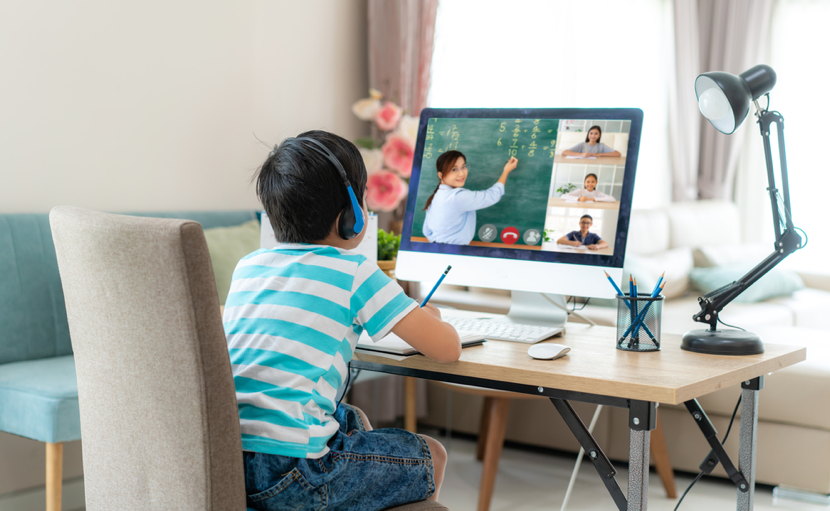
The computer is your classroom and your binder
The physical classroom is made up of tables, chairs, chalkboards or projectors, the teacher, and the learners.
Your computer provides you with tools with similar functionality. Your computer screen is probably your blackboard and at the same time your notebook or notepad. It allows you to view writings, take notes through a previously installed input program. You also have the possibility of exchanging with classmates through the chat of the application you use for the lesson or other software (zoom, team, meet ...) or platforms like WhatsApp, Messenger etc.. Your virtual classroom is therefore as active as a normal classroom in that you will find your classmates in chat mode.
If you have presentations to make, the "screen sharing" option helps you broadcast your data in the virtual classroom. As for the teacher, through the same screen sharing and activating his or her video he or she can give you explanations about the lesson and answer your concerns orally or in writing.
The hard drive is your binder and library
To get to class, students need binders to file notebooks, books, pens, kits and many other tools. All of these tools are found in your computer. You have everything in one. Your book, you can scan it if you don't have it in digital form. You can read it through your computer screen and make notes directly if it's in digital format.
Your pen is the cursor of your text software. It offers you multiple colors according to your preferences. You even have the ability to erase and rewrite without crossing out.
Also, just like the parts of a binder, your computer's memory allows you to organize your tools through the creation of folders, files and save them in specific places that suit you. If you feel that your virtual binder is dirty, you can clean it through formatting or deleting, simply.
The memory of your pc or smartphone is your library where you store books that you have read or downloaded online.
Losing your binder very often leads to the loss of content. It's the same with your computer or hard drive, so you can back up your files to the cloud to minimize the risk of loss.
Internet is your transportation
To get to a classroom you have to move around. Walking is a very recommended physical activity for health, so it is to be practiced but in a virtual teaching context it is not necessary, just like the car, motorcycle or bicycle which in addition to being the cause of traffic accidents contribute to the pollution of the atmosphere.
It is true that even digital tools contribute to the degradation of the environment, but they have almost become unavoidable and this is about opting for the least restrictive solution: abandoning the pollutants associated with mechanical locomotion.
So the Internet allows you to travel from your home to your classroom and from your classroom to your home. It is your most adequate means of transportation that certainly has limitations such as lack of network but is still interesting and facilitates you to access your courses.
Audio and video recordings are your teachers
The teacher prepares his or her course or lesson and delivers it at specific times and periods indicated according to the programs and syllabi of the institutions for which he or she works. When digital is invited, the lesson can be recorded and the link sent to the students. When this is not the case, the teaching is done remotely in real time (synchronous teaching) with interactions, albeit conditioned by specific features.
Live performances can be recorded. In fact, as a student, I have sometimes recorded lectures in order to avoid taking notes, through just the "record" option of the software or application used. With these recordings, you have the teacher full time and forever. You can listen and re-listen to his teachings and even use them throughout your life. So sound and moving images become your enablers.
Online learning or inhabiting the school
In a previous article, I demonstrated that African students sometimes inhabit the university for voluntary and involuntary reasons. The same situation arises for online learning.
To inhabit a place is to spend several hours of one's day or nights there. All definitions of "inhabit" emphasize occupying a place, regularly. A computer is not a place or a location in the spatial sense of the word, but its regular use and the fact that it becomes an inescapable tool in a learner's life makes it a kind of place to dwell.
In addition, with the evolution of digital and technologies, we notice an almost habituation to the computer and the internet. We spend several hours of the day on it for multiple reasons: work, entertainment, marketing, learning etc. As an online student or pupil, the main tools become the computer or smartphones and the internet.
In your living room, dorm room, office, or any other space that accommodates you, you can take online courses. You have the ability to become a walking student without much effect on your studies. You carry your classroom and all the learning tools with you, hence your omnipresence on your computer and on the internet: you live school online.
By the way, those nostalgic for traditional, bench-based learning in a classroom with a physically present teacher cannot be blamed for preferring this model of learning; however, given the importance of digital and the development of virtual learning, it is good form to demonstrate that the change brought about by the virtual is largely a replication of the traditional system.
The difference as well as the similarities are palpable. The main thing you lose through a computer-represented virtual classroom is physical contact with other learning stakeholders. The availability, diversity, immediacy, and ubiquity offered by online training compensates for some of this loss.
Illustration: DepositPhotos - ake1150sb
Bibliography
-Larousse Dictionary, online, https://www.larousse.fr/dictionnaires/francais/habiter/38780
-Coghan, Mike, "The Difference Between Online and Distance Education," https://www.e-tribart.fr/blog/e-learning/difference-formation-en-ligne-et-formation-a-distance
-Manon, Stas, (2022), "The 5 Differences Between Online and Face-to-face Teaching" https://insights.gostudent.org/fr/differences-enseignement-en-ligne-en-presentiel
Ben Abid-Zarrouk, Sandoss, (2011), "An analysis of the equity of online teaching", Distances and Knowledge, vol 9, pp 97-129.
See more articles by this author