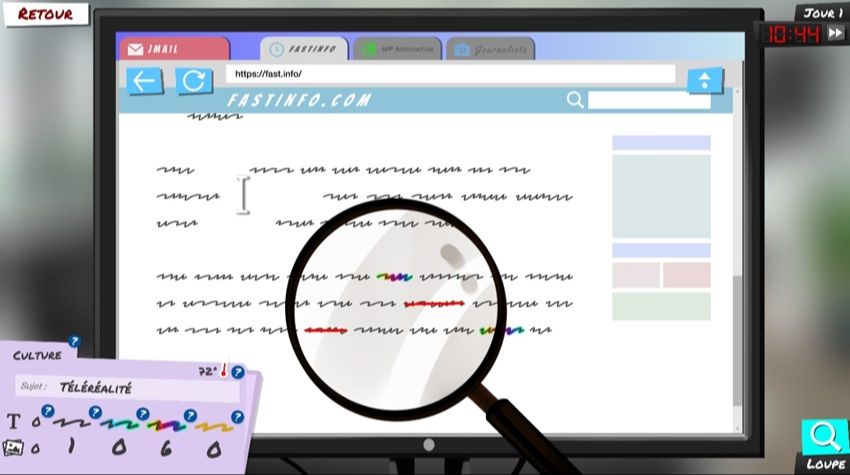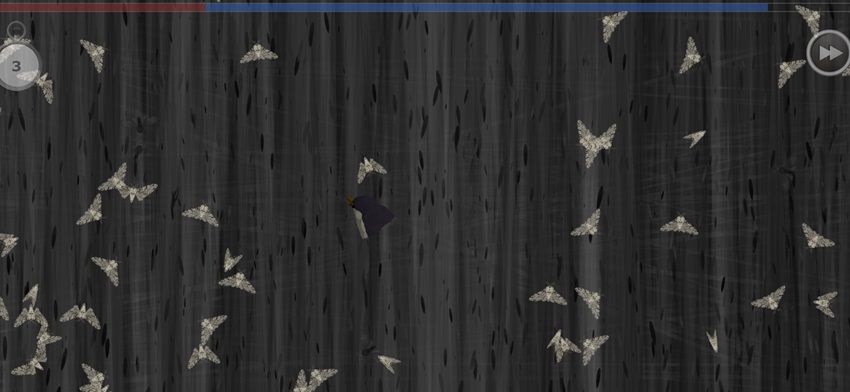
"Phalenes! understanding natural selection through play
A serious game designed to demonstrate natural selection and its effects on a moth population.
Publish at November 23 2022 Updated November 23 2022


There are more and more virtual assistants that can answer questions. AIs that chat can be found for free online. Yet, you only have to start interacting with them to see the limitations. They don't have the concept of meaning, which sometimes makes exchanges difficult. For Jean-Christophe Baillie, AI researcher, the issue of semiotics could potentially be learned by algorithms but by an approach similar to that of learning language in children.
In fact, if most scientists have tried to give an adult mind to artificial intelligences, Alan Turing submitted already in 1950 the idea of designing instead AIs with the mind of a child. This one could develop and with the right curriculum become more mature. For example, the question of language is interesting. Developmental psychology has shown that the child learns terms by experimenting with the physical and social world around him. By exchanging, he acquires the meaning of colors, objects, and even intangible concepts.
This could be repeated with AIs. Many researchers are trying to do this with robots but they are big money investments with risks of mechanical disorders. So an alternative solution would be virtual reality where the algorithm learns by manipulating elements and gradually develops meaning.
Time: 34min43
Picture credit: en.depositphotos.com
You might also like:
"Phalenes! understanding natural selection through play
A serious game designed to demonstrate natural selection and its effects on a moth population.
A fun game about heredity and genetics - Welcome to Thingdom
How do you talk to children about genetics and heredity? A British museum has come up with the method: design a game in which you create a line of adorable creatures with precise objectives. The game is fun, colorful and easy to learn. Even adults will succumb to the charms of the bugs and their large families.
Newscraft: the game that puts you in the shoes of a reporter
A serious game that explains and brings to life the notion of news selection and the editorial line of different types of media.
"Space Shelter: Google's cybersecurity game
All our lives have an online component. As a result, a large proportion of Internet users are at risk of being tricked by hackers. A short game invites Internet users to remember certain elements of cybersecurity using a space theme.
Elude: a serious game for understanding depression
An original approach to depression. The game's metaphor is well conceived, a little dark and informative about a problem that affects millions of people.