Building a climate conducive to learning through classroom management
The teacher must demonstrate the know-how and interpersonal skills needed to manage his or her class.
Publish at December 14 2022 Updated December 14 2022


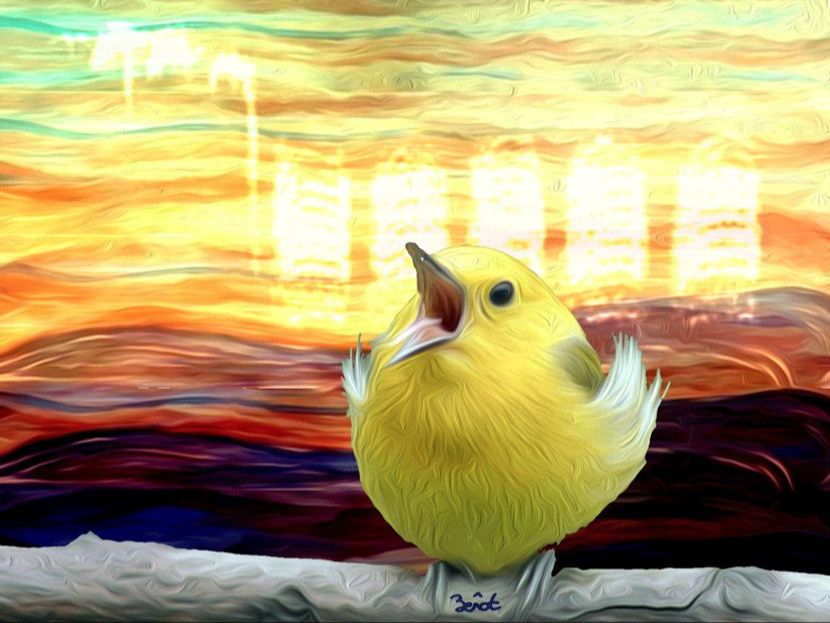
Passereau - Alert Launcher - 2021 -
In the 1937 cartoon Snow White and the Seven Dwarfs, when she finds herself in the dwarfs' house faced with an abominable mess, Snow White calls out to the animals of the forest with an interspecies melody (a whistle) understood by several species, to help her bring order to the cottage.
When faced with a crisis situation, such as during an assault, we call for help by shouting while we seek to fend off our attacker. In some cases, witnesses will avoid interfering and in others a few sentient beings will step in to assist us.
What if, like Snow White, we could solicit other species to assist us? Imagine, then, an intra and interspecific cry to which rodents, cats, pigeons and dogs will respond in unison by running to our aid to repel the intruder. We could believe ourselves in a fairy tale ... And if this phenomenon was not so supernatural as that?
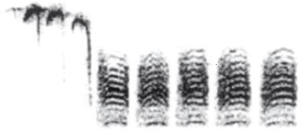
This phenomenon can be observed in some birds that in the presence of a predator emit a harassment call recruiting birds of its species as well as others to harass the predator in group in order to make it flee.
But how do these intra and interspecific communications take place? On what is this communication based? Is this type of communication frequent? This is what Mylène Dutour proposes to discover in her thesis "Communicating between species to cope with the predator: the case of harassment calls in passerines".
Mylène Dutour invites us, with passion, to discover the theme of communication between passerine species in defense processes by harassment. It is around this central subject that she develops her research approach and results in a thesis-article format. This choice makes sense thanks to the work put in place to maintain a clear, fluid narrative thread that offers the reader the pleasure of discovering research in behavioral ecology.
Echoing her subject, the researcher manages to bring together various disciplines such as bioacoustics, behavioral biology, ecology and physiology, but also her own talents as a photographer and artist to unveil the mysteries of her subject. Thus, she succeeds in capturing our attention and growing our interest throughout the manuscript by accompanying us and cross-referencing her observations to those of her peers.
This thesis work corresponds to the succession of different personal and intellectual histories.
My work on the study of stalking behavior began in Master 2, or perhaps it had already taken root in Master 1 during my internship on communication in the little owl (Athene noctua) under the supervision of Thierry Lengagne.
After obtaining some very nice results dealing with the impact of the European owl on the harassment behavior of passerines, I had the chance to pursue this work in a thesis. [But here we are, the ideas and questions were flowing... So, how to tell the reader a homogeneous story since this thesis work is articulated around several questions? The desire to learn and to discover knowledge did not weary me during these three years. And, on the contrary, it is partly my fault if some results deviate from the initial path. It must be said that 36 study models lent themselves particularly well to this aspect!
Finally, our questions were diverse and varied, but they were above all complementary and centered around the same anchor point. This thesis is therefore structured in three sections: the first one sets the theoretical framework, the second one includes the published, accepted or in preparation articles and the third one corresponds to the general discussion.
I wanted to offer the reader throughout this manuscript a complete story revolving around one main theme, communication between passerine species in the case of predator harassment.
The sum of Mylène Dutour's publications is impressive and full of results on her subject. Nevertheless, one of the most amazing is the application of this research to develop tools and study methods for conservation biology.
Conservation biology is the field studying the living world and its biological diversity: biodiversity, with the aim of protecting it. One of the key measures of conservation biology is the determination of species range and population size. Through her research, Mylène Dutour proposes the use of passerine harassment calls as a complementary tool to the acoustic population study of the European owl. This method provides three levels of information:
However, the author warns about the negative effect of an overuse of these harassment calls that can lead to a desensitization of the community to this call.
Mylène Dutour's work shows us how species cooperate in spite of their differences in the face of a common aggressor. We can see all the complexity of the networks revolving around a simple bird call. The results obtained, in addition to helping us to better understand this process, also lead to tools for studies in conservation biology.
This research work reminds us that communication is not unique to humans and that mutual aid is a survival strategy used by many species of living beings. Overcoming the limits of their species and language, these birds unite in true community to become David against Goliath.
The luckiest among us are fortunate enough to be able to listen to nature by simply opening their window. However, it would seem that we have trouble hearing some of the cries of alarm, distress or mutual aid from members of our own species, and in some cases, our own cries...
Good reading
This work was defended on November 28, 2018 in Lyon at the doctoral school Evolution, Ecosystems, Microbiology, Modeling : ED 341 of the Claude Bernard Lyon 1 University within the Laboratory of Ecology of Natural and Anthropized Hydrosystems (EHNA) (Lyon - France)
Mylène Dutour. Communicating between species to cope with the predator: the case of harassment calls in passerines. Ecology, Environment. University of Lyon, 2018. French. NNT: 2018LYSE1251. tel-02426002v2
Credit citation: Figure 3: Harassment calls made by black-capped chickadees (Thesis)
Thesis: https://theses.hal.science/tel-02426002/
PDF: https://theses.hal.science/tel-02426002v2/document
You might also like:
Building a climate conducive to learning through classroom management
The teacher must demonstrate the know-how and interpersonal skills needed to manage his or her class.
Everything small is aesthetic [Thesis].
Each year, the Nikon Small World Awards reward the best photomicrographs of the year and make us discover the splendor of life at the microscopic scale. Can this invisible world be the muse of artists? This is what Yan Jun Xu proposes to explore in his thesis "Microscopic Beauty in Contemporary Art".
Holographic place and visualization of urban dynamism [Thesis].
The city is a space co-constructed by people to exchange, communicate and trade. The City and Man form a complex ecosystem in which Man shapes the City and the City shapes Man. The understanding of this system is essential to envisage the future of our urbanized societies. Let's discover how to visualize this complex to better understand it with Thibault Pierre Louis Romany.
Technology, what recipe for a "new normal" in education?
Technology is a powerful tool for transformation, but only under certain conditions: a common and shared vision among all the actors involved is undoubtedly a good starting point. A recent report compares different educational reforms in the digital domain and illustrates the points of convergence and the specificities of each experience. Each country has its own specific trajectories, in which technology is not the only determining factor of success.
Humor in human-robot social interactions [Thesis].
What if laughter was no longer a human trait? Lucile Béchade's crazy project is to integrate humor into machines in order to improve human-robot interactions. Humor is an important tool for establishing both common ground and trust between two individuals. Making machines sensitive to the effects of their humor and adapting their actions to the user could prove very useful. I'll let you discover why.