Doing a new pedagogy in your own way. Pedagogical radicality is characterized in its practices by its intensity, singularity and agility.
Publish at February 15 2023 Updated December 12 2024


By Mourad Benhalima - Special Collaboration
At the end of the session, before leaving, the facilitator suggests that the learners do a "tour de table", during which they are invited to express themselves on the course of the training. This moment of informal exchange offers the opportunity to evaluate the learning and the training. The feedback requested by the facilitator allows learners to express their feelings in relation to their lived experience and thus produce feedback.
The questioning of the ability to exploit the information produced, for the purpose of validating the achievement of learning objectives and for the purpose of adjusting learning and training, has led to the development of an evaluation compass.
The tool "the cardinals of evaluation" aims is to guide the roundtable in order to structure the feedback and allow a better apprehension, by the learners and the facilitator, of the information produced.
The intention of this tool is to produce a multi-directional feedback, which aims to situate and comfort the learner in his or her learning, to inform the facilitator, and to allow the facilitator to make adjustments to his or her posture and/or teaching strategy.
The Evaluation Cardinals, or evaluation compass, tool structures the informal end-of-training-session evaluation into four cardinal points toward the final tip.
During the round, each cardinal point is addressed by the learner in the following order:
N ➔ S ➔ O ➔ E ➔ C.
The learner, after internal questioning, gives feedback using the compass as follows:
It allows the learner to situate him/herself with respect to his/her learning, to make explicit his/her needs for clarification and deepening, to elicit his/her modalities of transfer. It also allows him/her to formulate constructive advice to , the facilitator.
It allows the facilitator to implicitly verify the achievement of the training objectives, identify gaps and make necessary adjustments based on the feedback received.
The Cardinals can be used to bridge the gap between two training sequences that include an intersession, or as part of a face-to-face learner-facilitator formative evaluation.
This compass enables a 360° evaluation. The collection and exploitation of information serves to improve the quality of training and ultimately the quality of learning.
At the end of a training day given on the topic of feedback, a learner uses the Cardinals as part of the round table discussion proposed by the facilitator:
Mourad Benhalima is an Emergency Physician practicing in Normandy (France) who defines himself as a Lifelong Learner. He holds a Master's degree in Health Training Engineering and a Master's degree in Quality and Safety of Care Pathways obtained at the Sorbonne Paris Nord University.
He teaches the Quality approach of Training Organizations, Learning Organizations, Teaching Strategies and Docimology at the University Sorbonne Paris Nord.
His current interest is in the evaluation of learning and training, as a lever for learner motivation and engagement, throughout training paths, and beyond.
You might also like:
Doing a new pedagogy in your own way. Pedagogical radicality is characterized in its practices by its intensity, singularity and agility.
School failure and the influence of affect
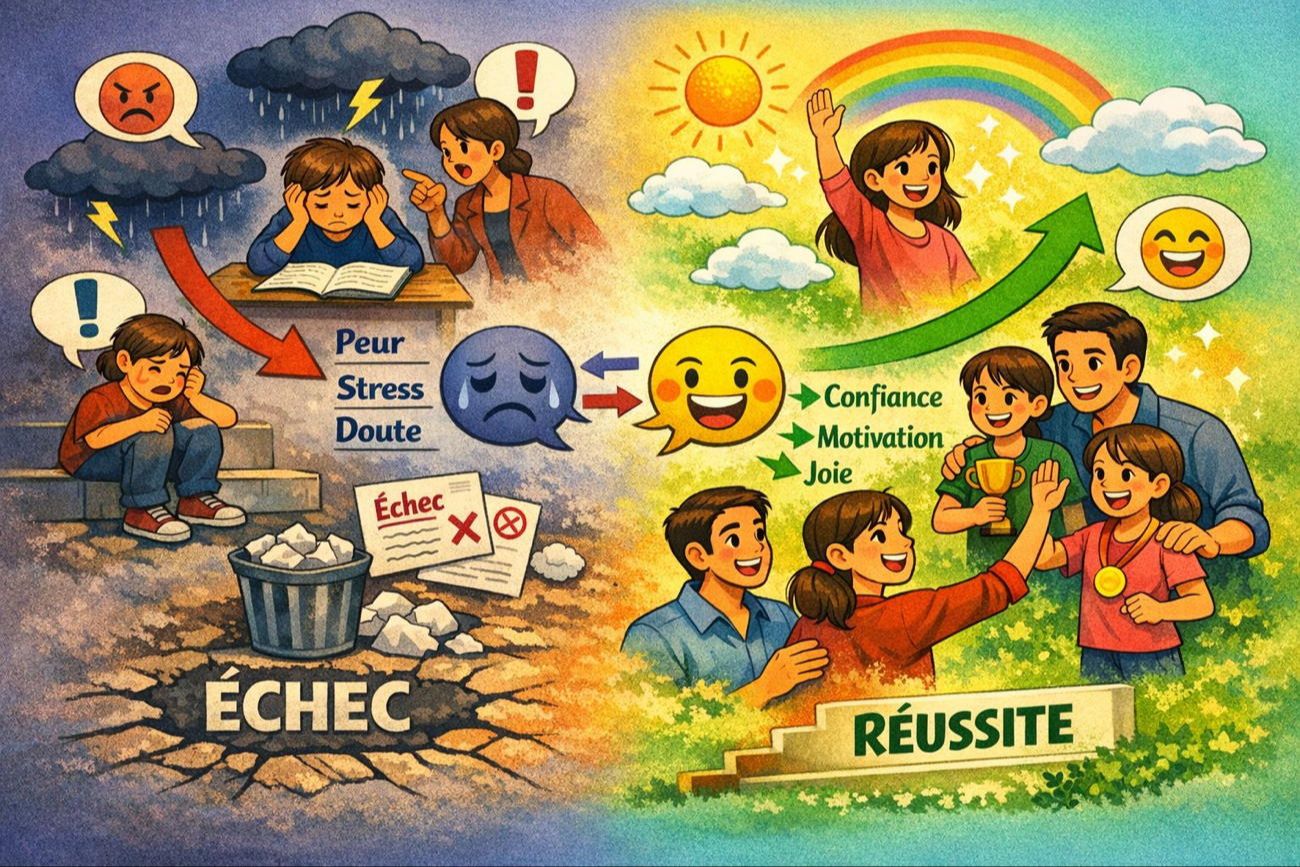
A student's perception of school determines his or her success or failure. It depends on the quality of the environment (family environment, student-teacher relationship, social environment) in which he or she evolves.
Creativity techniques don't develop creativity
Techniques don't create creativity. They can at best provide a framework, but never guarantee it. Innovation is born of the encounter between a mental posture, reflection and the welcoming of the unexpected.
Measuring. To control or to accompany?
Classical platforms provide us with data that is not enough to provide remediation when learners encounter difficulties. Database, cognitive psychology, and training specialists are trying to go further with cognitive tutors, and distance learning actors are expressing needs that go even further...
Faced with the unexpected, think unconventionally
Beyond the search for single causality and the hegemony of rationality, individual or collective decision-making rigidity can be an obstacle to managing the unexpected. Methods for overcoming them.