Avatars and projected identities
Avatars are such simple accessories in our digital connections but they carry all the complexity of our personalities and our world. Let's take a look at the various dimensions of this subject.
Publish at April 04 2023 Updated April 04 2023


The pressure of work and the incessant flow of ideas pouring into our consciousness through all the doors of knowledge make modern existence risky in many ways.
Nikola Tesla
Beyond the psychological flow described by Csikszentmihalyi (2014) which is a: "mental state reached by a person when he or she is fully immersed in an activity and is in a maximal state of concentration, full engagement, and satisfaction in its accomplishment" (Wikipedia) - it is possible to apply the concept to the circulations, of energies, matter, emotions, and affects that flow through the enterprise.
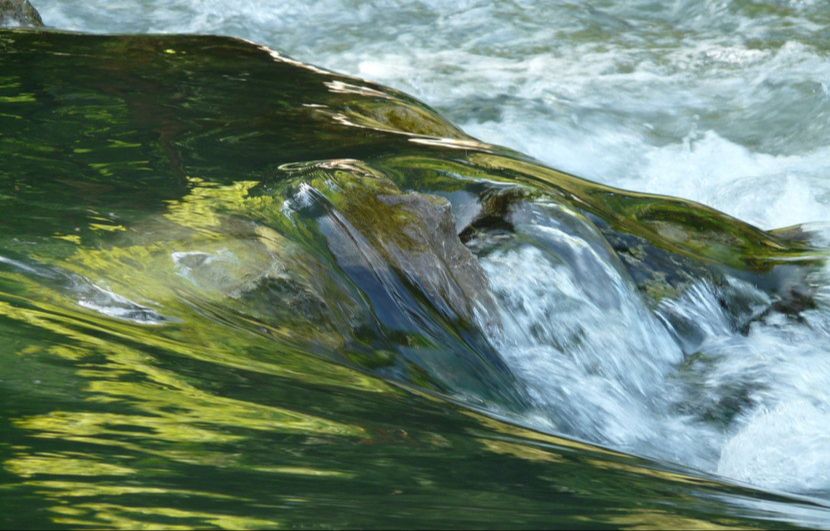
Flow is a concept that describes the continuous and harmonious movement of a system or process. In nature, flow can be observed in many phenomena such as the movement of water, the wind in the trees, the change of seasons, etc. Becoming aware of flow in nature helps to better understand the energy that flows in training groups and more generally in work organizations. It is also a way to think about the organizational world more organically and perhaps bring more life into structures sometimes calcified by habit.
Preparing to observe movement in organizations certainly requires a thorough knowledge of "organizational theories," but the path suggested here is to observe nature to understand the flow of life. During a sales management training course, the organization I belonged to had proposed to managers in training to sit in the middle of the shelves of the store they were managing and do nothing but feel and observe the flow. It was an incredible experience for managers who are always agitated about product placement or achieving a result. And yet by agreeing to "do nothing" they learned far more than in several days of training.
Developing this ability to observe in nature is a path to regenerating managerial practices. Take time regularly to observe the nature around you. Sit in a quiet place and let your mind wander. Observe the movements, colors, shapes, textures. Soak up the ambiance and atmosphere of the place. Use all your senses to become aware of the flow. Listen again to the sounds of nature, smell the smells, touch the textures, observe the colors and movements. The more you use your senses, the more you will be able to perceive the flow and spot the feedback loops that occur within it.
Practicing mindfulness, which is about being present in the moment, without judgment or distraction, by observing natural phenomena, such as the movement of water, changes in light, the sounds of nature. To train yourself to perceive subtle differences, you must alternate your attention between the inside and the outside of your body. To do this, it is necessary to pause, to not fixate on anything and to fully feel the moment. Gradually, by dint of observation and training, it is possible to remain present and attentive to each sensation. This learning from nature brings another look at the movements that agitate the company, their recurrence or their rarity.
To deepen one's understanding of flow, through intellectual effort, it is possible to save time by reading books by Pelt ((L'homme renaturé 2015) or Hallé who reminds us that a tree is not an isolated being but a colony. By watching documentaries, talking with experts, knowledge will grow, metaphors will become more obvious and you will be able to perceive the flow through it.
For example, by observing a stream whose flow stumbles on a rock, it is easy to understand that it is useless to insist and that it is better to pass by the obstacle by limiting the efforts and aiming for the harmonious flow. These images are lessons for leading a team, conducting a project or piloting a transformation. There is no need to force anything, it is enough to find the best flow, where the energies want to go. Observing nature penetrates us with the wisdom of living systems that self-regulate, adjust and recompose themselves with what is there.
Studying systems from the metaphor of nature involves understanding the interactions between the elements that make up a natural system. In a methodical way here is how it can be done:
It is possible to make connections between observing nature and the operation of a business as (Delavallée, 2021)cells, particularly using the principles of sustainability and ecology. By observing natural ecosystems, we can understand how the interactions between elements contribute to the overall functioning of the system.
Similarly, in a company, each department or team is connected to the others and must work in harmony to achieve the company's goals. Applying the principles of sustainability, where each element must be used responsibly to maintain the balance of the ecosystem is best to keep the analogy to the living.
In a business, sustainability can be applied by adopting responsible practices to minimize waste, reduce energy consumption, and manage natural resources efficiently. Understanding the dynamics of change in nature is key.
For that matter, quickly, everyone realizes that there is no waste in nature only cycles. Indeed, ecosystems are constantly changing. By taking a systems approach, companies understand how the different parts of the business are connected and how they can work together to improve overall performance (see Pater Senge's 5 disciplines and the systemic).
Learning how natural elements interact and how ecosystems regenerate is a source of regeneration of new economic models.
Hopefully, observing nature-inspired flow will bring in ideas of balance and self-regulation rather than boundaries and attempts at domination. Being inspired by nature goes beyond the idea of copying a virtuous model to capture profit for oneself. Organizational design and change management have lessons to take from nature.
Source
TedX https://www.ted.com/talks/mihaly_csikszentmihalyi_flow_the_secret_to_happiness
Csikszentmihalyi, M., Abuhamdeh, S. & Nakamura, J. (2005). Sinking. Handbook of competence and motivation, 598-608.
Csikszentmihalyi, M., Abuhamdeh, S., & Nakamura, J. (2014). Flow. Flow and the foundations of positive psychology: The collected works of Mihaly Csikszentmihalyi, 227-238.
https://oleksandr-tereshchuk.com/wp-content/uploads/2021/10/Flow-Book-Excerpts-Oct-13-2021.pdf
Wikipedia Flow https://fr.wikipedia.org/wiki/Flow_(psychology)
Delavallée, E. (2021). Taking inspiration from the living to organize the company: 10 operational principles. De Boeck Supérieur.
https://www.decitre.fr/livres/s-inspirer-du-vivant-pour-organiser-l-entreprise-9782807335141.html
Eric Delavallée - Questions de management. Drawing inspiration from the living to organize the enterprise
https://www.questions-de-management.com/sinspirer-du-vivant-pour-organiser-lentreprise-mon-dernier-ouvrage/
Theories of organization (15minutes) https://youtu.be/pTfLNN7Eox0
Pelt, J. M. (2015). Renatured Man. Bouquins.
https://www.decitre.fr/livres/l-homme-renature-9782221157428.html#ae85
Revue des deux mondes. Francis Hallé. The tree is not an individual but a collective being, a colony https://www.revuedesdeuxmondes.fr/francis-halle-larbre-nest-pas-un-individu-mais-un-etre-collectif-une-colonie/
You might also like:
Avatars and projected identities
Avatars are such simple accessories in our digital connections but they carry all the complexity of our personalities and our world. Let's take a look at the various dimensions of this subject.
Learning organizational resilience
When an organization experiences a trauma, it can resume the course of its history by demonstrating organizational resilience.
Why learn to draw in the age of AI?
The arrival of artificial intelligences capable of generating images by describing in writing has been a revolution. So, will the art of drawing become obsolete? The answer is clear, in principle...
Constraint sets us free: how limits increase creativity tenfold
Counter-intuitive idea: creativity can be exacerbated by constraints rather than limited by them. Through various examples such as the Pecha Kucha format, the rescue of the Apollo 13 mission, the development of video games in the 80s, and even in teaching, it has been demonstrated that imposed limits force innovation and concentration.
Attention to others, a key to collective intelligence
Attention to the other as a key to participation and commitment.