Tests of vigilance and attention
Measuring attention remains a concern in many settings. Some work tasks are not very error tolerant. Here are a series of sample tests to measure attention in children and adults.
Publish at May 03 2023 Updated May 03 2023



In 2023, the Routard guidebook celebrated its 50th anniversary. Yet it is the latest in a long line of creations over 200 years, as this France Culture capsule explains. The first guide called the "Guide des voyageurs en Europe" appeared in 1793. Written by the German Heinrich August Ottokar Reichard, this one offers maps, suggestions on places to visit (called curiosities) and routes with useful advice on stagecoaches.
French people sniffed out the thread and first of all, Jean-Marie-Vincent was going to copy Reichard's guide by using the name of Richard to mix the audience well. Meanwhile, Louis Hachette, a famous publisher, saw the interest of people for these books and hired Adolphe Joanne to write them. A battle was born between these blue books and the red German Baedecker collections, translated into French and English. Each reached a certain audience, and when World War I broke out, the English Baedecker translators teamed up with Hachette to create a blue-colored guidebook on each side of the English Channel.
However, another competitor popped up in 1910. The tire manufacturer Michelin sensed the interest in the automobile and thus developed books to tell travelers where to get one, which roads to follow, etc.
The Routard would thus arrive much later, in the 1970s, by Hachette editions, which wanted to publish more democratic works and related to the changing mores from that time on. In 2022, 1.9 million copies of the Routard were printed.
However, the latter is seeing its popularity decrease, now directed to social networks, online sites, etc. Nevertheless, when wi-fi is not stable or available, the travel guide is still a safe bet for the traveler wishing to get information.
Length: 4min50
Picture credit: en.depositphotos.com
You might also like:
Tests of vigilance and attention
Measuring attention remains a concern in many settings. Some work tasks are not very error tolerant. Here are a series of sample tests to measure attention in children and adults.
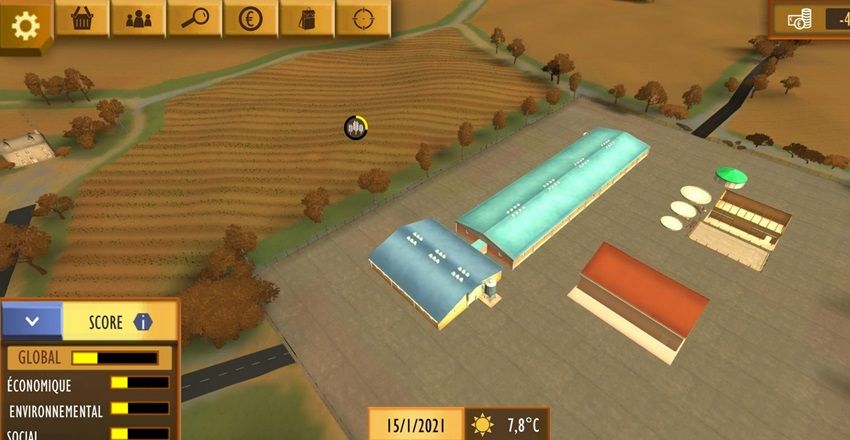
Reflecting on agroecology through play
There's nothing simple about being a farmer. You have to plan your activities throughout the year, make sure you have the right machinery, maintain it and so on. All with a view to ecology. A serious French game seeks to teach agroecology.
The Englishes MOOC course was developed by an artist and is designed for anyone interested in the (English) language. It explores the history of English, its pronunciation, and its relationship to the art world.
A fun game about heredity and genetics - Welcome to Thingdom
How do you talk to children about genetics and heredity? A British museum has come up with the method: design a game in which you create a line of adorable creatures with precise objectives. The game is fun, colorful and easy to learn. Even adults will succumb to the charms of the bugs and their large families.
Develop your musical ear through play with Meludia
To a layman, music is just a tune performed by a musician. Yet, if he were to play Meludia, he would learn all the rudiments and terms associated with musical practice.
A series of games that require an ear.