Deconstructing the historical myths of personal development
Relativize the beliefs and myths that make our lives more beautiful, but which are not necessarily right.
Publish at May 16 2023 Updated May 16 2023


Many science fiction universes predict futures where we are split between the real and virtual worlds. Usually this is more dystopian than utopian, leading to many problems in discerning what is real and what is not, as an escape from a difficult life, etc. A way for the authors to warn all those who would embark on this path without thinking it through.
We have already had a small glimpse of this type of reality. During the covid-19 related confinements, human interaction has been mostly virtual. Video conferencing solutions, work environments, and social networks prevented complete isolation. All that was missing was a more generalized supply of virtual reality headsets and it would have been easy to meet in virtual cafes, theaters or auditoriums. Besides, this is the fantasy of metavers like Mark Zuckerberg, to name only the most famous. So would the next step be to all become avatars?
The question of these current and future avatars already fascinates anthropology researchers. Indeed, this technology allows one to escape the "gravity of one's body" to project oneself into a disappearance of the self. Some speak instead of an "idealized self," meaning that users create their extension of themselves by trying to be as interesting as possible. Specialists have noticed, by the way, that extroverts tend to choose an even more colorful version for their character while introverts try to blend in.
An approach that comes close to the real thing with all the unpleasant sides as well. Indeed, inequalities are moreover omnipresent in metavers: female avatars suffer more sexual harassment, among other things, and the poorest ones can't afford elements of personalization they would like. What's more, some users let themselves be influenced by their avatar.
The emotion and affect created by the character can sometimes have influence on the person who will then start to act "as their avatar should," which can in some cases involve problematic behavior. Relationships could transform with avatars. Many gamers feel like they are really themselves only in a virtual context. The already strong parasocial ties on networks could become even stronger with the advent of virtual universes linked to an influencer or famous personality.
This double of oneself, or digital twin, is not a recent invention. During the Apollo 13 mission, a computer clone of the shuttle was used by engineers so that they could return the astronauts to Earth. It was possible to find a solution by using similar data at the same time. Today, however, these computer reproductions are causing as much concern as curiosity for the future. For example, medicine could understand and analyze the human body even better by digitally recreating it. Some hope to see hologram avatars in entertainment, marketing, communication and also education.
Concretely, what does the possibility of avatars in education mean? Already, it depends on what kind of uses virtual reality is desired for. Institutions have used it to promote their campuses to potential students, a method that is even more valuable in a time of pandemic that prevents large numbers of on-site visits. Virtual events such as master classes or interviews for internships could be conducted using metavers.
Pedagogically,avatar classrooms would allow students to perform actions often impossible in a real-world setting, such as affixing annotations in virtual space or projecting themselves into different environments. It would be possible for them to collaborate on projects with the teacher who, in turn, would be able to materialize what he or she wants. A human body, a geometric figure, a 16th century work, etc. All of this so that the learners could manipulate it, observe it and work on an individual or common project related to the items. They could move around the space without disturbing and go to different workshops to experiment or work.
According to some research, the use of avatars in contexts, for example, of ethics education adds value to teaching. By using solutions like GatherTown, students felt more inclined to share their opinions and work collaboratively in this context. The digital environment could create safety for some to reflect on cases proposed by the teaching team.
The idea of the virtual and digital twin is mostly to be able to practice again and again. Making mistakes in a teaching or medical simulation does not have unfortunate effects. On the contrary, use this sandbox as an opportunity to test things, improve behaviors and actions, etc.
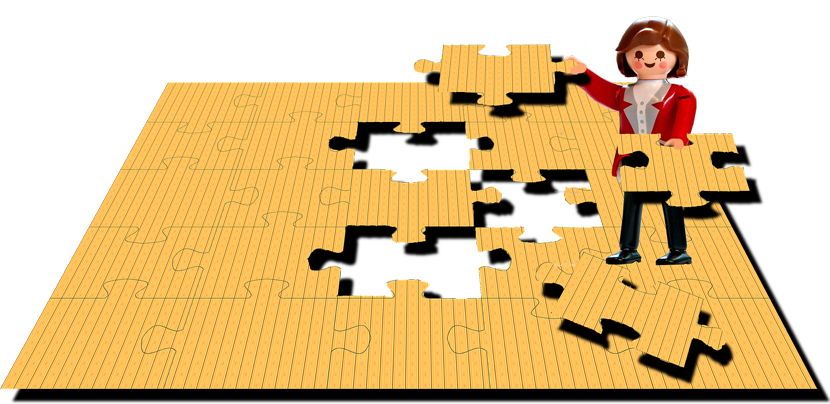
Image: Brian Penny / Pixabay
References:
"Avatar: The Loss Of Identity?" The Daily Swile. Last updated June 23, 2022. https://thedaily.swile.co/avatar-entreprise.
"Avatars, The Hidden Revolution Behind The Digital Twins." Octopize - Mimethik Data. Last updated July 7, 2022. https://octopize-md.com/fr/2022/07/07/avatars-la-revolution-cachee-derriere-les-jumeaux-numeriques/.
Chrétien, Fleur. "When The Metaverse Unfolds In Higher Education." Figaro Etudiant Pro. Last updated July 13, 2022. https://pro.etudiant.lefigaro.fr/article/quand-le-metaverse-se-deploie-dans-lenseignement-superieur/.
"Tomorrow, What Will Our Behaviors Be In The Metaverse Or The Impact Of Digital In Our Lives?" Elodie Mielczareck. Last updated November 28, 2022. https://www.elodie-mielczareck.com/articles/demain-quels-seront-nos-comportements-dans-le-metaverse-ou-limpact-du-digital-dans-nos-vies-.
Hernandez Gonzalez, Teresa. "Virtual Reality as a Support for Future Teachers." KnowledgeOne. Last updated September 21, 2022. https://knowledgeone.ca/la-realite-virtuelle-comme-support-pour-les-futurs-enseignants/?lang=fr.
Hu, Yung-Hsiang, Hui-Yun Yu, Jian-Wei Tzeng, and Kai-Cheng Zhong. "Using an avatar-based digital collaboration platform to foster ethical education for university students." ScienceDirect. Last updated April 2023. https://www.sciencedirect.com/science/article/abs/pii/S0360131523000052.
Leclercq, Thomas. "Will Metaverse Disrupt Friendships Among Young People?" The Conversation. Last updated October 20, 2022. https://theconversation.com/le-metavers-va-t-il-bouleverser-les-liens-damitie-chez-les-jeunes-191964.
"Student World And Digital, Creating A Link Between The Two?" Kwark.education. Last updated March 29, 2023. https://kwark.education/le-metavers-createur-de-lien-entre-les-etudiants/.
Moyrand, Emmanuel. "Avatars, Your Digital Extension In The Metaverse." JDN. Last updated February 1, 2022. https://www.journaldunet.com/media/publishers/1508281-les-avatars-votre-extension-numerique-dans-le-metaverse/.
Ronerge, Alexandre. "Gather Town: a window into the future of education? " Thot Cursus - Last updated December 14, 2021
https://cursus.edu/fr/23393/gather-town-une-fenetre-sur-le-futur-de-leducation
Shatkov, Dmitry. "Are Holographic Avatars a Perspective Concept?" HYPERVSN. Last updated March 1, 2023. https://hypervsn.com/blog/are-holographic-avatars-a-perspective-concept.html.
Tan, Cindy. "Building A Unique Digital Identity: Mathieu Nouzareth On How Avatars Shape Our Metaverse Experience." Metaverse Post. Last updated April 14, 2023. https://mpost.io/fr/building-a-unique-digital-identity-mathieu-nouzareth-on-how-avatars-shape-our-metaverse-experience/.
"Immersive Universes: Tomorrow, All Avatars?" France Culture. Last updated: October 28, 2022. https://www.radiofrance.fr/franceculture/podcasts/le-meilleur-des-mondes/univers-immersifs-demain-tous-avatars-9623758.
Woolfitt, Zac. "How Will Avatar Students and Virtual Twins Learn in Classrooms of the Future?" Media and Learning. Last updated March 2023. https://media-and-learning.eu/type/featured-articles/how-will-avatar-students-and-virtual-twins-learn-in-classrooms-of-the-future/.
You might also like:
Deconstructing the historical myths of personal development
Relativize the beliefs and myths that make our lives more beautiful, but which are not necessarily right.
Sometimes, sportsmen and women can completely lose their composure at the start of an event, when they've been putting in a string of good performances in training. These under-performances are often explained by "mental factors", but that's a bit short-sighted. Athletes and researchers have attempted to propose more refined and differentiated hypotheses. Useful analyses for anyone who needs to be at the forefront of an engaging or stressful action.
What if the Smurfs spoke the language of mushrooms?
And if the Smurfs spoke the language of mushrooms? That would explain why they live in those funny little houses! More seriously, did you know that mushrooms have developed a certain type of conversation? Presentation of this not so ordinary and surprising study about fungal and mycological means of communication.
Studying at university and/or working: going where the advantages lead
Is the student better off continuing his or her post-secondary studies, or starting to work and possibly studying part-time? For the state, the advantage of developing a skilled, multi-skilled and specialized workforce ensures its tax revenues. The pressure that artificial intelligence is putting on the education system's methods is forcing it to move towards continuing education...
Learning from professional practice in the library
By analyzing the situation, we can better understand how to mobilize skills and knowledge to good effect.