"You don't learn to swim by watching the lifeguard, or by debating the properties of water."
Publish at September 19 2023 Updated September 19 2023



Erasmus: "the main hope of a nation lies in the proper education of its youth."
Education is constantly evolving to better prepare students to face the challenges of the modern world. Among the most significant advances, the integration of emotional intelligence into the school curriculum has taken center stage. This holistic approach aims to develop students' emotional and social skills, helping them to manage failure and success while fostering empathy and compassion. That's why, when asked what socio-emotional learning is in the classroom, we read this in "6 ways to integrate socio-emotional learning in the classroom" -STUDYO :
Socio-emotional learning refers to social and emotional skills related to the ability to recognize and manage emotions, develop empathy and a healthy state of mind, make responsible decisions and build positive relationships, as well as deal effectively with challenges.
So, what does this actually mean?
Emotional intelligence, as popularized by Daniel Goleman, refers to the ability to recognize, understand and effectively manage one's own emotions as well as those of others. In the Académie de Rennes curriculum, it is grouped into three categories:
Emotional intelligence encompasses three major abilities:
Thus, its integration into the school curriculum is a response to the growing need to prepare students to succeed not only academically, but also in their personal and professional lives. By teaching emotional awareness and regulation from an early age, schools provide students with an essential tool for managing stress, frustration and anxiety, while fostering a more positive and inclusive learning environment.
As a result, they will be better able to cope with failure as well as success when confronted with one of these outcomes. In concrete terms, as Goleman explains in Chapter 16 of his book "Emotional Intelligence", this means that :
Emotional education has its roots in the affective education movement of the 1960s. At the time, it was believed that, when it came to psychology and motivation, children learned best if they immediately applied what they had learned. Instead of using emotion to educate, it educates the emotions themselves. So how do you develop social skills?
Another crucial aspect of socio-emotional education is the development of social skills. As Frederica Minichiello writes: "Social-emotional skills are seen as 'savoirs-être' that can be acquired, taught and evaluated." Thus, learning to communicate effectively, to resolve conflicts constructively and to collaborate with others are essential skills for success in life.
Socio-emotional education gives students the opportunity to acquire these valuable skills, divided into five components:
It also helps them to understand that failure is not an end in itself, but a learning opportunity. By building emotional resilience, schools prepare students to overcome obstacles and persevere in the pursuit of their goals, whether academic or personal. Empathy and compassion would therefore be an advantage for better success.
Empathy and compassion are pillars of social-emotional education. They foster positive feelings, happiness, emotional intelligence and curiosity, as Corinne Isnard writes in her article on Empathy and Compassion.
By encouraging students to put themselves in other people's shoes and understand their emotions, we foster a more caring school climate. Empathy, which is based on self-awareness, strengthens peer relations, reduces bullying and reinforces a sense of belonging to the educational community. Empathy is very effective here, because the more sensitive we are to our own emotions, the better we are able to decipher those of others.
Compassion, on the other hand, encourages students to act altruistically towards others, helping to create responsible, committed citizens. As a result, students become more responsible, more assertive, more popular with their peers and more open, more helpful, more considerate, more attentive, more inclined to adopt conciliatory strategies to resolve conflicts, more in harmony with others, more "democratic" in their attitude and more able to resolve conflicts...
In short, socio-emotional education plays an essential role in the training of 21st-century individuals. By integrating emotional intelligence into the school curriculum, developing social skills and encouraging empathy and compassion, schools create an environment conducive to personal fulfillment and academic success.
By investing in socio-emotional education, we are investing in a future where individuals are better prepared to face life's challenges and contribute positively to society.
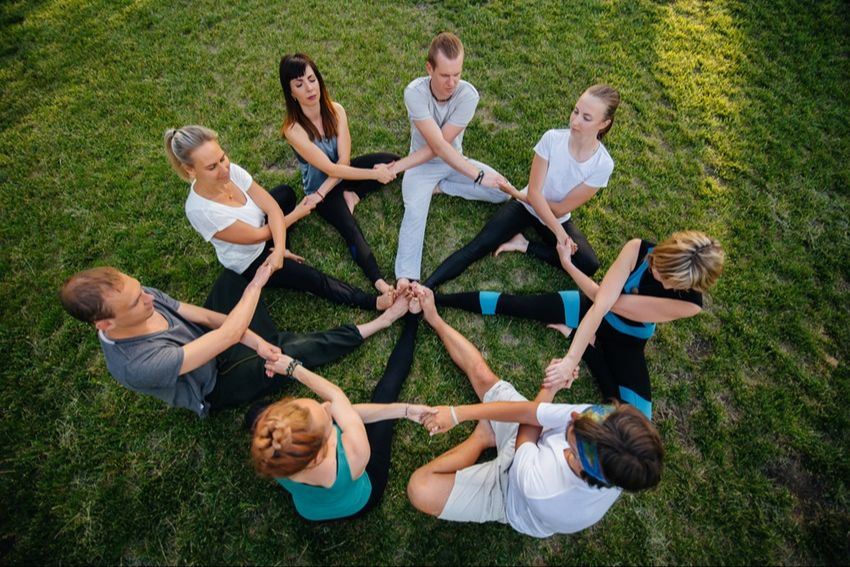
Illustration: Gerd Altmann - Pixabay
References
6 ways to integrate social-emotional learning in the classroom, in STUDYO,
https://studyo.co/fr/blogue/6-facons-dintegrer-lapprentissage-socio-emotionnel-en-classe
Corinne Isnard B. "Chapter 9. Empathy and compassion" in LA PLEINE CONSCIENCE AU SERVICE DE LA RELATION DE SOIN. P. 119-130.
https://www.decitre.fr/ebooks/la-pleine-conscience-au-service-de-la-relation-de-soin-9782807314573_9782807314573_10029.html
Daniel Goleman, L'intelligence émotionnelle, Robert Laffont, Paris, 1997.
https://www.decitre.fr/livres/l-intelligence-emotionnelle-9782290100653.html#ae85
Favoriser la motivation des élèves grâce à l'intelligence émotionnelle, in Espace pédagogique, ACADEMIE DE RENNES https://pedagogie.ac-rennes.fr
MINICHIELLO Frederica(2017), "socio-emotional skills: research and initiatives", in Revue internationale d'éducation de Sèvres, p.12-15.
https://journals.openedition.org/ries/6008
You might also like:
"You don't learn to swim by watching the lifeguard, or by debating the properties of water."
The contribution of Qi Gong to collective intelligence facilitation
History of Qi Gong and its benefits for collective intelligence facilitation
Digital discretion and sensitive analogy: complementary methods
The etymology of "Analogy" is "a proportional relationship between two things". Analogy refers to a reality. On the other hand, the digital refers to a shared reference system. Both allow us to apprehend the world.
Two opposing visions, that of wuwei (non-action), which embraces all forms, and that of the Palo Alto school (every presence exerts an influence), all to accompany action. Where does manipulation come in?
It's not so much a question of asserting a particular religion as it is of asserting human values in the public sphere, of tolerating a vision other than the objective, material values alone, which are poor guides when it comes to orienting oneself towards happiness.