What's your talent?
How can you cultivate it?
10 personalities who made it to the top with their genius
If you've ever surfed the Internet, you've probably seen headlines about talent, success, merit or even virtuosity. According to many media outlets, we're surrounded by geniuses in our cultural, corporate or political landscape. It's enough to make you think you're in a fairytale from a thousand and one nights.
This passion for extraordinary personalities is not new, but there seems to be a renewed interest in high-potential individuals, incredible success stories and so on. An obsession with inspiring biographies, but an interest that is detrimental to the common good.
The "genius" problem
Once an individual is considered a genius, he or she is virtually invulnerable on all subjects. Many virtuosos have committed atrocities that are forgiven in the name of their creations, their importance and so on. Picasso was a misogynist who mistreated virtually all his wives, even freezing moments when they were crying in his paintings, and yet he seems untouchable.
One of the problems with the myth of the solitary genius is that we forget that this success is much more collective than we think. In order for the author or artist to produce his work undisturbed, he often needed assistants; sometimes, anonymous little hands helped the "artist" in the production of his fresco or sculpture. This myth has repercussions today. People under a loathsome genius won't stay with him or his company for very long. This would explain the frequent staff turnover in companies owned by certain "virtuosos"...
All the more so as the question of merit also crumbles under reality. Despite good intentions, it's the children of wealthier families who benefit from the private system (which is better funded than the public one) and have access to better training and jobs. Nepotism, luck and other factors are often what differentiate the wealthy from the poor. American universities are encouraged to enroll diverse profiles, yet recent figures show a huge disparity between men and women, and between applicants of color and whites.
Is it talent? No, environment creates success
At the beginning of 2023, neuroscientist Samah Karaki published a hard-hitting essay entitled "Talent is a fiction". That's all it took for the media to invite her. In a world that's always on the lookout for talented people, to say that the concept doesn't exist is a huge blow. For Karaki, the concept of "talent" has no scientific basis. It's complicated enough to note the appearance of a positive genetic trait in plants. It's even more hazardous in humans. In both cases, everything depends on the environment in which these living beings find themselves. Studies have shown that twins will not necessarily have the same pathway and reactions.
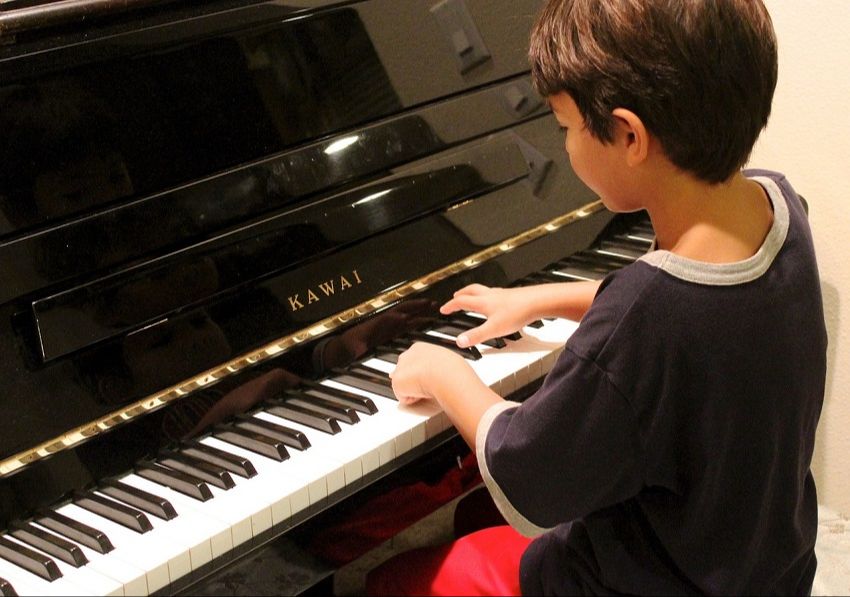
With this in mind, we can take many a genius off his pedestal. Mozart certainly began composing at the age of 6. A phenomenon... helped by the fact that his father was himself a renowned composer who forced him to play the piano for some 3,500 hours before he was 6. If Wolfgang had been born into a peasant family at the same time, he would probably never have made music, and his name would not be in the collective imagination.
Consequently, focusing on individual achievements while ignoring the environmental issue allows the authorities to shirk their responsibility for reducing inequalities. By relegating everything to the genetic question," asserts the scientist, "it's easy to fall into a dangerous game that pigeon-holes human beings. Wasn't colonialism partly based on racist ideas of "the physiological superiority of whites"?
This also plays a role with students. Rather than trying to reduce the factors hindering the success of some, the school crosses its fingers and relies on its geniuses to "hide the dunces". As a result, millions of children find themselves categorized and will not necessarily seek to break out of these labels. In fact, even "high-potential students" are abandoned, pressurized or showered with resources, when what they really need is attention, room for error and relaxing moments.
Samah Karaki points out, among other things, that this myth of talent has put girls at a disadvantage in science and mathematics courses. Indeed, environmental stereotypes continue to have an effect on students, who choose faculties often on the basis of gender-specific qualities. This has nothing to do with skills, but simply with the fact that by treating the female sex as "sensitive" or "irrational", it is difficult for young women to project themselves into careers perceived as cold and Cartesian.
Image: nightowl / Pixabay
References
Beauchet, Gwendoline. "Samah Karaki, PhD in neuroscience: "The very notion of talent is not based on any scientific reality"." Marie Claire. Last updated: January 27, 2023. https://www.marieclaire.fr/revoir-la-notion-de-talent-samah-karaki-interview,1441799.asp.
Bright, Jim. "Let's face it, meritocracy is a myth. The game is rigged." The Sydney Morning Herald. Last updated: June 23, 2023. https://www.smh.com.au/business/workplace/let-s-face-it-meritocracy-is-a-myth-the-game-is-rigged-20230620-p5dhva.html.
Brunfaut, Simon. "Samah Karaki: 'Talent has no scientific basis'." L'Echo. Last updated: July 22, 2023. https://www.lecho.be/opinions/general/samah-karaki-le-talent-n-a-pas-de-fondement-scientifique/10481839.html.
Conahan, Noe. "The myth of meritocracy is alive and well, and it lives on campus." Mentality Magazine. Last updated November 1, 2022. https://www.mentalitymagazine.org/articles1/2022/11/1/the-myth-of-meritocracy-is-alive-and-well-and-it-lives-on-campus.
Edwards, Ross. "Is talent a myth? The truth about natural ability." The Great Updraft. Last updated August 19, 2023. https://thegreatupdraft.com/talent-myth-natural-ability/.
Holditch, Emily. "Why meritocracy is a myth." The Boar. Last updated November 26, 2022. https://theboar.org/2022/11/myth-of-meritocracy/.
Hornbek-Copenhagen, Maria. "Myths about 'talent' disadvantage women in science." Futurity. Last updated: August 28, 2023. https://www.futurity.org/talent-gender-sciences-2966132-2/.
"Samah Karaki: Is talent a fiction?" France Inter. Last updated: August 2, 2023. https://www.radiofrance.fr/franceinter/podcasts/des-idees-pour-un-monde-nouveau/des-idees-pour-un-monde-nouveau-du-mercredi-02-aout-2023-7041402.
Scappaticci, Elena. ""The fiction of talent makes social inequalities natural"." Usbek & Rica. Last updated: January 13, 2023. https://usbeketrica.com/fr/article/la-fiction-du-talent-rend-naturelles-les-inegalites-sociales.
Sieger, Pam. "8 common myths in gifted or advanced and talented education." Learning Liftoff. Last updated May 2, 2023. https://learningliftoff.com/students/gifted-students/common-myths-in-gifted-or-advanced-and-talented-education/.
Vitaud, Laetitia. "Why we need to put an end to the myth of genius in business." Welcome to the Jungle. Last updated: September 21, 2022. https://www.welcometothejungle.com/fr/articles/en-finir-avec-le-mythe-du-genie-en-entreprise.
See more articles by this author