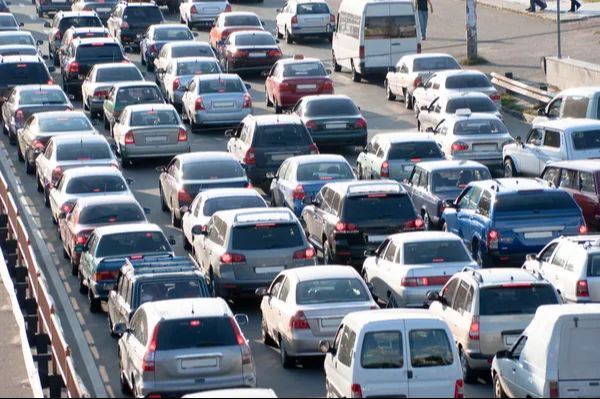
If the existence of roads is proof positive of the opening-up of areas, a guarantee of development, they are also the source of a whole range of ills and nuisances of all kinds, from traffic accidents to health problems.
According to the findings of the literature review consulted by the researcher, these ills are experienced differently depending on social class. Individuals from underprivileged backgrounds would be the main victims.
Linking road traffic to social inequalities, Sarah Mahdjoub-Assaad has written a scathing doctoral thesis: "Les nuisances liées au trafic routier (bruit, pollution de l'air et insécurité) : de la gêne à la perception du risque sanitaire sous l'angle des inégalités sociales". This research has two objectives:
- The main objective is to identify the determinants (socio-demographic, socio-economic, linked to daily mobility) of discomfort with noise, air pollution and road accidents.
- The second objective is to study the inter-relationship between annoyance, perception of health risk and the health effects experienced as a result of the three road traffic-related nuisances.
In order to achieve these objectives, the researcher organizes her reflection into three parts: the state of knowledge, the survey and general discussion. With a view to reporting on this work, she presents the state of knowledge, the data collection tools and sampling, and finally the results of the research.
The state of knowledge
In this section, Sarah acknowledges that road traffic-related nuisances are not new. The Romans were already complaining about them. In France, these annoying nuisances are the scourges of society and health, of interest to numerous institutions such as BruitParif (Observatoire du bruit en Île-de-France). The researcher classifies nuisances into three categories, which she presents succinctly along with the risks incurred for humans: noise, pollution and insecurity. She then analyses road nuisance from the angle of social inequality.
- Noise
Particularly annoying for the French, the reaction to a nuisance varies from one individual to another, and reflects a feeling of displeasure depending on whether the noise is imposed or desired, and can be life-threatening.
For example, high exposure to road traffic noise - a frequency of over 55dB(A) - results in a considerable reduction in the number of months of healthy life, with the immediate consequence of sleep disturbance and annoyance.
- Atmospheric pollution
Road traffic is one of the main sources of air pollution. Measures have been taken to limit pollution. For example, the WHO has set limits on exposure to pollutants, and environmental observatories have been set up in France to monitor air quality and pollution levels. Despite this, road traffic continues to cause deaths.
In fact, the WHO records 3 million deaths worldwide every year. On top of this, road traffic is associated with a number of physical and psychological inconveniences: eye and skin irritations, etc., and the perception of air pollution is a matter of individual subjectivity.
- Road safety
This refers to the fear and risk of road accidents. Road safety is due to a number of factors, ranging from alcohol and drug abuse to carelessness on the road and poor road design. To reduce the damage, restrictive measures are being taken to hold road users accountable. But the risk is still high. In 2016 in France, 3469 people lost their lives on the road.
Analyzing road nuisance from the angle of social inequalities
Whether it's social inequalities in relation to noise, pollution or road unsafety, the literature on the subject hardly reveals unanimous conclusions. This is due to variations in study design and methodology, not to mention the lack of data in some European countries. Aware of this obstacle, Sarah has included other factors in her analysis, namely socio-demographic, socio-economic and mobility determinants.
After presenting the current state of knowledge concerning the variables of her research, the researcher proceeds to delimit the field of study.
The field of study
The researcher conducted two cross-sectional "general population" surveys in the Rhône département, in 2013 and 2014 respectively. The first survey focused on annoyance, and involved 720 respondents. The second survey focused on the perception of health risk and the feeling of its effects, and saw the participation of 277 subjects, corresponding to volunteers from the first study who agreed to continue with the survey. The main data collection tool was the questionnaire. By analysing the data, Sarah was able to draw some conclusions.
Research results
Asked to identify the determinants of perceived discomfort with noise, air pollution and road accidents, the researcher hypothesized that those most discomforted were the most disadvantaged.
- Result 1: Socio-demographic and socio-economic indicators, as well as means of transport, helped to determine discomfort linked to noise and air pollution, while discomfort linked to road accidents seemed to be determined more by the perception of road risk.
- The secondary objective was to identify the determinants of the perception of a health risk in relation to noise, air pollution and road accidents, on the one hand, and of the perception of the effects of noise and air pollution, on the other.
- Result 2a: housing-related factors seem to be involved in the perception of noise-related health risk, while mobility-related factors are linked to air pollution, and health-related factors are associated with road accidents.
Furthermore, time spent at home and finding one's home inconvenient were commonly associated with the perception of a health risk related to noise and road accidents.
- Result 2b: those who suffered from hearing fatigue and tended to be depressed felt or had already felt the effects of noise, while those who suffered from sore throats and nervousness felt the effects of pollution. In addition, smokers were the most likely to feel the effects of both noise and air pollution, as well as being the most bothered by air pollution.
Reference
Mahdjoub-Assaad Sarah, 2018, Les nuisances liées au trafic routier (bruit, pollution de l'air et insécurité) : de la gêne à la perception du risque sanitaire sous l'angle des inégalités sociales -Université de Lyon - online
https://theses.hal.science/tel-02062646
See more articles by this author