Publish at December 13 2023Updated December 13 2023
The syntax taught by Jenga
Adopt the codes of a familiar game
Syntax is an essential part of learning French, but it can sometimes be arid. With both regular and special needs students, it's important to find a way to get them interested. One New Brunswick teacher, Cassandre Arseneau, has potentially come up with a way of doing this, drawing on a well-known board game. Jenga is very popular with children: after building a tower with wooden blocks, each player removes one. As the construction becomes more fragile, the aim is to avoid being the one to remove the block that causes the tower to fall.
Take the same idea, but this time add an element of the sentence to each block. Madame Arseneau has affixed subjects, verbs and complements to wooden blocks. Once the students have completed a few syntactical exercises, the idea is to play a game in which each of them has to form sentences with the blocks... without letting the whole thing fall apart. It's an original way of approaching the construction of statements while having fun, alone or with others. What's more, it's possible to deal with verb tenses or other subjects in disciplines such as music, she explains in this video clip.
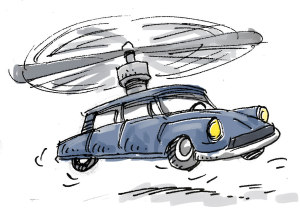
Airships capable of carrying heavy loads, a plane that flies around the world without refueling, a drone designed for the home market, or a segway that allows a person to move vertically on two wheels... These products illustrate the C-K method, designed to encourage the emergence of breakthrough innovations.
Most utopias are difficult to achieve. However, there is one that can be implemented: to withdraw cars from cities little by little. All mathematical models show that it is possible to continue to develop the city around the automobile. Thus, many cities in the world are starting to push them back. Policies facilitated by the confines of the covid-19.
The mock trial is in essence an exercise in conflict, and therefore promotes pedagogy through debate and, by extension, cognitive conflict. This cognitive conflict arises from the debates and exchanges generated by the group exercise.
In a highly animated world, it's no longer enough to just rely on your reputation. You have to stand out and, most importantly, build a community of followers. That's why even in the cultural world, more and more are using online community facilitators. The museum community has quickly realized the benefits. And now some are thinking about libraries following suit...
The role of the teacher has often been seen as a transmitter of knowledge. However, as soon as the pedagogy changes, the teacher's tasks change. With inverted or active teaching, the teacher becomes a facilitator and an animator of the class. This does not mean that he does not transmit any knowledge...