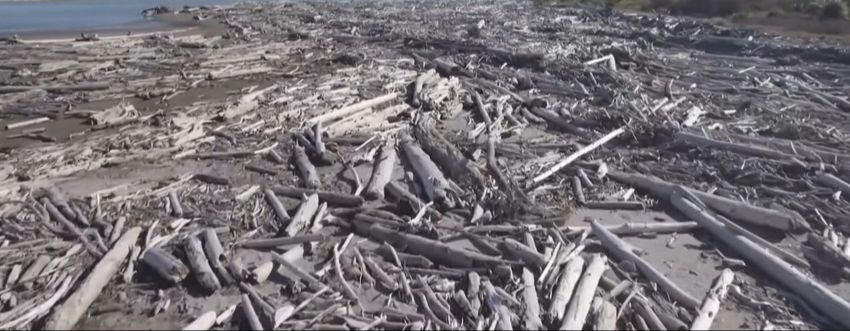
We know that the driving force behind global climate change is the production of carbon dioxide. Now, more than ever, it seems that the world needs to reduce its emissions. Some companies, unable to do so quickly, have come up with an idea: carbon credits. In this way, they pay for a "right to pollute" offset by carbon farms, usually massive tree plantations in various corners of the planet.
The idea may sound appealing, but it has managed to attract the New Zealand government. To date, the forestry industry has invested around 5 billion euros in pine plantations and processing. But this is having a detrimental effect on local residents. Particularly in certain Maori communities, trees are often swept away by cyclones. As a result, this monoculture causes significant damage to the surrounding shores and farms, and even death in some situations. What's more, Maori education, which is based on outdoor learning, is less and less feasible because of the disaster areas, whose damage takes time to be repaired by the authorities.
The solution, according to some, lies in changing the approach to reforestation, which should focus instead on species endemic to New Zealand. Fortunately, indigenous nations are making their voices heard by international organizations, including the UN, which has criticized the carbon footprint of New Zealand's carbon farms for producing more emissions than they remove.
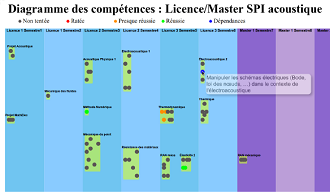
How is a learning tracking tool actually implemented? A case study presented at the most recent French Acoustics Conference details the rollout of an online visualization tool—a “skills graph”—within a bachelor’s-to-master’s degree program ... and the reactions of faculty, students, and administrators.
In winter, prepare your soil with mulch and green manures, grow cold-hardy vegetables (of which there are many), and protect your crops with sails, tunnels or greenhouses. A semi-underground greenhouse can even enable you to harvest all year round without heating.
Rigorous methods to foster creativity? Should we believe in them? Most techniques prove to be disappointing or at least random in their results. However, the TRIZ method is an exception, undoubtedly because it provides for a more structured and complete progression, at the price of greater rigor and more laborious learning. We suggest you discover its principles and steps.
Developing skills is a process of becoming aware of the real issues of a profession. This is the reason why professional circles base their training on accompanied internships, often alternating with theoretical courses. Because competence cannot be acquired without a measure of action, and without reflection on the experience of action. Knowing how to act goes through different stages where professional insertion plays a major role.