Action research, a political choice
An alternative approach to research is very field-based. Its objective is not the same as others. The idea is to change ways of doing things in order to better meet needs. It's called action research.
Publish at February 07 2024 Updated February 07 2024


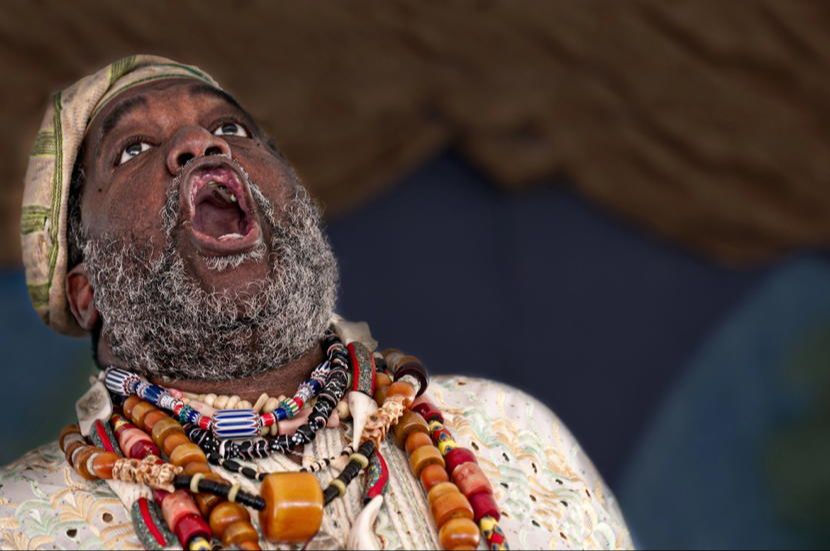
One of the first human cultural activities, apart from graphic ones, is storytelling. Whether it's the tale of a day in the fields or the mythical exploits of a hero condemned by the gods, storytelling is at the heart of human life.
Storytelling was first used to explain things, before science came along to remove the "mystical" polish from phenomena. Then, we continued to tell stories to move us, pass on lessons or bring meaning to a confused existence...
Although most fables today are written down, they have long been passed on orally. In all cultures, the notion of passing on legends has been central to tribes and clans. Anthropologists know that this form of storytelling is all the more important as it enables us to understand how certain tales were transported, the meaning they took on in the community in question, and so on.
In the ancient Irish tradition, for example, we find the seanchaí, the keeper of stories, who travelled from village to village to share stories and ancestral knowledge. Native Hawaiians had a similar role. Pessa'h is a Jewish custom in which the story of the Exodus from Egypt is told to the young each year.
Canada's various First Nations have also built up a wealth of oral tradition stories that almost disappeared if some, like this author, hadn't decided to preserve their essence in writing, as colonization undermined this oral tradition and the legends attached to it. Europeans saw these tales as proof of the "savage" nature of these peoples, who had to be tamed.
African griots know a thing or two about this too. These unparalleled storytellers and guardians of lineage memory quickly lost their status with the arrival of the colonists. As a result, this approach to storytelling almost sank into oblivion. Fortunately, many resisted and kept this local culture alive despite immense pressures.
Today, the various nations of Africa find themselves in a strange situation. On the one hand, they are of course trying to keep up with the times and offer their young people the skills for tomorrow's world. On the other, they feel the need to make room in schools for oral tradition, which has been threatened. Even UNESCO sees this as a way of decolonizing African history, to make room for the particularities of each culture. Some feel that reviving this source of knowledge would be emancipating for the majority of Africa.
In Africa, an old man who dies is a library that burns (Amadou Hâmpaté Bâ, Malian writer).
Many Africans are worried about the future of the oral tradition, which has been a major cultural cornerstone. Griots are fewer and farther between, and their elders are gradually disappearing, taking to the grave stories great and small that would be formative for the young.
If young Africans have American, French or even Australian references, what about those of their own nation? Their town or village? Hence the importance, for more and more observers, of integrating this knowledge into African school curricula. To do this, we need to turn to the corpus of texts that have integrated these stories or ways of telling morals, often with animals, into written works.
In 1953, Léopold Sédar Senghor and Abdoulaye Sadji wrote a textbook for Senegalese pupils in "Black Africa", as it was then called. Under the noses of the colonizers, these two authors succeeded in incorporating elements of the African oral tradition, adapting it sufficiently to still teach written French. The idea, however, is not to create hatred of the French, but rather to offer a cultural cross-fertilization that allows children to immerse themselves in both cultures.
African authors such as Souleymane Mbodj are now in a position to create tales for schoolchildren that can be consulted at school. As we showed in a previous article, there are a large number of observatories and research centers on the question of orality in Africa, designed to safeguard these stories and even share them online in written form.
The various African cultures and diasporas are invited to rekindle the flame of oral tradition by telling stories from their childhood, creating family moments where storytelling is emphasized, and also to take part in events promoting African stories.
It's also a reminder that while little Malians, Senegalese, Ivorians and others would benefit from having African referents, other peoples would be enriched by immersing themselves in this little-known oral tradition. Teachers of all origins would do well to take a closer look at this body of stories and legends that so nearly disappeared.
Photo: korzeniewski / DepositPhotos
References
Corinus, Véronique. "Senghor and Sadji pédagogues: l'oralité africaine au service de l'écrit français." OpenEdition Books. Last updated April 29, 2021. https://books.openedition.org/pub/43177?lang=fr.
"The fascinating history of African storytelling." CultureTree. Accessed February 3, 2024. https://culturetree.co.uk/1940/.
Hillary Chiwanza, Takudzwa. "Reviving the oral traditions of Africa - Reclaiming our knowledge as a weapon for decolonization and liberation." Africa Rebirth. last updated July 5, 2023. https://www.africarebirth.com/reviving-the-oral-traditions-of-africa-reclaiming-our-knowledge-as-a-weapon-for-decolonization-and-liberation/.
"Integrating African oral literature into education: strengthening students' cultural identity and learning." The Taboo Agency. Last updated June 28, 2023. https://www.taboo.ac/livre-de-bord/integrer-la-litterature-orale-africaine-dans-leducation-renforcer-lidentite-culturelle-et-lapprentissage-des-eleves/.
"Les contes africains: l'école par la parole." RFI. last updated February 2, 2023. https://www.rfi.fr/fr/podcasts/8-milliards-de-voisins/20230202-les-contes-africains-l-%C3%A9cole-par-la-parole.
"The importance of oral tradition for children: the case of Sahelian countries." WATHI. Last updated January 4, 2017. https://www.wathi.org/valeurs-africaines/wathinotes-valeurs-africaines/wathinote-limportance-de-tradition-orale-enfants-cas-pays-sahel/.
"African orality in peril?" L'Afrique De Fa. Last updated February 9, 2023. https://lemondedefa.wordpress.com/2023/02/09/loralite-africaine-en-peril/.
Maalouf, Laila. "Raconter pour se réapproprier sa culture." La Presse. last updated November 5, 2023. https://www.lapresse.ca/arts/litterature/2023-11-04/entrevue-avec-natasha-kanape-fontaine/raconter-pour-se-reapproprier-sa-culture.php.
"Saving the Oral Tradition: Tales and Legends of the World Online." Thot Cursus. last updated August 4, 2013. https://cursus.edu/fr/9346/sauver-la-tradition-orale-contes-et-legendes-du-monde-en-ligne.
Souag, Moha. "Intangible heritage: valuing an African cultural referent." Policy Center for the New South. Last updated December 1, 2023. https://www.policycenter.ma/publications/patrimoine-immateriel-valoriser-un-referent-culturel-africain.
"Storytelling and cultural traditions." National Geographic Society. Last updated November 1, 2023. https://education.nationalgeographic.org/resource/storytelling-and-cultural-traditions/.
Vincent, Sylvie. "Oral tradition: another way of conceiving the past." History Canada. History Canada. last updated June 3, 2021. https://www.histoirecanada.ca/consulter/arts-culture-et-societe/la-tradition-orale-une-autre-facon-de-concevoir-le-passe.
"Working towards an African Renaissance through culture and history." UNESCO. last updated May 11, 2023. https://www.unesco.org/en/working-towards-african-renaissance-through-culture-and-history.
You might also like:
Action research, a political choice
An alternative approach to research is very field-based. Its objective is not the same as others. The idea is to change ways of doing things in order to better meet needs. It's called action research.
Virtual reality: practice without risk
Virtual reality is gaining momentum in the entertainment industry with video gaming. However, the education sector is not left behind since this technology offers increasingly realistic simulations. Consequently, for jobs where delicate manipulations are commonplace, virtual reality becomes a great asset. Examples.
Putting First Nations back in the textbooks
First Nations are just beginning to get some recognition after having suffered a lot of repression. However, this respect is not yet reflected in school materials that either erase them or portray them as "savages". Fortunately, Aboriginal authors are enriching the literary corpus and publishing initiatives are preserving the languages and stories of these peoples.
There are some excellent online resources to help you better understand the particularity, strength and techniques of press illustration. When the tradition goes back this far, we understand its value and richness.
Interactive Graphic Resources for the Classroom
Visual applications to achieve one's educational goals


