
Tutoring and e-mail: there are limits to familiarity and impertinence
Many teachers don't know how to deal with this phenomenon or how to manage it.
Publish at February 14 2024 Updated February 14 2024


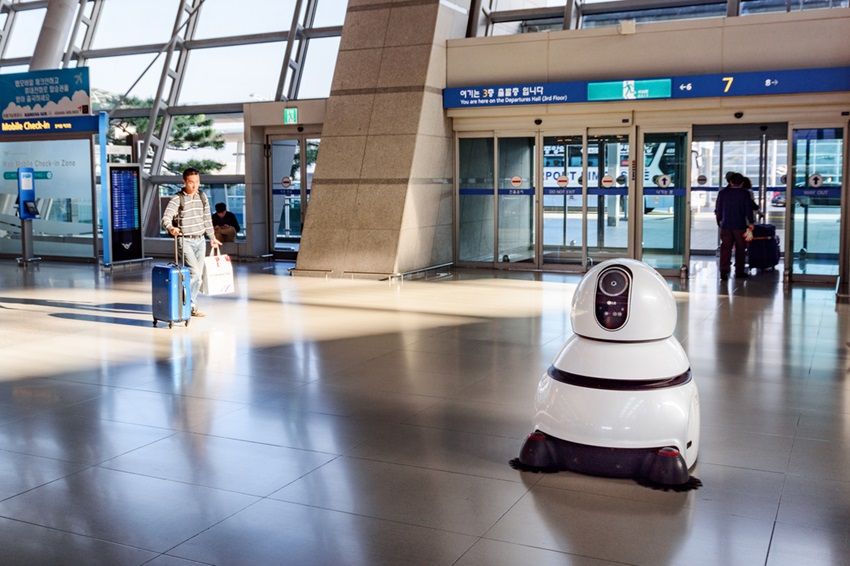
Sci-fi fans might have wondered, when re-watching classics like "Blade Runner" or "I'Robot", whether they'd ever walk alongside androids or robots on the street in their lifetime. It seemed to belong to a more distant future. Yet, little by little, these machines have begun to make their mark. For the time being, they seem to be mainly reserved for factories, at least that's the case in the Americas and Europe, but in Asia, the situation is not the same.
Many Eastern countries have adopted robotics to a greater extent. Japan, of course, where major advances in robots have been made, and China, seeking to demonstrate its global power, is investing more and more in the field; for the moment, however, it's South Korea that's claiming to be the land of robots.
Indeed, statistics compiled on the number of robots in the manufacturing world show that Korea is ahead of all other nations. By 2021, the country had reached 1,000 machines per 10,000 employees, seven times higher than the world average of 141 per 10,000. This only applies to factories. Because robots are now part of everyday Korean life. In January 2022, the Korea Herald reported that some 3,000 robots were serving customers in restaurants. In 2019, there were just 50.
This considerable explosion can be explained by a number of factors. Korea's proximity to Japan has encouraged innovation and a degree of competition with advances made in the island nation. As a result, the Korean authorities have spent nearly half a billion dollars on robotics R&D. What's more, like many industrialized countries, Korea is experiencing a labor shortage, due in part to an aging population and a refusal by workers to tolerate certain working conditions. The Korean fried chicken industry, for example, is benefiting from the arrival of robots to produce and serve food.
Both Korea and Japan have always had a very positive view of technological advances. This cultural difference can be felt when it comes to robots: Asians perceive them as competent and friendly, while Westerners see their capabilities but regard them as cold.
So no one in Korea was shocked that the authorities allowed autonomous robots to be deployed outdoors. Delivery and other machines will now be able to walk on sidewalks with others, provided they weigh less than 550 kilograms and cannot go faster than 15 km/h. Companies using them will also have to take out insurance and will be subject to road traffic regulations. The operator of a robot crossing in the wrong place will be fined... 23 dollars.
South Korea is also seeing an increase in the number of people living alone. As a result, Korean groups are developing small butlers to help these individuals and liven up their daily lives.
So, is Korea the vision of what's to come in the world in the next decade? Possibly, but even the robot paradise has a number of issues to deal with before moving even further ahead with robotization.
Of course, ethical questions are raised by the uses of robotics. How can we ensure that everything is done without affecting people's physical and psychological integrity, as well as their personal data? What's more, while metropolises are the ideal playground for robots, this is less the case in rural areas. Not to mention the fact that certain segments of the population will be uncomfortable interacting with a robot. According to the country's consumer protection agency, we'll need to think about different ways of dealing with older people and those with disabilities.
All these questions, and many others, can help us to prepare for a less robotized society. All the more so as a greater share of robotization also comes with its own employment challenges. If the effects in Korea are smaller than expected, it has been necessary to offer training and related career paths to the people being replaced. For those shocked by this, even robots are not immune to replacement. Indeed, it seems that cheaper Chinese robots are undermining the Korean robotics industry...
Photo: efired / DepositPhotos
References:
AFP. "South Korea bets on robot cooks for chicken." L'essentiel. Last updated: September 12, 2023. https://www.lessentiel.lu/fr/story/coree-de-sud-restaurant-292695085028.
Boehm, Eric. "In South Korea, robots are taking robots' jobs." Reason.com. Last updated: September 20, 2023. https://reason.com/2023/09/15/in-south-korea-robots-are-taking-robots-jobs/.
Byung-yeul, Baek. "Robots slowly integrating into everyday life in Korea." Koreatimes. Last updated: November 28, 2023. https://www.koreatimes.co.kr/www/tech/2024/01/129_363843.html.
Dobberstein, Laura. "South Korea allows robots to roam among pedestrians." The Register. Last updated: November 17, 2023. https://www.theregister.com/2023/11/17/mobile_robots_south_korea/.
Gaudiaut, Tristan. "Infographic: the most robotized countries on the planet." Statista Daily Data. Last updated: July 5, 2023. https://fr.statista.com/infographie/15793/industries-les-plus-automatisees-densite-robots-industriels-par-pays/.
Jun-hee, Park. "AI robots to aid English education in Seoul schools." The Korea Herald. Last updated November 29, 2023. https://www.koreaherald.com/view.php?ud=20231129000649.
Kyung-min, Lee. "Robots to prepare meals in public schools." Koreatimes. Last updated July 19, 2023. https://www.koreatimes.co.kr/www/tech/2024/01/129_355177.html.
"Robots Generate Profits - and Unease - in South Korea." Quebec Ministry of the Economy, Innovation and Energy. Last updated: March 20, 2023. https://www.economie.gouv.qc.ca/objectifs/informer/vecteurs/vecteurs-economie-et-innovation-detail/les-robots-generent-des-profits-et-un-malaise-en-coree-du-sud.
Masson, André. "Scientists release robot dinosaurs to watch them hunt." Korii. Last updated: January 29, 2024. https://korii.slate.fr/et-caetera/scientifiques-relachent-robots-dinosaures-etude-technique-chasse-caudipteryx-plumes-oiseaux-animaux-ornithologie.
"Robots bring profit - and unease - to South Korea's shaky labor market." Asia Pacific Foundation of Canada. Last updated: January 31, 2023. https://www.asiapacific.ca/publication/robots-bring-profit-and-unease-south-koreas-shaky-labour.
Rousseau, Yann. "South Korea: Against loneliness, companies offer small butler robots." Franceinfo. Last updated: January 11, 2024. https://www.francetvinfo.fr/replay-radio/bientot-chez-vous/coree-du-sud-contre-la-solitude-des-entreprises-proposent-des-petits-robots-majordomes_6284289.html.
"Seoul to introduce 'English tutor robots' for young students." Koreatimes. Last updated November 29, 2023. https://www.koreatimes.co.kr/www/tech/2024/01/129_364129.html.
Trickey, Erick. "In South Korea, robots are on the job. So how is the service?" Experience Magazine. Last updated: October 14, 2022. https://expmag.com/2022/10/in-south-korea-robots-are-on-the-job-so-how-is-the-service/.
You might also like:
Tutoring and e-mail: there are limits to familiarity and impertinence
Many teachers don't know how to deal with this phenomenon or how to manage it.
Climate cooling - A surprising passive technology to the rescue
In his "Foundation" trilogy, Isaac Asimov describes the Kan Sector, located at the South Pole of Trantor, the Empire's capital planet. This sector is dedicated to evacuating the heat produced by the planet's 40 billion inhabitants. Let's bet we won't get to that population level, but we can be sure that evacuating the heat we produce will be an interesting challenge for our civilization. Here's an operational solution to help us get out of the mess we're in.
Algorithms have invaded our networks, our phones, and some customer services. The agricultural community seems far away from these technologies, yet the agrarian AI industry has never been more important. Every year, more and more farms are using the latest techniques to analyze soils, animals, and plants to make the best decisions to provide food locally and internationally.
The Danish philosophy of school architecture
Some people take a functional approach to school architecture. As long as the school design does not get in the way of learning, there is no need to add frills. Yet other places have advanced and harmonious approaches to building educational facilities. Denmark is often cited as an example with these schools that are architectural gems, totally in tune with the country's educational approach.
The Importance of Drawing in the Classroom
The school must provide both auditory and visual stimuli for learners. In the case of the latter, they are often there covering the walls of the classroom. Yet, we might forget that drawing has an importance in pedagogy. It can be a tool for students to understand and a way for teachers to create easy-to-remember reminders. And you don't have to be a great drawer to enjoy the benefits of pictures.


