Balancing work and family life [Thesis]
Finding the right balance between work and family life depends on how you perceive your ability to do things well, and whether or not your environment is favorable...
Publish at April 24 2024 Updated April 24 2024


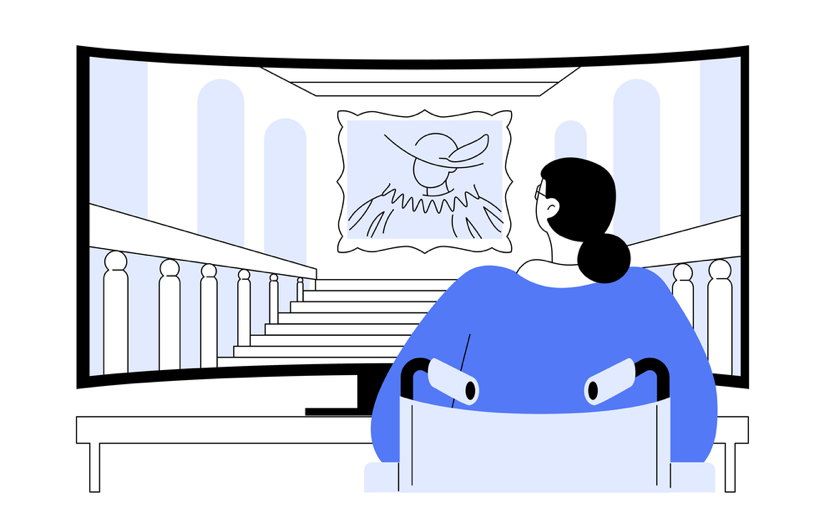
The digital century has revolutionized all human activities, and the Covid19 pandemic, which is the background to this paper, has made it even more so. Shopping online, taking a course at a distance, visiting a museum from home... all this and much more is possible.
Although the museum business has been completely changed, and this has given rise to concerns about the risk of reducing the number of visits to real museums, and replacing the real museum with the virtual one, Léo Verdoncq, in his Master's thesis, sees this as an opportunity to introduce young learners to cultural objects steeped in history, in line with a recommendation of the "parcours d'éducation artistique et culturel" (PEAC). Even if "the virtual does not provide the incomparable sensation (...) of a unique work in a place steeped in history".
Despite this observation, the researcher's study has a number of objectives: firstly, to compare real and virtual visits from a complementary perspective; secondly, to investigate the added value of virtual visits in terms of their contribution to learning and the desire to learn; and thirdly, to question the virtual visit's ability to modify the Cycle 3 student's relationship with the work, the museum and artistic and cultural education. This raises a number of questions:
In order to capture the essence of this thesis, we will first present the theoretical framework, then outline the research methodology, and finally present the results achieved by the researcher.
In this section, Leo Verdoncq first traces the origins of the introduction of art courses in school curricula, then highlights the importance of direct confrontation with works of art and that of a virtual visit, and finally underlines the limits of the latter and its pedagogical contribution.
In this section, the researcher dwells on direct confrontation with works by students. It emerges that cultural and artistic practices are the result of the Refondation de l'École de la République. This involves education in and through art, giving learners the opportunity to "appropriate places, understand the codes that govern them, behave as spectators, educate the eye, express emotions in front of the works viewed, etc." (Deronne 2017), with a view to better apprehending the contemporary world (le Haut Conseil de l'éducation artistique et culturelle - La charte pour l'éducation artistique et culturelle, July 2016).
Subsequently, the researcher reveals the contribution of direct confrontation with works of art. He acknowledges that it has the benefit of anchoring us in reality, creating an effect of "disorientation and novelty" (Jacobi D., Coppey, 1995) conducive to learning, on the one hand, and to cultivating ourselves through social interaction, on the other. So what about a virtual tour?
While the digitization of cultural sites may at first glance seem to jeopardize real museums, due to the democratization of art objects, the researcher nevertheless notes that real and virtual visits are complementary (Marc Terrisse 2013), knowing that the latter offers more than allows the attraction of the young public, but above all the stimulation of the desire to learn thanks to a multisensory interaction offered by the virtual visit, having the effect of discovering works of art anew. Despite the many advantages of virtual tours, they do have their limitations.
As a limitation, Leo Verdoncq, through Marc Terrisse, mentions the virtual tour's inability to fully reproduce the sensory experience and the effect of "disorientation and novelty". It is also difficult to create social interaction, which is purely enriching, as is the case with a real visit. However, its didactic significance was raised.
Against all odds, despite the anecdotal consideration given to the virtual visit by teachers, it guarantees interactivity, participation, involvement and appropriation of the works encountered and the places visited, provided that the teacher takes charge of preparing the pupils to maintain the effect of surprise that the discovery of a work of art will give them.
Every study is based on a methodology: this one is no exception.
In order to answer the above-mentioned questions, qualitative and quantitative methods were employed, through the distribution of a questionnaire to teachers, trainees and Master MEEF students.
In addition to these methods, an experiment was carried out with learners of the project combining ICTE and art history teaching, in order to observe the pedagogical effect of the virtual visit on the learner. After collecting data, the researcher arrived at some results.
Léo Verdoncq concludes that :
In conclusion, the virtual visit awakens students' curiosity and desire to learn, and gives them a sense of autonomy, but it can never replace the real visit; they complement each other. Despite the results obtained, it is still difficult to measure the change in the student's relationship with the museum.
Illustration: Klyaksun on DepositPhotos
Reference
Verdoncq Léo,2021, "Entre arts, culture et numérique : quand la visite virtuelle contribue aux apprentissages et cultiver le désir d'apprendre", Education, online https://dumas.ccsd.cnrs.fr/dumas-03635096
You might also like:
Balancing work and family life [Thesis]
Finding the right balance between work and family life depends on how you perceive your ability to do things well, and whether or not your environment is favorable...
Users' general understanding of artificial intelligence often boils down to generalizations like "AI applies statistical algorithms". It does much more than that. Here are seven research articles to read to better understand what's going on with artificial intelligence.
Holographic place and visualization of urban dynamism [Thesis].
The city is a space co-constructed by people to exchange, communicate and trade. The City and Man form a complex ecosystem in which Man shapes the City and the City shapes Man. The understanding of this system is essential to envisage the future of our urbanized societies. Let's discover how to visualize this complex to better understand it with Thibault Pierre Louis Romany.
Evaluation in elementary schools
Reducing student stress during assessments means opting for a formative type of assessment.
The school experience of the descendants of North African immigrants [Thesis]
Descendants of North African immigrants can have a positive school experience, provided their parents are involved in their schooling.