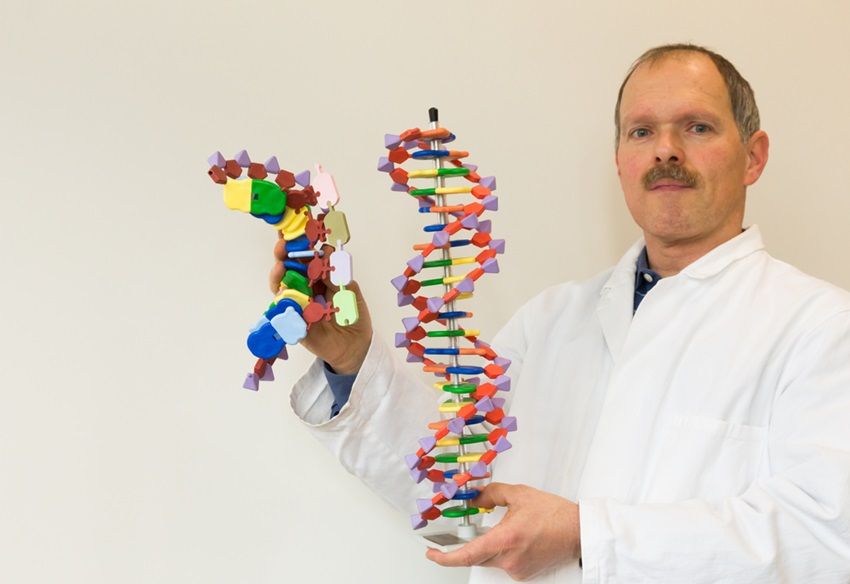
The beauty of knowledge and science is its evolution. The more scientific work progresses, the more refined our knowledge becomes. Our understanding of astrophysics, chemistry or geology is constantly evolving, and so are the human sciences. For a long time, historians claimed that the female warrior was just a myth; DNA analysis of certain remains has shown that female soldiers fought alongside their male counterparts. In short, the beauty of science also lies in its ability to question itself and take advantage of technological advances to refine knowledge and theories.
Does this show in the teaching material? Not always, unfortunately.
Textbook obsolescence
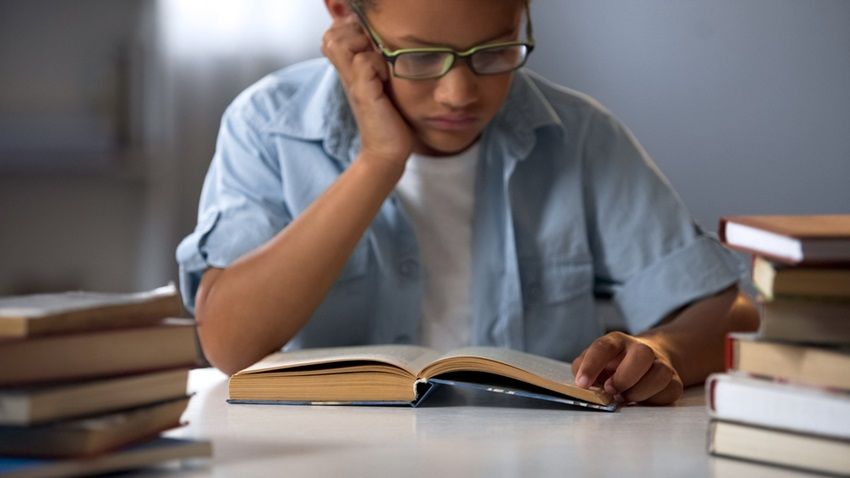
This new knowledge takes time to reach the classroom. It's normal not to share it immediately; some of it deserves to be checked and double-checked. But is it right to provide learners with textbooks that are 20 years or more old? Many things change in two decades, including the way they are taught.
This obsolescence of teaching materials is particularly noticeable in developing countries. For example, in 2019, 59% of the academic material used in Nigerian universities was published between 1991 and 1999. Only 21% of the corpus on offer came from the years 2000 to 2018, i.e. an almost similar percentage of books dating from 1970 to 1990. Many textbooks in French-speaking Africa still use the Bosher method to teach French. This is not a bad thing in itself, but it remains an outmoded approach in the 2020s.
This obsolescence also concerns Western countries such as the USA , where 66% of biology textbooks are said to be totally obsolete with regard to, among other things, the understanding of sex and gender. This is the result of an ideological battle in Republican states, which refuse even to teach about scientific advances in this field. And then, it took until 2017 for the clitoris to appear in a school textbook.
That's why some people say that textbooks are outdated and an archaic way of transmitting knowledge. They offer few practical problems, are often ill-conceived in their progression and, above all, offer only one point of view to the student. While this doesn't bother us too much when it comes to questions such as when a city was founded or the names of mountain ranges, it becomes more critical when it's time to reflect on the reasons for the rise of fascism in Italy or the explanation of how the brain works.
The use of such obsolete material has the effect of discouraging or boring learners, who feel they're wasting time on more or less true information. It also allows old preconceived ideas to persist, even among the younger generation. A very personal example: until the end of high school, I believed that the navigators of the Renaissance didn't know that the Earth was round, a fact known and verified since Antiquity. Because the textbooks suggested that the explorers weren't too sure of this reality.
Avoiding textbook burnings
So, what's to be done with these obsolete manuals? Of course, the idea would be to burn them all and dispose of them, a gesture a little too radical. Especially as states invest a lot of money in these books. For example, in 2015, the government of the Philippines found itself in hot water when it procured 16 million books unsuitable for teaching. Officials claimed that these were still useful for teachers. This is not entirely untrue, even if, ideally, public authorities should ensure that teaching materials are kept up to date.
It is indeed possible to teach with these manuals. After all, some parts are still true. In such cases, it's important to take note of them, and to be able to use means of teaching recent knowledge on subjects where the data used is out-of-date. In this respect, the Internet can serve as a watchdog for more up-to-date information, but beware of misinformation!
The use of cultural mediation venues such as museums is a useful way of sharing new knowledge or deconstructing preconceived ideas. Ideally, you should produce your own teaching materials for use in the classroom with your pupils, to improve on what's in the textbooks. In this respect, American teachers often use the"Teachers pay teachers" site, and French-speaking teachers"Mieux enseigner" or PartApp in Switzerland, where they buy recent teaching materials at modest cost to pay for the time spent by other colleagues on ideation and production.
Some sites suggest donating these old manuals to charities in other countries. A well-intentioned proposal at first glance, but one that merely shifts the problem of obsolescence to the "less fortunate nations". On the other hand, offering them to libraries for archiving already seems a good avenue, and if it's absolutely necessary to "get rid of" them, recycling remains an eco-responsible approach.
Will the growing use of electronic textbooks help reduce obsolescence? Possibly. It's easier to edit and change data in a digital document. However, publishers need to do this, ensure that it doesn't cost schools too much, and make sure that the book doesn't disappear as a result of a computer problem. So the question of relevance doesn't disappear altogether, even with technology.
Image: motortion / DepositPhotos
References:
"5 tips for teaching with outdated textbooks." HoJo's Teaching Adventures, LLC. Last updated July 23, 2020. https://hojosteachingadventures.com/teach-outdated-textbooks/.
"Teaching: outdated textbooks." Newsmada. Last updated April 18, 2023. https://newsmada.com/2023/04/18/enseignement-des-manuels-scolaires-obsoletes/.
Folk, Zachary. "Majority of US biology textbooks teach outdated ideas about gender and sex, study finds." Forbes. Last updated February 22, 2024. https://www.forbes.com/sites/zacharyfolk/2024/02/22/majority-of-us-biology-textbooks-teach-outdated-ideas-about-gender-and-sex-study-finds/?sh=531aa6d665c4.
Joseph Hegina, Aries. "DepEd: 16 M outdated books not fit for K to 12 still useful." Inquirer.net. Last updated April 6, 2015. https://newsinfo.inquirer.net/683838/deped-16-m-outdated-books-not-fit-for-k-to-12-still-useful.
Korbey, Holly. "Should textbooks still play a role in schools?" Edutopia. Last updated June 9, 2023. https://www.edutopia.org/article/should-textbooks-still-play-a-role-in-schools/.
"Outdated educational materials: how to fix & avoid (Expert guide)." Siphiwe Moyo. Last updated January 12, 2024. https://mssiphiwemoyo.com/blog/fix-avoid-outdated-educational-materials/.
Smith, Olivia. "What to do with old textbooks in 2024." BookScouter Blog. Last updated March 6, 2024. https://bookscouter.com/blog/what-to-do-with-old-textbooks/.
"Teaching with outdated textbooks." The Owl Teacher. Last updated May 30, 2016. https://theowlteacher.com/teaching-with-outdated-textbooks/.
Tucker, Brian. "Why textbooks are obsolete in the modern classroom." Lab To Class. Last updated November 11, 2021. https://labtoclass.com/why-textbooks-are-obsolete-in-the-modern-classroom/.
WanaData. "Report: How outdated academic materials affect quality of tertiary education." Medium. Last updated April 16, 2019. https://medium.com/wanadata-africa/report-how-outdated-academic-materials-affect-quality-of-tertiary-education-89fe805a0c05.
See more articles by this author