
What is the ideal school for the 21st century?
Listening to the students is the first step in building a pedagogical strategy that will correspond to them, towards the school of tomorrow
Publish at May 29 2024 Updated May 29 2024


There's no accounting for taste.Ancient proverb
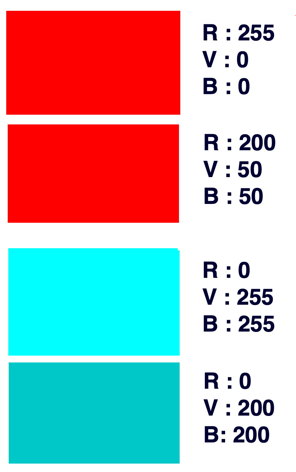 Metamerism and subjectivity
Metamerics are mixtures of RGB (Red, Green, Blue) colors that ultimately appear identical to the human eye under certain lighting conditions, even though they are composed of different color combinations. Our eyes perceive colors through three types of receptors: red, cyan and blue. Stimulating them in different proportions can result in identical color perception.
As the relative sensitivity of these receptors varies for each individual, and lighting and light reflections also depend on the point of view, we can easily produce several color combinations for "roughly" the same perceived results.
In other words, we can play with combinations of colors, lighting conditions and luminosity to deceive our senses, or identify their differences in sensitivity, as in color-blindness tests. The proverb quoted in the introduction underlines the fact that our perceptions are subjective.
Metamorphoses can be found for all our senses: sounds, smells, touch, etc.
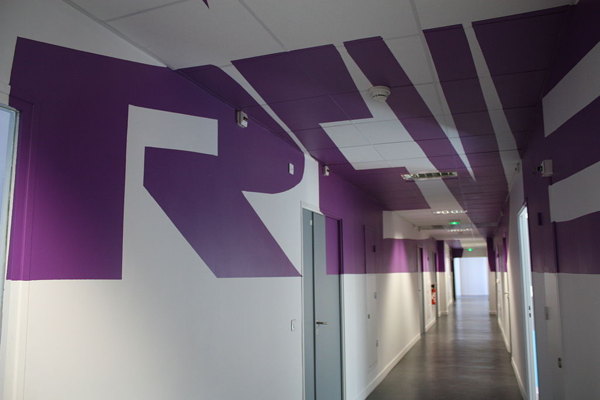 Anamorphoses and time markers
You've probably already seen those works of art that can only be perceived coherently from one point of view; they're called "anamorphoses". They're a perfect illustration of the fact that reality is always perceived from one point of view.
The mind can conceive of something from several points of view, such as through our two eyes, or through hundreds of eyes if we consider A.I., but from the moment this reality is integrated, we once again obtain a single, admittedly broader, but original point of view.
A point of view is also temporal. Time affects what we perceive and what we integrate into that perception.
On the scale of the universe, 1,000 years is equivalent to a tiny fraction of a second. Complex phenomena occur in a femtosecond (10-15 sec.), others occur on a geological scale, in millions of years (2), and in both cases can only be perceived by taking a duration on the appropriate scale to define the beginning and end of the "instant". What about changes in landscape, mood or body shape? All are subjective to the period under consideration.
So, whether in space or time, the synthesis of points of view produces only one new point of view.
Great leaders know how to listen, and are enlightened by the points of view of many people (5). This enables them to propose projects that are more likely to win support and be more successful than those that are more autocratic. The length of their popularity depends to a large extent on this ability to listen and renew.
On the other hand, great researchers adopt a focused point of view, which they sometimes maintain against all odds (6).
The reality they perceive can only be explained from a specific point of view. Einstein had nothing to do with our certainties about the invariability of time (3). Dan Shechtman had to fight for years before the very idea of quasicrystals was accepted (4). For many scientists, other people's points of view don't allow them to perceive the reality of what can only be perceived from a particular point of view, so they don't let incompatible points of view stop them.
Considering several points of view is sometimes good, sometimes less so; so in what contexts is it best to discuss points of view?
We can think about the past, observe the present and dream about the future. Doing things differently doesn't usually result in good projects. We can benefit from the experience of the past, but with the data of the present and the vision of a future. The data of the past are not the data of reality, and without a vision of the future, you can't make a plan in the present. Only points of view whose source can be identified, i.e. the point of view itself, are accepted, which excludes fake news and artificial intelligence hallucinations.
If we take the cases of the leader and the researcher, they will listen to those who bring them the experience of the past, but not to backward-looking points of view; they will consider those who bring data and observations of the present, but not those who seek to maintain the status quo and propose only a vision of the present - the earth has been at the center of the universe for so long! Finally, they will take into account different visions of the future concerned by their activity. Great discoveries are fuelled by advances in many fields.
It's so easy to isolate oneself or, on the contrary, to systematically consult everyone, in a kind of direct democracy that can be more akin to opinion polling than real listening (7). Balance certainly involves many points of view, broad as well as narrow, short- and long-term, but when it comes to projects, their choice is decisive: their subjectivity ends up creating the reality of the project, which will succeed or fail.
Illustrations:
Mental Implosion - agsandrew - DepositPhotos
Metamères - by Graphic Converter DL
Anamorphosis - Arthur Causse - CC BY-SA 3.0
References
1- There's no accounting for taste - Usito
https://usito.usherbrooke.ca/d%C3%A9finitions/annexes/locutions_courantes/Des_go%C3%BBts_et_des_couleurs_on_ne_discute_pas
2- Deep Time Walk
https://www.deeptimewalk.org/
2- Deep Time Walk
https://ecotopia.fr/marche-du-temps-profond/
3- Albert Einstein - Wikipedia
https://fr.wikipedia.org/wiki/Albert_Einstein
4- Dan Shechtman - Wikipedia
https://fr.wikipedia.org/wiki/Dan_Shechtman
5- 15 qualities that make you a good leader - Alicia Raeburn - Asana
"take into account the point of view of others, even if you don't agree"
https://asana.com/fr/resources/qualities-of-a-leader
5- What are the qualities of a leader? ESLSCA - Business School
"Empathy is the ability to put yourself in other people's shoes and understand their feelings and perspectives."
https://www.eslsca.ma/blog/quelles-sont-les-qualites-dun-leader
6- Scientific recruitment: what are the 7 qualities of a researcher? - Okay Doc
https://okaydoc.fr/recrutement-scientifique-qualites-chercheurs/
6- Essential qualities in research - Wiki Sciences claires
"Be able to work independently... and as part of a team"
http://www.vulgarisation-scientifique.com/wiki/Pages/Les_qualit%C3%A9s_essentielles_en_recherche
7- Tyranny of the majority: myth or reality? - Espoir RIC (Référendum d'Initiative Citoyenne )
https://www.espoir-ric.fr/questions-de-fond/tyrannie-de-la-majorite
You might also like:
What is the ideal school for the 21st century?
Listening to the students is the first step in building a pedagogical strategy that will correspond to them, towards the school of tomorrow
Internships, summer jobs, integration jobs in 2022
Internships, summer jobs, making a little money, testing a trade, learning a trade or being directly operational to make up for a shortage of positions?
Asian influences on collective intelligence facilitation
This article endeavors to bring together and articulate the main sources that feed the Asian roots of collective intelligence facilitation, from the 3 great Chinese philosophies to their most contemporary disseminators.
What will education be like in twenty years?
What will the school of 2040 look like? Will there be any schools left? Teachers? The OECD and many others have tried to see the possible futures in pedagogy. So states will really have to choose between an improved but similar model and a total transformation that would come with other questions.
Assessing the relevance of information: a challenge of sensitivity for artificial intelligence
Artificial intelligence aims to provide answers close to those that a human would give if he were endowed with memory and extraordinary computing capacity.
Other than the brute force linked to the power of the processors, this requires a fine-tuned consideration of the context and emotional aspects, to identify the information that may be relevant to the individual receiving the information.


