The evolution of organizational optimization
To optimize organizations, change has to be managed. Several decades have seen the exploration of numerous change management methods.
Publish at September 25 2024 Updated September 25 2024


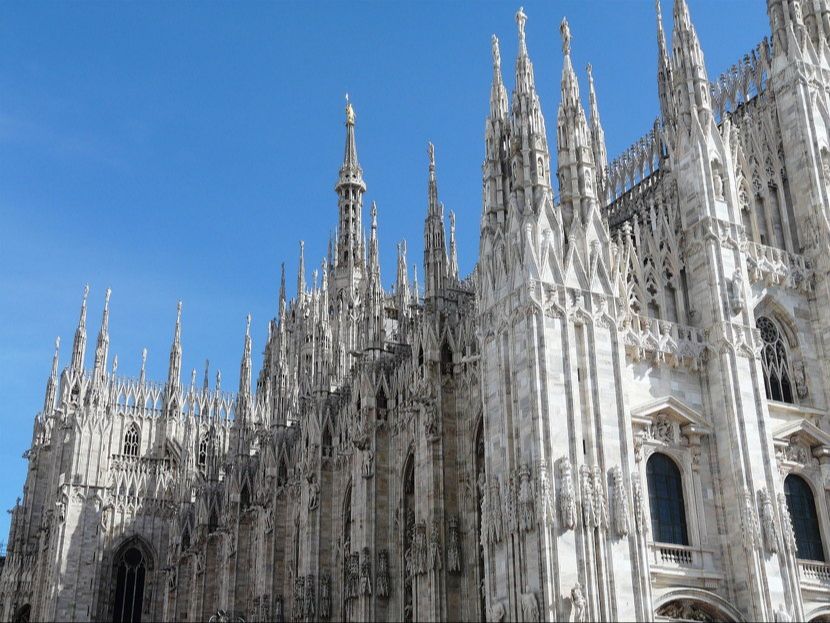
My civilization is based on the cult of Man through individuals. For centuries, it has sought to show Man, just as it would have taught people to distinguish a cathedral from its stones. It preached this Man who dominated the individual.
Terre des hommes (1938) by Antoine de Saint-Exupéry
The construction of medieval Gothic cathedrals represents an exceptional architectural and human feat, spanning several centuries. These buildings, such as Notre-Dame de Paris, Chartres and Reims, managed to maintain a remarkable stylistic coherence and harmony despite the many generations of craftsmen and architects involved.
This article examines the reasons for this continuity, with particular emphasis on the role of the Compagnons du devoir in the transmission of knowledge and the development of essential skills.
The construction of a medieval cathedral could extend over several centuries (Gimpel 1980). The average construction period for French Gothic cathedrals oscillated between 200 and 300 years, due to economic and political constraints and sometimes natural disasters. Despite these interruptions, architectural coherence was maintained thanks to the transmission of knowledge and the principles of sacred geometry, which dictated the proportions and structures of the buildings.
Master builders played a crucial role in the design and supervision of work, relying on drawings and plans that served as a reference over several decades (Fitchen, 1981). The use of sacred geometry, a set of mathematical and symbolic rules, ensured the overall harmony of the building despite changes in style over the centuries. These principles ensured continuity in Gothic architecture, particularly in the use of pointed arches, rib vaults and buttresses.
The Compagnons du devoir (Vidalenc, 1967), the guardians of traditional craftsmanship, played a central role in the construction of cathedrals. Trained according to a strict apprenticeship tradition, these itinerant craftsmen disseminated techniques and innovations throughout Europe, while respecting the principles of coherence of the buildings they worked on.
The Compagnonnage system, based on an apprenticeship journey from one town to the next, helped to maintain consistency in the quality of the work carried out on these complex sites.
Collective intelligence is an essential aspect of compagnonnage. Each journeyman contributed to the edifice while learning from other craftsmen. This dynamic fostered a continuous exchange of knowledge, enabling each generation to contribute to the edifice while respecting the achievements of previous generations. This system guaranteed continuity not only in techniques, but also in the aesthetics and harmony of cathedrals.
The deep-rooted motivation of journeymen and craftsmen lay in their desire to learn and perfect their techniques. This learning was encouraged by a social and religious environment in which cathedral building was seen as a spiritual endeavor that went beyond mere manual labor. The journeymen not only mastered technical skills, but also developed an in-depth understanding of the architectural, mathematical and symbolic principles involved in building these monuments.
Intellectual curiosity, combined with the rigor and exacting standards of their training, enabled the Compagnons to introduce innovations while remaining faithful to established principles, thus ensuring the coherence of the works over very long periods.
The construction of the Gothic cathedrals is a powerful testimony to what collective intelligence, combined with a strong desire to learn and shared emotion, can achieve. These monumental worksites, which brought together thousands of craftsmen over the centuries, show us that architectural coherence and the durability of knowledge depend on the ability to transmit and learn.
From a pedagogical point of view, this collective undertaking illustrates that learning cannot be limited to the transmission of technical knowledge. It is profoundly linked to the emotion generated by the shared work. The pride of contributing to a grandiose project, the recognition of a job well done and the enthusiasm for innovation are all driving forces for learning and creation.
Ultimately, the construction of Gothic cathedrals teaches us that collective intelligence, fuelled by emotion and a willingness to learn, is a key to lasting works, not only in architecture but in any complex human project.
Illustration: Milan Cathedral - eric delgrange on Pixabay
Source: Bony, J:
Bony, J. (1983). French Gothic Architecture of the 12th and 13th Centuries. University of California Press https://online.ucpress.edu/jsah/article/43/4/367/56636/Review-French-Gothic-Architecture-of-the-Twelfth
Murray, S. (1989). Notre-Dame of Amiens: Life of the Gothic Cathedral. Cambridge University Press
Fitchen, J. (1981). The Construction of gothic cathedrals: a study of medieval vault Erection. The University of Chicago Press
Gimpel, J. (1980). The builders of cathedrals.
https://www.decitre.fr/ebooks/les-batisseurs-de-cathedrales-9791036917400_9791036917400_1.html
Culas, M. (1986). Sur le chemin des cathédrales de lumière: Chypre. Cahiers du Centre d'Études Chypriotes, 6(1), 39-52. https://www. persee.fr/doc/cchyp_0761-8271_1986_num_6_1_1198
Vidalenc, J. (1967). Les compagnonnages en France du Moyen Age à nos jours. https://www. persee.fr/doc/rhmc_0048-8003_1967_num_14_3_2964
Pérez, L., & Verna, C. (2009). La circulation des savoirs techniques du Moyen-âge à l'époque moderne. New approaches and methodological issues. Tracés. Revue de sciences humaines, (16), 25-61.
You might also like:
The evolution of organizational optimization
To optimize organizations, change has to be managed. Several decades have seen the exploration of numerous change management methods.
Imaginary worlds to develop our know-how and innovate in pedagogy
What if free attention time was used to invent new ways of living together?
From light knowledge to crystallized knowledge
From collective intelligence to social networks, from good data to fake news... cognitive biases to knowledge management, our society is evolving when it comes to the nature of our thoughts in both form and content.
Offbeat pedagogies and innovative concepts
A description of the effects and challenges of offbeat pedagogies
Exploring the effect and implications of generative AI in web content creation
Highlighting potential challenges related to the diversity and quality of datasets used to train AIs, highlighting the need to balance human and automated contributions to preserve innovation and diversity of ideas.